For Onlinecourses55
|
2025-12-09
For Onlinecourses55
|
2025-12-09

Nonverbal communication in job interviews: convince without speaking - communication non verbal
Mastering your nonverbal signals is key in interviews. By exploring our comprehensive course on body language techniques, you’ll learn to refine your presence and create a powerful first impression.
In a job interview, your résumé gets you the appointment, but your body language gets you the job. Experienced recruiters know that words can be rehearsed, but the body rarely lies about confidence, anxiety, or honesty. Often, the decision to hire or dismiss is made unconsciously within the first 3 minutes, based purely on nonverbal cues.
In this practical article, taken from our module on Nonverbal Communication for Professional Success, we teach you how to hack that first impression and project the image of the ideal candidate.
Studies suggest that within seven seconds the interviewer has already decided whether they like you or not. Don’t waste this moment.
The Walk:Energy and Purpose: Don’t shuffle your feet or walk hesitantly. Enter with a firm step and a moderate pace. An energetic walk suggests a dynamic, hard‑working person.
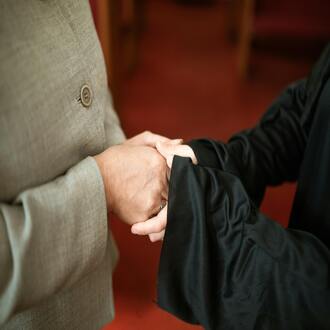
The "Handshake" (Handshake):The character test: It’s the only permitted physical contact and it says a lot about you.
Once in the chair, your posture communicates your attitude toward the job and authority.
Sit all the way back:Confidence: Occupy the entire seat. Sitting on the edge signals you’re ready to flee (anxiety). Leaning back too far conveys arrogance or lack of respect.
The strategic lean:Active interest: When the interviewer talks to you about the company or the role, lean your torso slightly forward. It’s a universal signal of "I’m interested in what you’re saying." If you lean back when asked a difficult question, it will look like you’re defending yourself or distancing from the answer.
Visible Hands:Honesty: Never hide your hands under the table or in your pockets. The human brain distrusts hands it cannot see. Keep them on the table or on your lap. Use them to gesture and emphasize your achievements; that makes you appear more competent.
The candidate who looks at the floor seems to be hiding something. The one who stares without blinking looks like a psychopath. Balance is key.
The Business Triangle:Where to look: Imagine an inverted triangle on the interviewer’s face (eyes and forehead). Keep your gaze in that area. Lowering your gaze to the mouth is more social/intimate and less professional.
The 60/40 Rule: Maintain eye contact approximately 60–70% of the time while listening and 40–50% while speaking. Breaking eye contact briefly to think of a response (looking to the side or up) is natural and shows you’re reflecting, not reciting a script.
'Rapport' or attunement is what makes the interviewer think "there’s good chemistry with this candidate."
How to do it:The Subtle Mirror: If the interviewer is calm and speaks slowly, don’t speak fast and gesture a lot. Slow your tempo. If they lean forward, wait a few seconds and subtly do the same. Don’t mimic like a mime; simply adapt your energy to theirs. This sends a signal to the recruiter’s subconscious: "We are alike, we understand each other."
There are gestures that scream "anxiety" and can sabotage you even if your answers are perfect.
The interview isn’t over until you leave the building. When saying goodbye, offer your hand firmly again, smile, and keep an upright posture until you cross the doorway. Many candidates "deflate" when they stand up, revealing all the stress they had contained. Maintain the professional persona until the end.