For Onlinecourses55
|
2026-04-23
For Onlinecourses55
|
2026-04-23
Differences between individual therapy and couples therapy which is better? - couples therapy training
Discover the ways in which individual and couple dynamics intertwine. Our structured course invites exploration of your relationship in a supportive environment.
Individual therapy focuses on the individual, his or her experiences, thoughts and emotions. The space is private and exclusive to explore personal issues, traumas, repetitive patterns and self goals. The therapist acts as a guide to help the person understand him or herself better, develop coping strategies and enhance inner resources. In this format, personal history, self-esteem, anxiety or depression management, and important decision making are usually worked on. Confidentiality and the possibility of deepening without the presence of another party are key features.
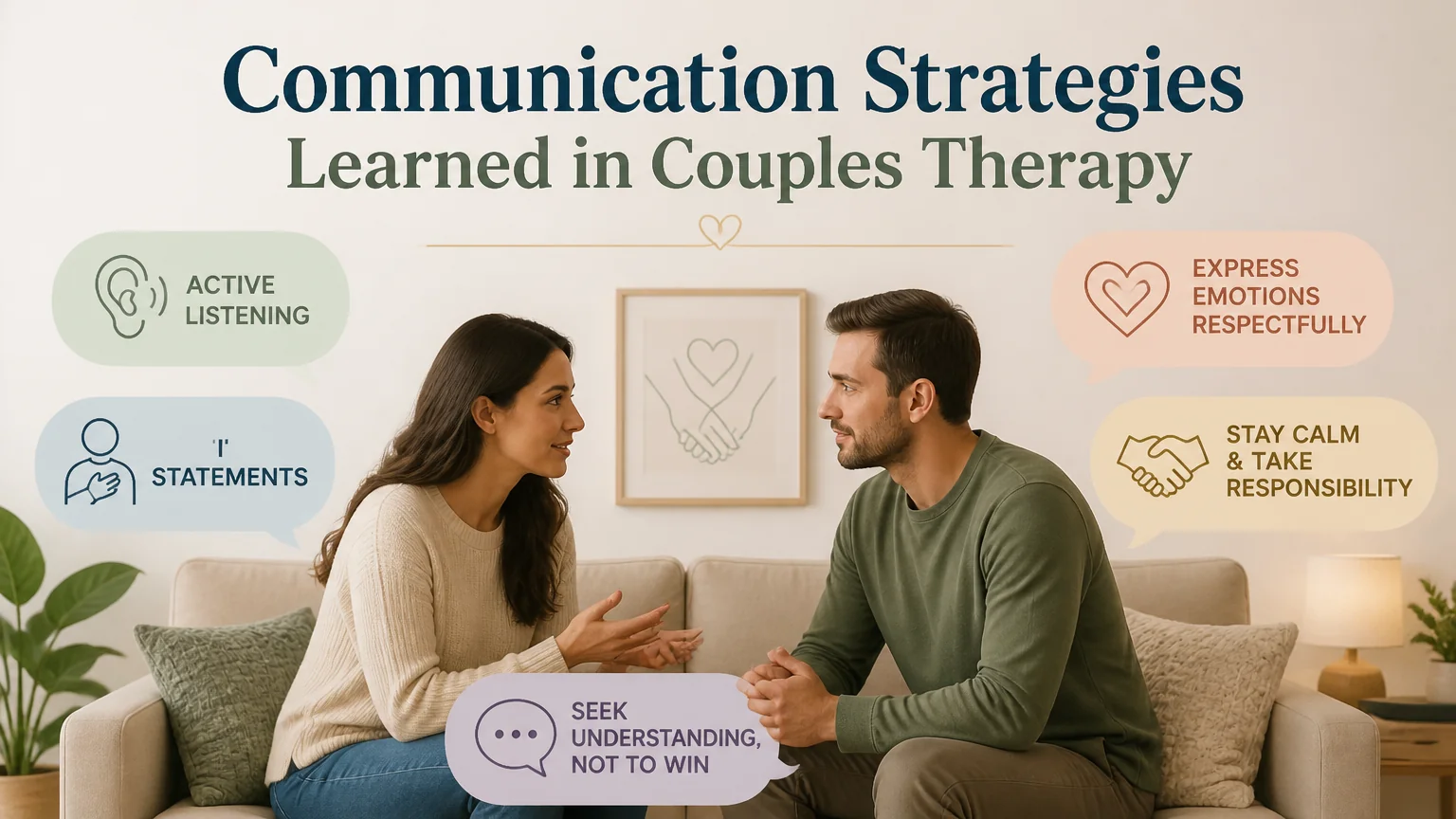
Couples therapy is designed for two people in a relationship seeking to improve coexistence, communication and intimacy. In this space, interactions, conflict patterns and dynamics that maintain or damage the relationship are observed. The therapist moderates, facilitates the dialogue and proposes practical exercises for both to understand the other's perspective and learn healthier ways of relating. It is not about "working out who is at fault," but about creating common ground for change.
Although both formats share the goal of promoting wellness, their specific objectives differ. In individual therapy the priority is personal development: getting to know oneself better, healing wounds, regulating emotions and changing behaviors. In couples therapy the focus is on the relationship: improving communication, resolving conflicts, restoring trust and rebuilding intimacy. Approaches also vary; some individual therapists use trauma-focused or schema-focused therapies, while couples therapy may employ models such as emotion-focused therapy or the assisted communication method.
Individual therapy allows for in-depth, person-centered exploration. It facilitates the building of emotional autonomy and the development of personal tools. It is ideal when problems arise from internal wounds or patterns that the other person does not share or cannot understand. It also provides a safe space to express thoughts that might hurt the other person if they were formulated in couples therapy without preparation.
Couples therapy addresses relational dynamics in real time: the therapist can observe how they interact, intervene and teach communication techniques with both present. This accelerates the learning of behavioral changes and allows for practicing new ways of relating in session. In addition, when both are engaged, the results tend to be consolidated because the transformations are integrated into the daily routine of the relationship.
No modality is magic. Individual therapy may be insufficient if the central problem is the interaction between two people; on the other hand, couple therapy may fail if one partner is unwilling to take responsibility or if there are unresolved individual problems that impede change. Another limitation is the quality of the therapist: lack of experience in a particular modality can undermine the process. It is also important to monitor situations of violence where specialized interventions and safety measures are required.
The choice depends on the nature of the problem and the desired goal. If what is affecting you is primarily internal, or you need to recover personal resources before reconnecting with someone, individual therapy is usually the best option. If the problem is the relationship itself and you are both willing to participate, couples therapy may offer more direct solutions. In many cases, a combination of the two works very well: individual sessions complemented by couples sessions when appropriate.
Both individual and couples therapy serve a valuable purpose and there is no universal answer as to which is "better". The choice must be based on honest assessment of the situation, the willingness of the people involved, and the quality of the professional accompaniment. Sometimes the healthiest route includes both modalities at different times. The most important thing is to take the step of seeking help when problems exceed personal resources, and to do so with the intention of learning and transforming the way you relate to yourself and others.
Search
Popular searches