LOGIN

REGISTER
Seeker

Step-by-step guide to starting couples therapy without fear - couples therapy training

onlinecourses55.com

ByOnlinecourses55

2026-02-21
Step-by-step guide to starting couples therapy without fear - couples therapy training


Step-by-step guide to starting couples therapy without fear - couples therapy training

Starting a therapeutic process as a couple can generate doubts, nerves or resistance. It is normal to feel fear: it is an experience that implies vulnerability, changes in dynamics and the possibility of facing difficult issues. This text offers a practical and human guide to accompany you in the first steps, with clear ideas about what to look for, how to prepare and what attitudes help to get the most out of the process.

Why consider couples therapy

Before deciding, it may help to identify specific reasons. Many couples come because communication has deteriorated, there are recurring conflicts, intimacy has cooled, or they are facing a major transition (pregnancy, moving, separation of roles, infidelity). Others seek to prevent problems before they deepen. Therapy is not just for "crises"; it is also a tool for learning skills and understanding repeating patterns.

Choosing the right professional

Choosing the right therapist makes a big difference. There is no single perfect profile, but there are practical criteria to help make an informed decision:

Training and approach.

  • Check the therapist's training and whether he or she is licensed or belongs to professional associations.
  • Explore the therapeutic approach: cognitive-behavioral therapy, systemic, couple-focused emotional, integrative therapies, among others.
  • Seek clarity on how they work with couples: whether they use exercises in session, homework or complementary individual work.

Chemistry and trust

  • A sense of security and respect is essential. It is normal to try more than one professional until you feel confident.
  • Notice the therapist's willingness to listen without judgment and his or her ability to explain the process clearly.

Preparing before the first session

Preparing helps to reduce anxiety and make the best use of your time. These are concrete steps to arrive calmer and more focused:

  • Talk with your partner about expectations: how much time they are willing to invest and what goals they have. You don't need perfect agreement, but you do need a shared intention.
  • Write down specific examples of situations that concern you and what you each hope to change. Having references helps with the initial assessment.
  • Think about personal boundaries: what topics are not yet ready to delve into and what support you need if you feel overwhelmed.
  • Organize logistics: time, format (face-to-face or virtual) and confidentiality. Knowing these details reduces uncertainty.

What usually happens in the first sessions

The first sessions focus on assessment and therapeutic alliance. Do not expect immediate solutions; the initial objective is to understand the couple's history and define realistic goals.

Assessment

  • The therapist asks questions about the history of the relationship, family dynamics and significant events.
  • Communication patterns, conflict management and differences in expectations are explored.

Goal setting

  • Concrete goals are agreed upon: improve communication, manage jealousy, negotiate roles or recover intimacy.
  • Practical tasks are established to apply what has been worked on between sessions.

Practical strategies for the sessions

Some guidelines help make sessions more useful and less intimidating. Therapy is a safe space, but it requires responsibility and practice outside the office.

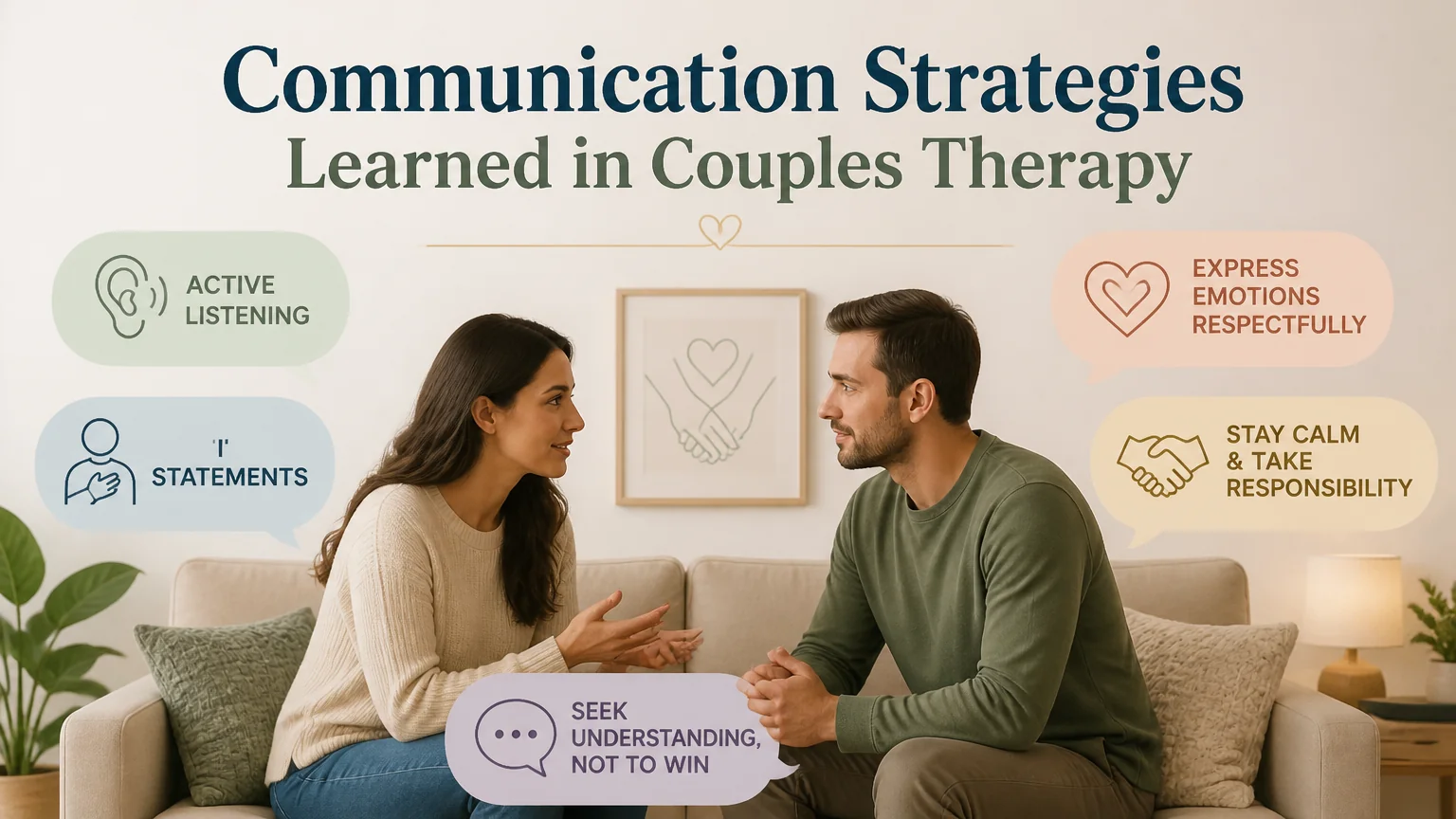
  • Active listening: try to listen without preparing a response while your partner is talking. Repeating in your own words what you understood improves the connection.
  • Speak in the first person: avoid accusations and use phrases that express feelings and needs ("I feel..., I need...").
  • Intervention time: if a discussion becomes intense, agree to pause and come back when you are calmer.
  • Practice exercises proposed by the therapist and share their effects in the next session.

Dealing with fear and resistance

Fear can manifest as avoidance, aggression or minimizing problems. Recognizing it is the first step in reducing its effect. Some strategies for managing resistance:

  • Normalize nervousness: many couples feel fear at the beginning; admitting it in therapy allows you to work through it.
  • Identify small, achievable goals rather than radical changes. Gradual progress builds confidence.
  • Use personal resources: support from friends, recommended reading or breathing exercises before sessions.
  • Talk to the therapist about how you feel about the process; a good professional will adjust the pace according to your needs.

Signs that the process is progressing well

Progress is not always linear, but there are signs of progress: less intense fighting, greater ability to express needs, more effective agreements, and renewed feelings of closeness. It is also positive to notice individual changes: better emotional management, greater self-esteem or clarity about personal boundaries.

When to rethink the course

If after several sessions there is no improvement or the relationship worsens, it is advisable to evaluate it with the therapist. Sometimes it is necessary to change professional, to integrate individual therapy or, in certain cases, to accept that separation is the healthiest decision. Honesty and professional accompaniment make it easier to make responsible and respectful decisions.

Final advice

  • Be patient: profound transformations take time.
  • Be honest with each other and with the therapist about expectations and limits.
  • Appreciate the small steps forward and celebrate when you are able to communicate better or resolve a conflict.
  • Don't be afraid to ask for a second opinion if something doesn't work; finding the right fit is part of the process.

Beginning a therapeutic process as a couple is an act of care for the relationship and for oneself. With information, preparation and a collaborative attitude, it is possible to transform painful patterns and build a healthier coexistence. If you decide to take the step, do so with the confidence that you are not alone and that there are practical tools to move forward with respect and clarity.

Become an expert in Couples therapy training!

Discover techniques and tools to help couples. Improve communication within couples. - Consisting of 19 topics and 64 hours of study – for 12€

EXPLORE THE COURSE NOW

Recent Publications

Search