For Onlinecourses55
|
2026-07-08
For Onlinecourses55
|
2026-07-08

Daily exercises recommended by emotional coaches - emotional coach
Acknowledging the importance of emotional work is essential; by integrating personalized practices with the help of a dedicated trainer, you can strengthen your emotional intelligence and navigate life's challenges with confidence.
Taking time to work on our emotions is not a luxury: it is a practice that improves mental clarity, relationships and the ability to manage stress. Emotional coaches agree that small daily routines produce sustainable changes. It's not about transforming your life overnight, but about creating habits that strengthen emotional intelligence, emotional regulation and resilience. By incorporating short, repeatable exercises, self-reflection is facilitated and impulsive reactivity to difficult situations is reduced.
Starting the day with a short emotional exercise sets the tone for the next few hours. A five- to ten-minute ritual can include mindful breathing, an acknowledgment of intentions and a brief affirmation. Coaches recommend keeping it simple: consistency matters more than length. This practice helps to connect with inner priorities and to respond rather than react to daily challenges.
Breathing is an accessible tool for regulating the nervous system. Emotional coaches often teach mindful breathing techniques because they reduce physiological activation and improve the ability to think clearly. Practicing mindfulness for even three minutes several times a day makes it easier to come back to center when anxiety or irritation arises.
Naming what we feel decreases its intensity. This process, called emotional labeling, allows us to step back and analyze what that emotion needs. Coaches recommend broadening the emotional vocabulary: instead of "I'm bad," identify whether it is sadness, frustration, disappointment or tiredness. A brief, daily log helps to map patterns and triggers.
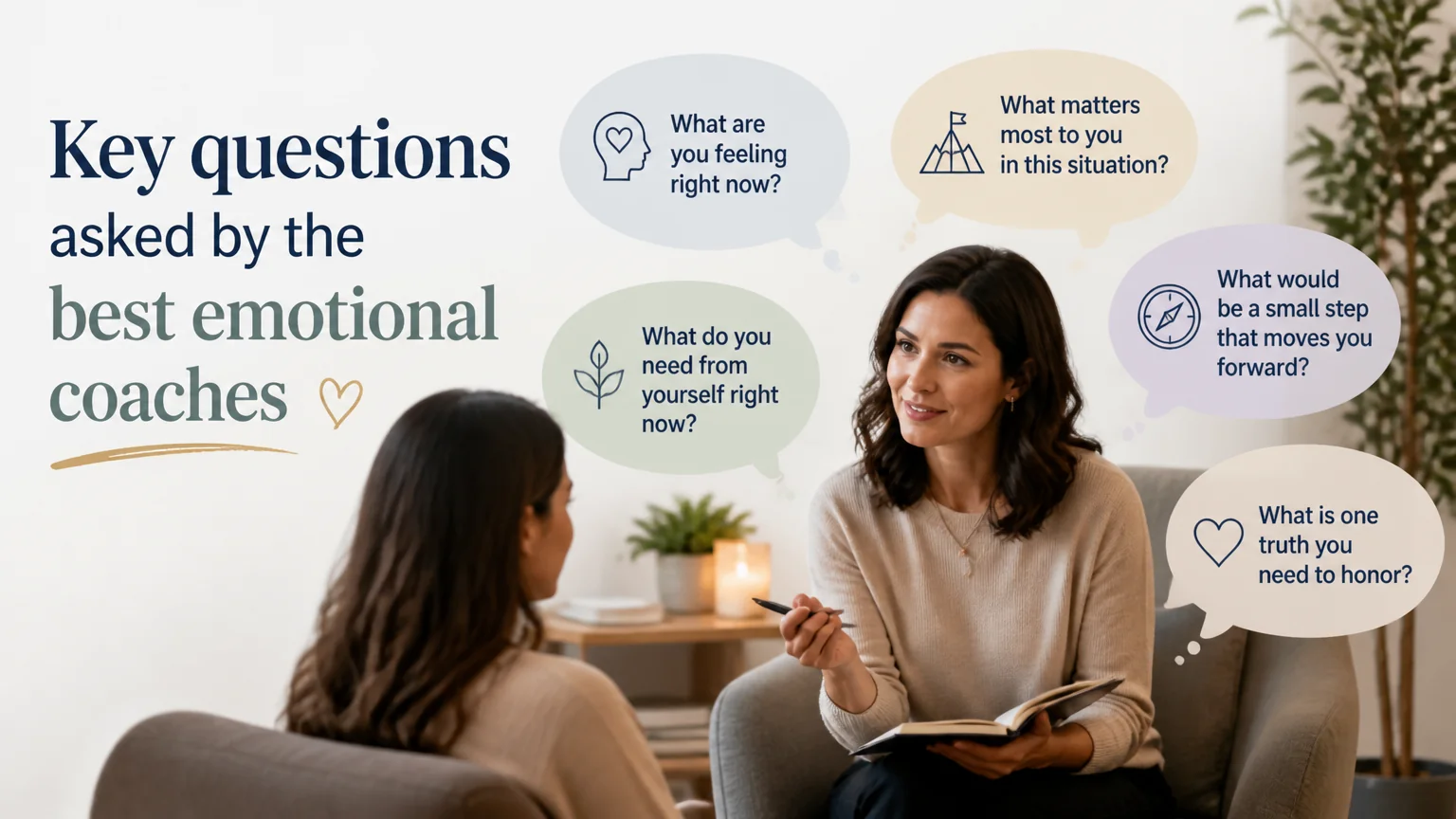
Writing about what we are feeling and thinking facilitates internal organization and resolution of internal conflicts. It need not be lengthy; five or ten minutes of free-writing allows for getting tangled thoughts out and discovering solutions. Coaches suggest using guided questions if it's hard to get started, e.g., "What do I need now?" or "What evidence do I have that this is true?"
Practicing gratitude shifts the focus from deficit to abundance. It's not about ignoring problems, but about balancing perception with elements that sustain and nourish. Spending a minute or two listing three things we are grateful for increases well-being and reduces recurring negative thoughts.
The connection between body and emotion is direct. Moving the body for even a few minutes helps to unblock tension and regulate mood. Emotional coaches recommend simple grounding exercises, stretching or short walks to bring you back to the present and reduce mental rumination.
Giving yourself short breaks to check in with your emotional state keeps emotions from building up until they explode. A "check-up" can take 60 seconds: how am I doing? what do I need? what can I do now to take care of myself? These micro-interventions encourage a kinder relationship with one's own reactions.
How you close the day influences the quality of your rest and your emotional readiness for the next day. A nighttime routine that includes briefly reviewing the day, writing down a couple of learnings, and practicing relaxing breathing prepares the nervous system for sleep. It is also helpful to plan a specific action for the morning, which reduces rumination before bedtime.
The key is simplicity and adapting to your own life. If an exercise seems expensive, cut it out and do the minimum feasible version. Associating the practice with a daily activity (brushing your teeth, making coffee) helps it become a habit. In addition, it is helpful to periodically review which exercises work and which can be adjusted.
These practices are helpful for daily self-regulation, but do not replace therapy when emotions severely interfere with daily life. If you experience deep sadness, intense anxiety, changes in sleep or appetite, or difficulty functioning in work and relationships, it is advisable to consult a professional. An emotional coach or therapist can tailor exercises and offer specific tools based on your history and needs.
Incorporate one or two exercises today and see how they change your energy and perspective in a week. The intention is not to be perfect but mindful: small daily gestures build a greater capacity to manage emotions. With patience and practice, these routines become personal resources that increase calm, clarity and connection to what truly matters.