For Onlinecourses55
|
2026-02-18
For Onlinecourses55
|
2026-02-18
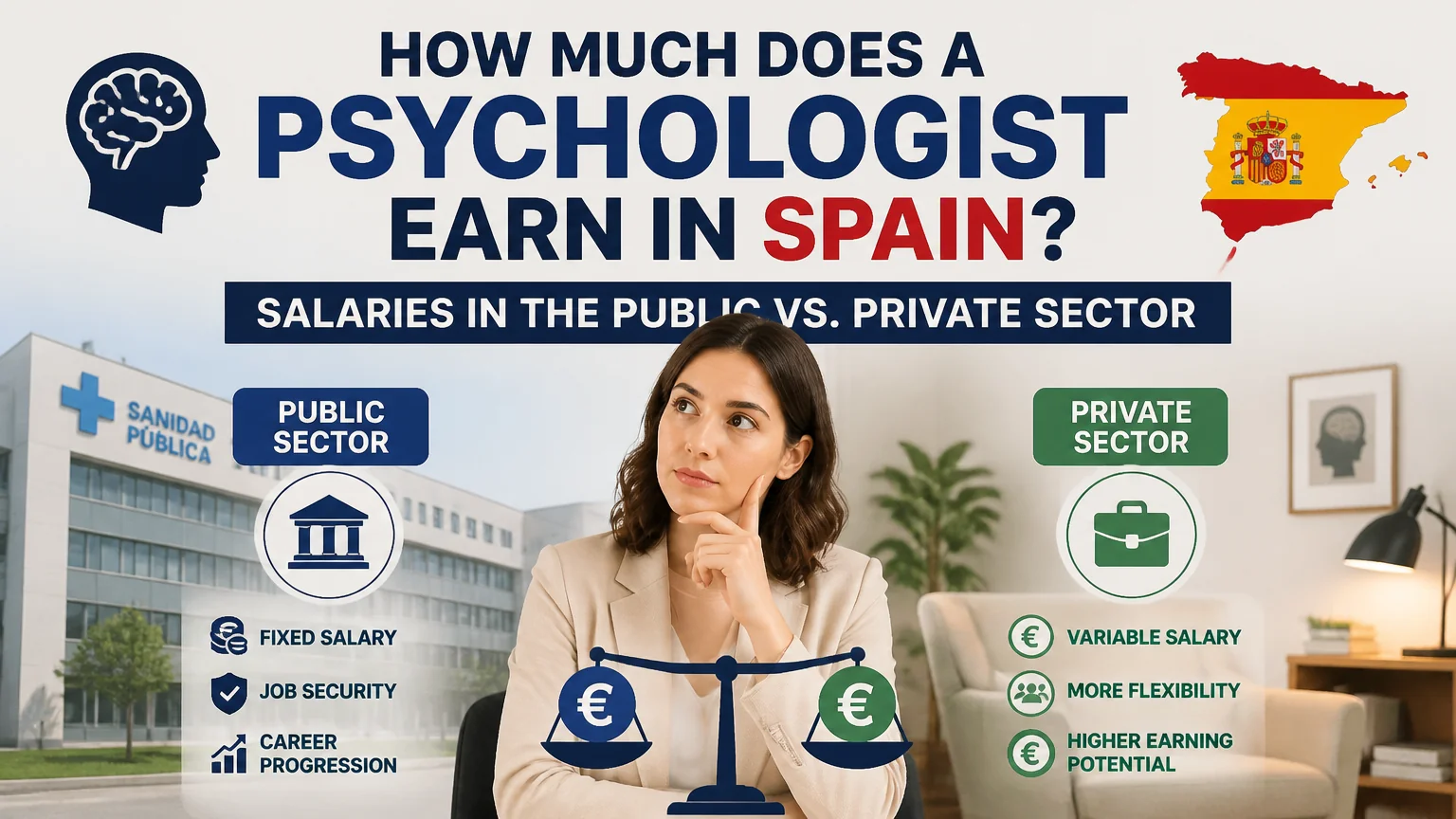
How much does a psychologist earn in spain? salaries in the public vs. private sector - practical psychology
Understanding salary dynamics in psychology is key to making informed career choices. Enhance your understanding of factors affecting earnings and discover valuable insights through the course centered on practical psychological knowledge to maximize your earning potential in the industry.
Mental health is an increasingly relevant topic in today's society. With growing recognition of its importance, the demand for psychology professionals has increased significantly in Spain. If you are considering studying psychology or are simply curious about how much a psychologist earns in Spain, this article will provide a detailed overview of salaries in the public and private sectors, as well as the factors that influence these professionals' income.
Working as a psychologist in the public sector in Spain offers job stability and a defined base salary. However, income can vary considerably depending on experience, seniority and the specific position held. Public sector psychologists typically work in:
Base Salary and Supplements: The base salary of a psychologist in the Spanish public healthcare system is generally between the 24.000€ and 30.000€ gross per year. To this must be added salary supplements that depend on factors such as seniority (triennia), the specific position performed (responsibilities, shifts, on-call duties) and geographic location (some autonomous communities offer specific supplements). For example, a psychologist with several years of experience who performs on-call duties could exceed 35.000€ per year.
Civil Service Exams and Professional Progression: Access to most positions in public healthcare is through competitive public examinations (oposiciones). Preparing for these exams requires a considerable investment of time and effort. Once inside the system, professional (and salary) progression is usually tied to seniority and the completion of continuing education courses.
The private sector offers greater flexibility and, in some cases, higher income potential for psychologists. However, it also involves greater uncertainty and the need to manage one's own professional career.
Self-Employment (Private Practice): Many psychologists choose to open their own private practice. Income in this case depends on several factors:
Employment (Private Clinics, Companies): Another option in the private sector is to work as an employee in private clinics, companies or institutions. Salaries in this case tend to be more variable than in the public sector, but they can be competitive.
Salaries in Private Clinics: The salary of a psychologist in a private clinic can range between 20.000€ and 40.000€ gross per year, depending on experience, specialization and the type of clinic.
Psychology in Companies (Human Resources, Workplace Wellbeing): More and more companies are incorporating psychologists into their human resources teams or to develop workplace wellbeing programs. Salaries in this area can be attractive, especially in large companies. A psychologist specialized in human resources or workplace wellbeing can earn between 30.000€ and 50.000€ gross per year, or even more in managerial positions.
Beyond the sector in which one works, there are a series of factors that significantly influence a psychologist's salary:

![Best academies and methods to prepare for the pir [comparison]](/images/postDuplicados/onlinecourses55-best-academies-and-methods-to-prepare-for-the-pir-comparison.webp)