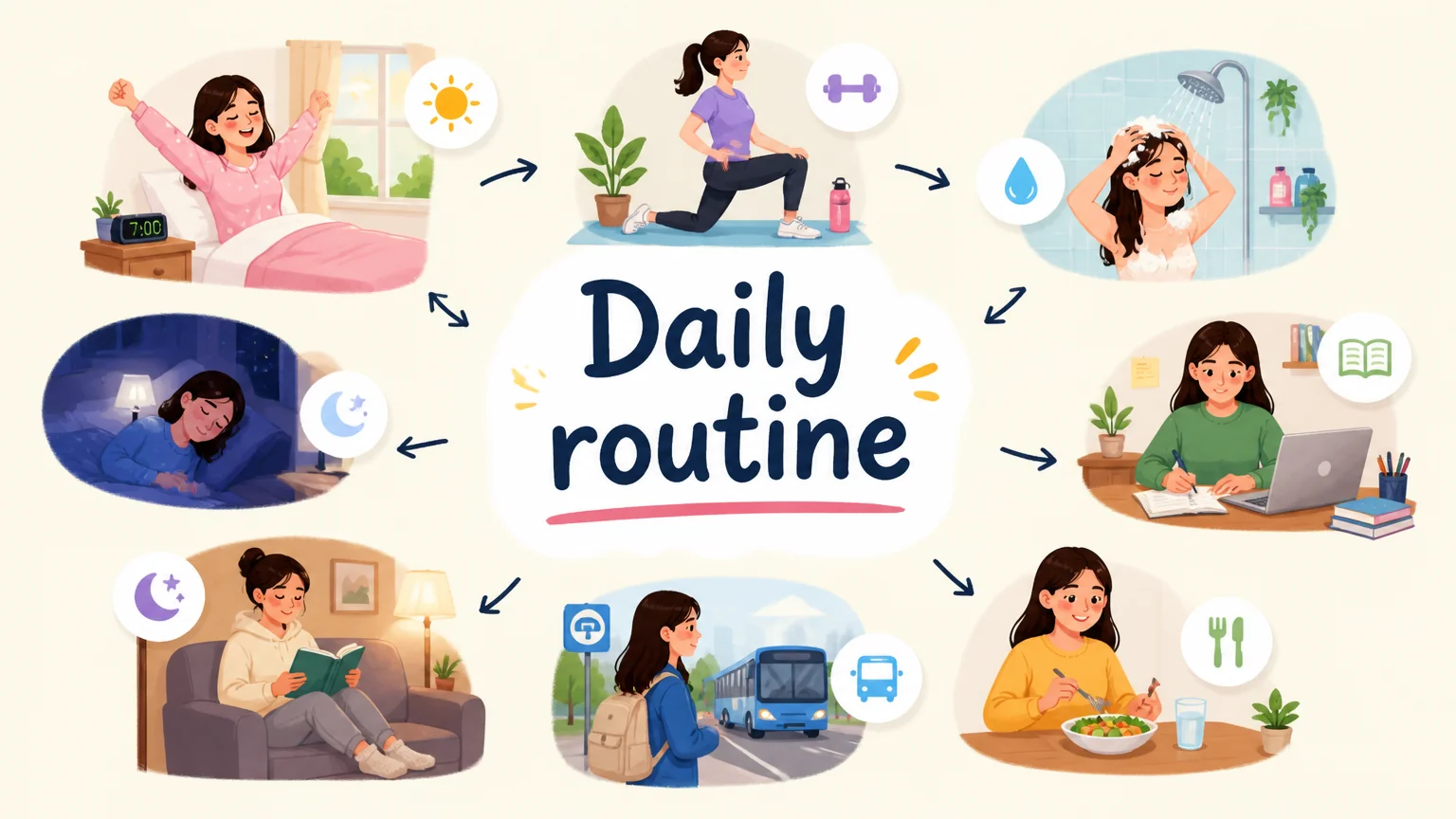
Daily routine - productivity work life home

onlinecourses55.com For Onlinecourses55 | 2026-10-12
Daily routine - productivity work life home


Daily routine - productivity work life home

If you're eager to turn chaos into order and elevate your well-being, consider joining this engaging course on building effective routines that enhance your daily life and help you achieve your personal fulfillment.

Have you ever wondered why some people seem to always have everything under control, while you feel constantly overwhelmed? The secret, often, is not magic, but a well-structured daily routine. A routine is not a prison, but a springboard for productivity, well-being, and personal fulfillment. In this article, we will explore in depth the concept of a daily routine, its concrete benefits, and how to create one that fits your life perfectly.

1. What Exactly is a Daily Routine and Why is it Important?

A daily routine is simply a series of actions you perform regularly each day, ideally in the same order. Think about brushing your teeth, making coffee, or checking your emails. These are already part of your routine, whether you planned them or not. The importance of a routine lies in its ability to automate tasks, reduce the stress of decision-making, and free up mental energy for more important and creative activities. Instead of waking up every morning wondering, "What should I do today?", you already have a plan of action that guides you through the day.

A well-designed routine helps to:

  • Increase productivity: When you already know what you have to do, you waste less time procrastinating or feeling disoriented.
  • Reduce stress: The predictability of a routine creates a sense of control and calm.
  • Improve physical and mental health: Incorporating healthy habits into your routine, such as physical exercise and meditation, can have a significant impact on your well-being.
  • Achieve your goals: Dedicating time each day to work on your goals, even if it's only for 15-30 minutes, can make a big difference in the long run.
  • Create a sense of accomplishment: Crossing tasks off your to-do list gives you a feeling of success and motivates you to continue.

2. The Scientific Benefits of a Structured Life

It's not just a matter of feelings. Science backs up the benefits of a daily routine. Studies have shown that regular routines can improve sleep quality, reduce symptoms of anxiety and depression, and even strengthen the immune system.

For example, maintaining regular sleep schedules helps regulate the body's circadian rhythm, the internal clock that controls sleep-wake cycles. This can lead to deeper, more restful sleep and more energy during the day. Similarly, dedicating time each day to mindfulness or meditation can reduce levels of cortisol, the stress hormone.

Furthermore, routines help form new habits. When you repeat an action several times, your brain creates new neural connections that make that action easier and more automatic. This means that, over time, the healthy habits you incorporate into your routine will become increasingly natural and intuitive.

3. Finding Your Perfect Routine: A Personalized Approach

There is no "one-size-fits-all" daily routine. The perfect routine for you depends on your goals, values, lifestyle, and personal preferences. The secret is to experiment and adapt your routine until you find what works best for you.

Here are some steps to create your personalized routine:

  • Define your goals: What do you want to achieve with your routine? Do you want to be more productive, fitter, more creative? Identify your main goals and use them as a guide to design your routine.
  • Identify your priorities: What are the most important activities for you? Make sure to include these activities in your routine and dedicate the necessary time to them.
  • Experiment: Try different routines and see what works best for you. Don't be afraid to make modifications and adjustments along the way.
  • Be realistic: Don't try to do too much too soon. Start with a simple routine and gradually add new activities as you feel more comfortable.
  • Be flexible: Life is unpredictable. Don't be too rigid with your routine and be willing to adapt it when necessary.

4. Practical Examples of Effective Daily Routines

To give you an idea of what an effective daily routine might include, here are some practical examples:

  • Morning Routine: Waking up at the same time every day, drinking a glass of water, doing light exercise (yoga, stretching), meditating for 10 minutes, eating a healthy breakfast, planning the day.
  • Afternoon Routine: Taking a break from work every hour to stretch your legs and rest your eyes, eating a healthy snack, dedicating time to a hobby or an activity you enjoy, taking a walk outdoors.
  • Evening Routine: Turning off screens at least an hour before bed, taking a hot bath, reading a book, writing in a journal, planning the next day, going to bed at the same time every night.

5. Key Elements for a Successful Daily Routine

There are some key elements that make a daily routine effective and sustainable over time:

  • Consistency: Try to follow your routine as much as possible every day, even on weekends. Consistency is essential for forming new habits and reaping the benefits of a regular routine.
  • Intentionality: Be mindful of the activities you include in your routine and why you are doing them. This will help you stay motivated and avoid falling into a mechanical and meaningless routine.
  • Flexibility: As mentioned earlier, life is unpredictable. Be willing to adapt your routine when necessary and don't feel guilty if you sometimes deviate from it.
  • Reward: Reward yourself for following your routine. This will help you stay motivated and make your routine more enjoyable.
  • Tracking: Keep track of your progress and evaluate the effectiveness of your routine. This will help you identify areas where you can improve and make the necessary changes.

6. Common Mistakes to Avoid When Creating a Daily Routine

Although creating a routine may seem simple, there are some common mistakes that can hinder your success:

  • Being too ambitious: Trying to change too many things too quickly can lead to burnout and frustration. Start with a simple routine and gradually add new activities.
  • Not considering your own needs: Your routine should be adapted to your lifestyle and personal preferences. Don't try to imitate someone else's routine if it doesn't fit your needs.
  • Being too rigid: Life is unpredictable. Don't be too rigid with your routine and be willing to adapt it when necessary.
  • Not tracking progress: Keeping track of your progress will help you stay motivated and identify areas where you can improve.
  • Forgetting to reward yourself: Rewarding yourself for following your routine will help you stay motivated and make it more pleasant.

7. Tools and Apps to Manage Your Daily Routine

Fortunately, there are many tools and apps available to help you manage your daily routine:

  • Planning apps: Google Calendar, Trello, Asana, Todoist
  • Habit tracking apps: Habitica, Strides, Loop Habit Tracker
  • Meditation apps: Headspace, Calm, Insight Timer
  • Fitness apps: MyFitnessPal, Nike Training Club, Strava
  • Timers and reminders: Set reminders for important tasks and use a timer to focus on work.

8. The Psychology Behind Habits and How to Use It to Your Advantage

Understanding the psychology behind habits can help you create a successful routine. Habits are formed through a three-phase cycle:

  • Cue: A trigger that initiates the habit (for example, the alarm clock).
  • Routine: The action you perform (for example, brushing your teeth).
  • Reward: The benefit you get (for example, the feeling of having clean teeth).

To create new habits, you must identify the cue, execute the routine, and get a reward. To break bad habits, you must modify the cue, replace the routine, or eliminate the reward.

9. Daily Routine and Mental Health: an Inseparable Link

A daily routine is not just a matter of productivity; it also has a significant impact on your mental health. As we have seen, a well-structured routine can reduce stress, improve sleep quality, and increase the feeling of control. When you feel you have control over your life, it is easier to face challenges and overcome difficult times.

Furthermore, a routine can help you cultivate mindfulness and gratitude. Dedicate time each day to reflect on the things you are grateful for and to focus on the present. This can help you reduce anxiety and depression and live a fuller, more meaningful life.

10. How to Adapt Your Routine to Life Changes

Life is constantly changing, and your routine will need to adapt to these changes. Whether you are starting a new job, moving to a new city, or facing a personal crisis, it is important to review your routine and make the necessary modifications.

Don't be afraid to experiment and try new things. What worked well for you in the past may no longer work now. Stay open to change and try to find a routine that fits your current life situation.

Conclusion: The Daily Routine as the Key to a Richer, More Fulfilling Life

Ultimately, the daily routine is a powerful tool you can use to transform your life. It is not a straitjacket, but a blank canvas on which you can paint the life you desire. With a little planning, experimentation, and commitment, you can create a routine that helps you achieve your goals, improve your well-being, and live a richer, more fulfilling life. Start building your daily routine today and discover the power of a structured and intentional life. Remember, change begins with a small step, and even the most effective routine starts with a single habit. What will be your first positive habit today?

Become an expert in Productivity work life home!

Certified Productivity Course: Learn to manage your time and become more efficient - Composed of 13 topics and 120 study hours - Price $12 only

EXPLORE THE COURSE NOW

Recent Posts