For Onlinecourses55
|
2026-10-11
For Onlinecourses55
|
2026-10-11
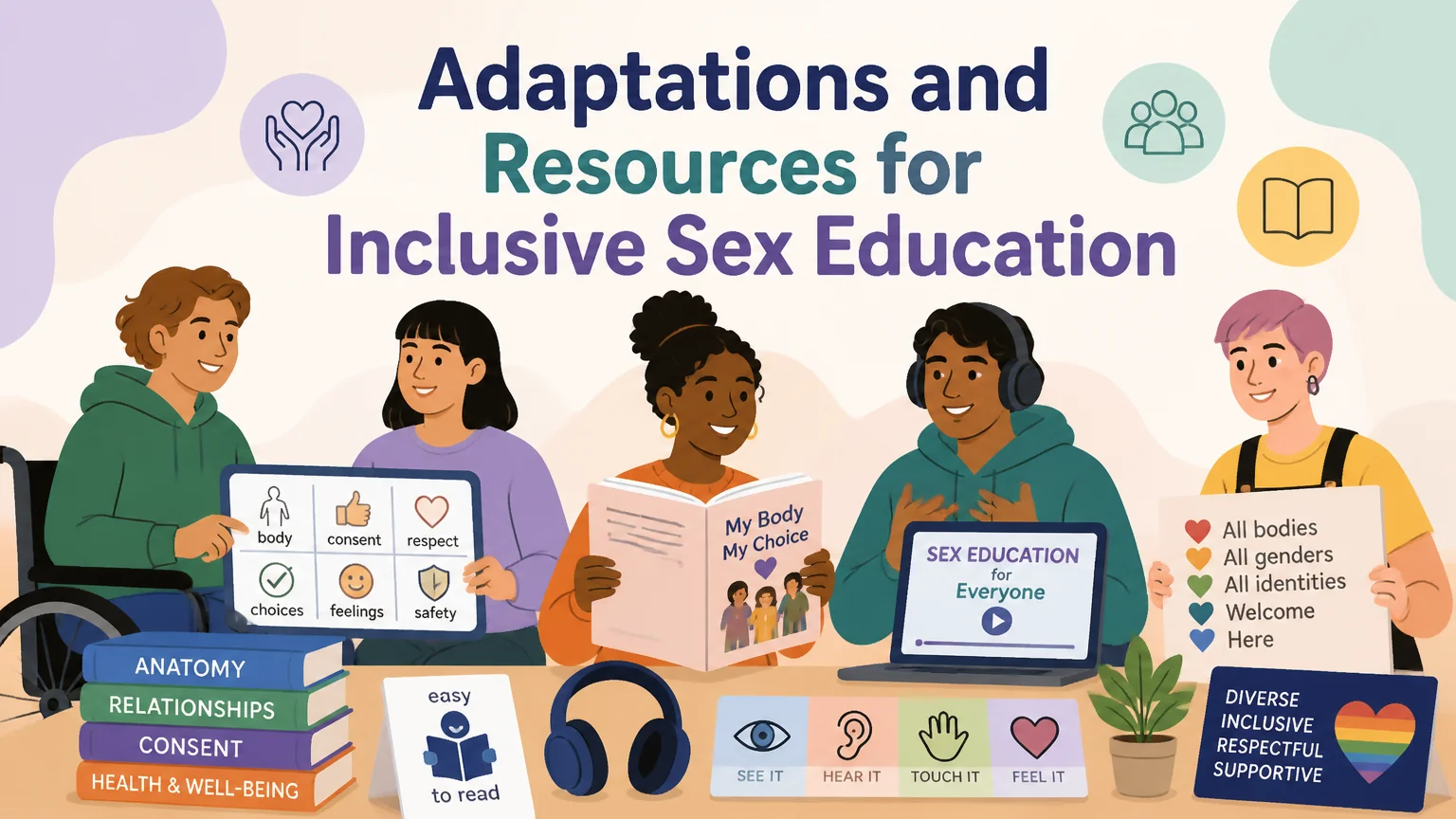
Adaptations and resources for inclusive sex education - sexuality asd disability
If you want to dive deeper into how to create inclusive sex education resources, consider exploring this comprehensive course on sexuality education for individuals with disabilities that will provide you with valuable insights and tools.
Education about the body, emotions, and relationships must be accessible and relevant to every student. When it is adapted to the context and needs of different groups, it not only improves understanding but also protects physical and emotional health. An inclusive approach recognizes the diversity of bodies, identities, abilities, and experiences, and seeks to provide practical tools for making informed and safe decisions.
Before selecting materials or activities, it is important to be guided by clear principles: accessibility, respect, cultural relevance, clear language, and active participation. Accessibility means that information is delivered through various sensory and cognitive channels; respect requires avoiding any stigmatizing language; cultural relevance takes into account family values and contexts; clear language facilitates understanding; and active participation promotes meaningful learning.
Using materials in alternative formats is essential. You can prepare guides in Braille, audio files with detailed descriptions, and structured text for screen readers. Verbal explanations should be clear and descriptive, avoiding reliance solely on images without descriptions. When using anatomical models, it is helpful to allow for tactile manipulation to understand shape, size, and function.
Providing captions for videos and transcripts is essential. Additionally, it is recommended to have sign language interpreters whenever possible and to use clear visual materials such as infographics, pictograms, and diagrams. In the classroom, maintaining eye contact, signaling rules, and using written aids to explain concepts enhances inclusion.
When there are difficulties with processing or comprehension, it is necessary to simplify language without infantilizing it, break down information into small steps, and use repetition and routines to facilitate retention. Practical and concrete activities, supported by pictograms and everyday examples, help transfer knowledge to real-life situations. It is also advisable to involve caregivers and families to reinforce learning outside the classroom.
Creating safe spaces where diverse pronouns, identities, and experiences are respected is key. Avoiding normative assumptions about bodies or relationships allows content to be addressed from multiple perspectives: anatomy and health for transgender people, violence prevention and consent in diverse relationships, and content that recognizes diverse families. Including testimonials and resources that represent different realities fosters empathy and reduces discrimination.
Multimodal materials: combine clear text, descriptive images, audio, and subtitled videos to cater to different learning styles.
Pictograms and step-by-step guides: useful for explaining intimate hygiene, contraceptive use, or red flags in relationships.
Tactile models: to explain anatomy to people with visual impairments or to those who learn best by handling objects.
Social stories and role-playing: help practice conversations about boundaries, consent, and seeking help.
Handouts and guides for families: provide guidance on how to support these processes and answer questions at home.
The method matters just as much as the content. Promoting participatory and collaborative activities allows each student to contribute based on their own experience. Small-group activities, with clear roles and adapted materials, facilitate expression and learning. Using open-ended questions and offering different ways to express oneself (orally, in writing, or through art) respects students’ preferences and abilities.
Assessment should measure functional understanding, not just memorization. It is recommended to use a variety of tools: observation, practical projects, portfolios, and guided interviews. Adjusting time limits, format, and criteria allows students to demonstrate what they know. It is important to document progress and challenges in order to adjust accommodations and coordinate with interdisciplinary teams as needed.
To implement high-quality accommodations, teachers need ongoing training in accessibility, inclusive language, and the use of alternative materials. Hands-on workshops, downloadable resources, and opportunities to exchange ideas with other schools enrich teaching practices. Likewise, involving families through talks and simple materials helps create consistency between school and home.
Before starting any unit, ask students about their access needs and preferences.
Always offer alternative versions of the same content (text, audio, visual, tactile).
Use non-stigmatizing language and allow people to choose how they describe themselves.
Ensure privacy and confidentiality in activities related to sexual and emotional health.
Continuously evaluate the effectiveness of accommodations and adjust them based on results and feedback.
Adapting sexuality education is not an extra—it is a necessity for guaranteeing rights and promoting safety and well-being. With clear principles, diverse materials, and flexible teaching strategies, we can reach every person while respecting their identity and abilities. Small adjustments to the design of activities and resources make a difference and contribute to safer, more informed environments for all communities.
Search
Popular searches