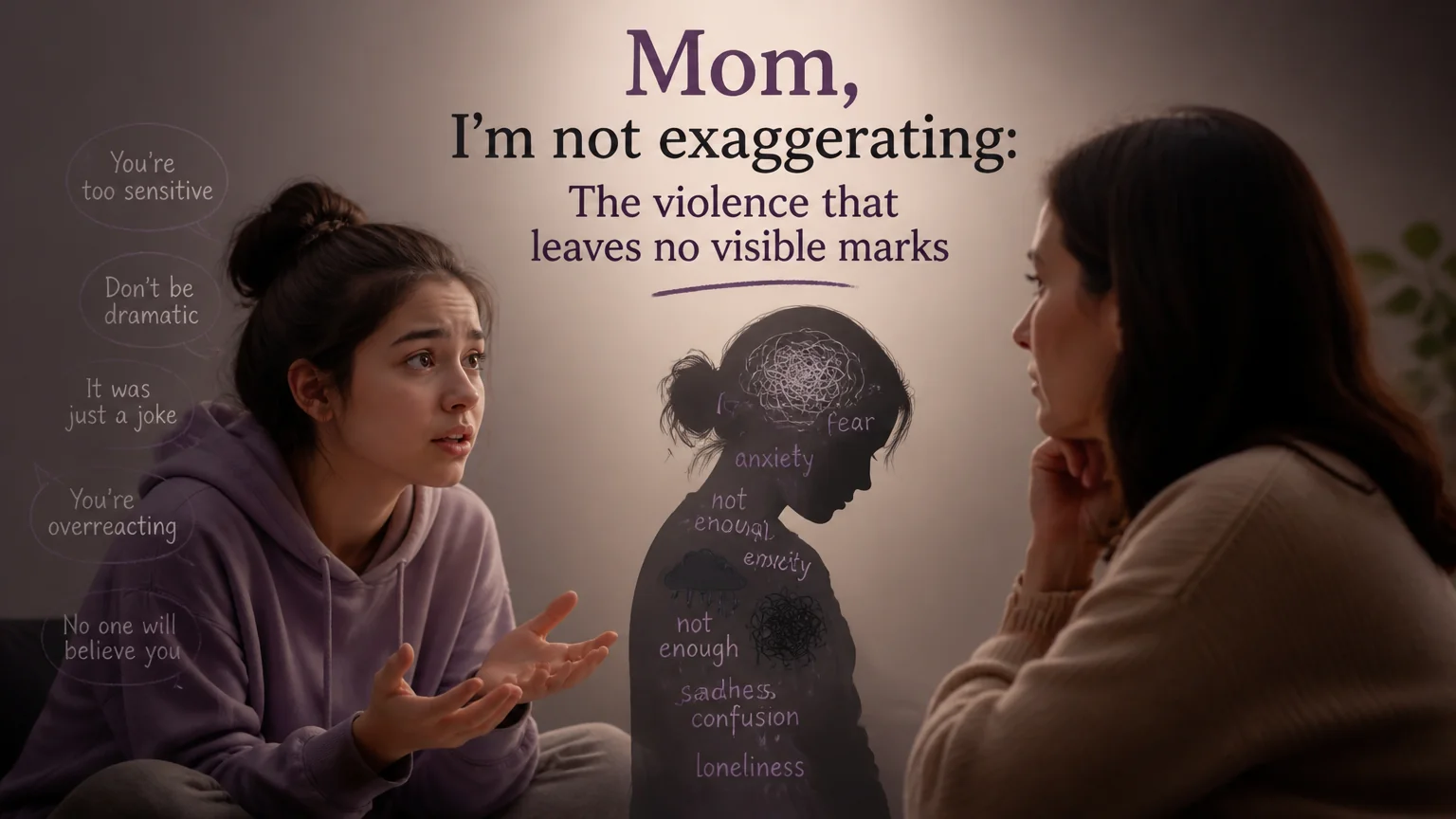
Mom, i'm not exaggerating: the violence that leaves no visible marks - violence psychology
Invisible violence often leaves profound emotional scars. If you wish to understand and address this subtle abuse, consider enrolling in this insightful course that examines psychological abuse and its numerous forms.
Often, when we talk about violence, the image that comes to mind is that of a blow, a visible wound, something tangible. However, there is a much more subtle, insidious, and, unfortunately, much more common form of violence: invisible violence. This violence leaves no physical marks, but it does leave deep scars on the soul. This article will explore what invisible violence is, its different manifestations, and how we can recognize and combat it.
What is Invisible Violence? Unraveling the Silence
Invisible violence encompasses a range of abusive behaviors that do not involve direct physical aggression. It is characterized by the use of power and control through psychological, emotional, economic, or social tactics. This form of violence can be perpetrated by a romantic partner, a family member, a boss, or even a friend. What makes it so dangerous is its ability to erode the victim's self-esteem, isolate them, and make them doubt their own perception of reality.
Common Forms of Invisible Violence: Beyond the Blows
Invisible violence can manifest in many ways, some of the most frequent include:
- Emotional Abuse: Constant criticism, public or private humiliation, insults, devaluing of feelings, emotional manipulation (such as gaslighting, which involves making the victim doubt their own sanity), emotional blackmail.
- Psychological Abuse: Threats (direct or veiled), intimidation, excessive control (of friendships, time, activities), social isolation, constant surveillance.
- Economic Abuse: Absolute control of money, prohibition from working, sabotage of job opportunities, incurring debt in the victim's name without their consent.
- Social Control: Isolation from friends and family, prohibition from participating in social activities, control over clothing or personal appearance, restriction of freedom of movement.
- Emotional Neglect: Ignoring the victim's emotional needs, lack of support, indifference to their feelings, minimizing their problems.
Psychological Impact of Invisible Violence: Scars You Can't See
Although it does not leave bruises or broken bones, invisible violence can have a devastating impact on the victim's mental and emotional health. Some of the most common consequences include:
- Low Self-Esteem: Constant criticism and devaluation erode self-confidence and one's sense of self-worth.
- Anxiety and Depression: Chronic stress and the feeling of being trapped in an abusive situation can trigger anxiety and depressive disorders.
- Post-Traumatic Stress Disorder (PTSD): In severe cases, invisible violence can cause PTSD, with symptoms such as flashbacks, nightmares, extreme anxiety, and difficulty concentrating.
- Social Isolation: Control and manipulation can lead the victim to withdraw from friends and family, which worsens their vulnerability.
- Difficulty Trusting Others: Betrayal and abuse of trust can make it difficult for the victim to form healthy relationships in the future.
- Feelings of Guilt and Shame: The victim may feel guilty for not being able to "fix" the situation or ashamed of being a victim of abuse.
- Somatization: Emotional stress can manifest through physical symptoms such as headaches, digestive problems, chronic fatigue, and sleep disturbances.
Recognizing Invisible Violence: Warning Signs
It is crucial to learn to recognize the warning signs of invisible violence, both in ourselves and in those around us. Some signs that you may be a victim of invisible violence include:
- Feeling constantly criticized or devalued.
- Doubting your own perception of reality.
- Feeling isolated from your friends and family.
- Being afraid to express your opinions or feelings.
- Feeling controlled or constantly monitored.
- Having low self-esteem and a sense of hopelessness.
- Experiencing unexplained physical symptoms (headaches, digestive problems, fatigue).
How to Seek Help: Breaking the Circle of Silence
If you recognize yourself in any of these situations, it is essential to seek professional help. You are not alone. There are resources available to help you break the cycle of invisible violence and reclaim your life. Some important steps include:
- Talk to someone you trust: Sharing your experience with a friend, family member, or counselor can be an important first step to breaking the silence and getting support.
- Seek professional therapy: A trained therapist can help you understand the dynamics of the abuse, process your emotions, and develop strategies to protect yourself.
- Contact specialized organizations: There are organizations that offer legal, emotional, and practical support to victims of domestic violence and psychological abuse. Look for resources in your community or at the national level.
- Set clear boundaries: Learning to set healthy boundaries is essential to protect yourself from manipulation and control.
- Prioritize your well-being: Make time for activities that make you feel good about yourself and help you regain your self-esteem.
 For Onlinecourses55
|
2026-10-11
For Onlinecourses55
|
2026-10-11