For Onlinecourses55
|
2026-05-23
For Onlinecourses55
|
2026-05-23

Couples therapy for young couples tips that work - couples therapy training
Consider the long-term benefits of early intervention in your relationship. Our proactive couples training course helps you address issues before they escalate.
When a relationship is just starting out or is still relatively new, it's easy to let small cracks slip by hoping they will close on their own. However, intervening early can prevent those conflicts from taking root. Seeking professional support doesn't mean the relationship is doomed; many couples find that an unbiased third party helps them see patterns they don't perceive from within. In addition, therapy offers practical tools to communicate better, negotiate expectations, and strengthen emotional intimacy before problems escalate.
The first sessions are usually devoted to getting to know each other: the therapist asks about the couple's history, expectations, goals and current dynamics. The aim is not to find fault, but to identify patterns. It is normal to feel nervousness and resistance; a good therapist creates a safe space for both partners to talk without interruptions and to feel heard. Concrete goals and exercises to work on outside the office are also agreed upon, as well as the frequency of sessions.
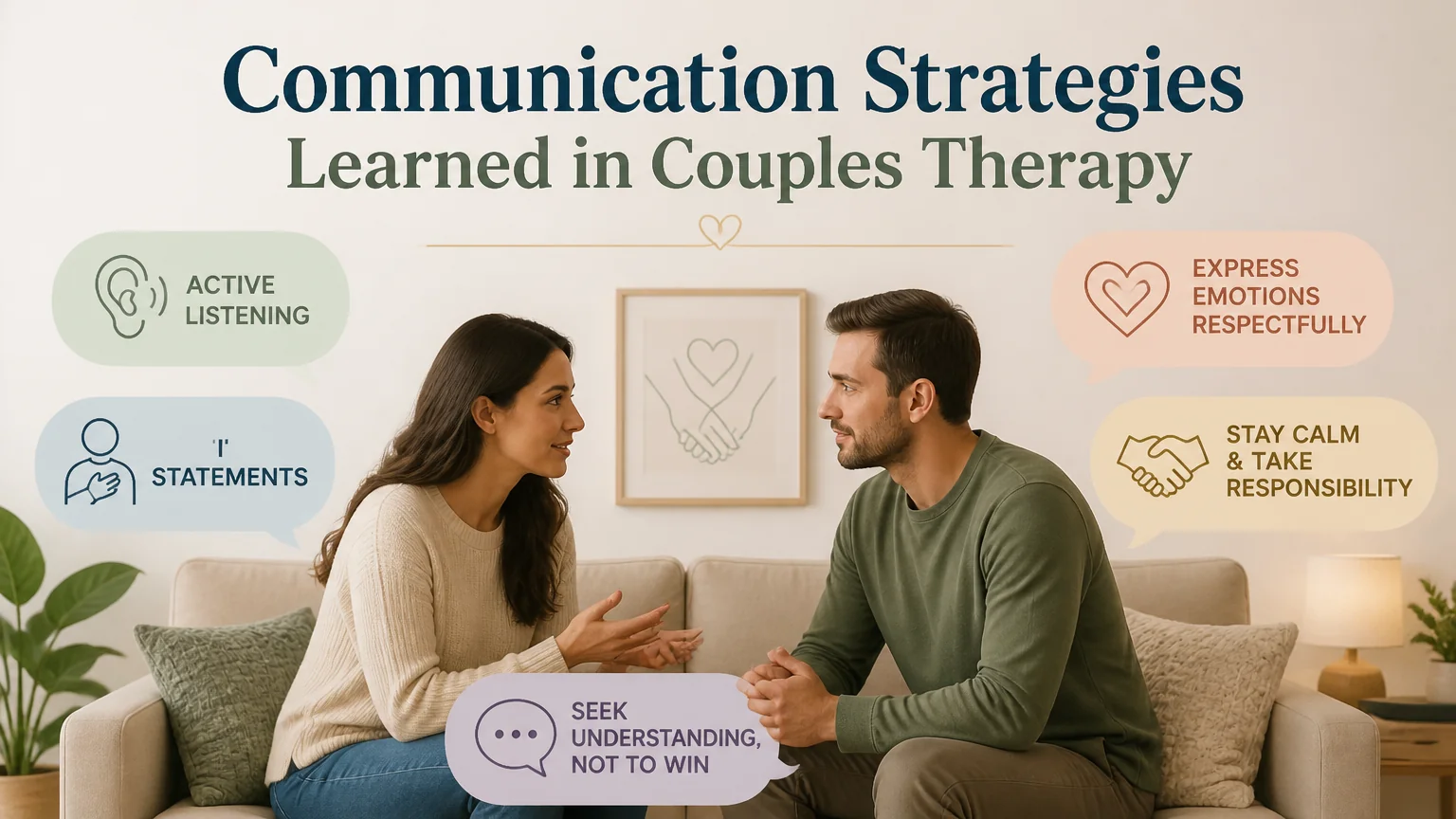
It's not just about talking more, but about talking more clearly and respectfully. Practicing first-person messages ("I feel", "I care") reduces defensiveness. Avoiding generalizations such as "always" or "never" helps the other person not feel attacked. It is also helpful to set up times to talk without interruptions, for example 20 minutes a day where one listens and the other shares without imposing solutions.
Establishing rules for discussions prevents them from escalating. Some effective rules are: no name-calling, no bringing up old issues, taking breaks if tension rises too high, and picking up the conversation again. Simple agreements such as using a gesture to ask for a pause or setting a maximum time to discuss a topic are practical tools. The idea is not to eliminate conflict, but to manage it carefully.
Sharing pleasurable activities strengthens the connection: cooking together, taking a walk or watching a series without cell phones. At the same time, maintaining personal boundaries-space for friends, hobbies and rest-prevents the relationship from suffocating. Respecting individual rhythms and negotiating times together and apart is an act of maturity that strengthens the couple.
Finding a professional with experience with couples and cultural or generational affinity can make a big difference. It is advisable to ask about the therapeutic approach (e.g., emotion-focused therapy, cognitive-behavioral therapy, or attachment-based therapy) and whether they work with young couples or couples at similar stages. Trust and a sense of safety during the first session are key indicators: if you both feel listened to and respected, this is a good sign. It's okay to change therapists if the connection doesn't work.
Lasting change requires practice and continued attention. Turning skills learned in therapy-such as active listening or pausing discussions-into habits helps sustain improvements. Reviewing relationship goals from time to time, celebrating small accomplishments, and re-asking for support when new challenges arise are healthy couples practices. In addition, maintaining curiosity about each other and continuing to build shared projects nurtures the relationship.
Seeking professional help is an investment in the relationship and in individual well-being. For young couples, learning communication and conflict resolution tools early on can make a difference in the long run. Most important is the willingness to try, make mistakes and learn together: with consistency and adequate support, it is possible to transform tensions into opportunities for growth and deepen the emotional connection.