For Onlinecourses55
|
2026-07-22
For Onlinecourses55
|
2026-07-22

How to measure the impact of emotional intelligence on customer satisfaction - customer service emotional intelligence
Revolutionize how you measure emotional impact in your service with the advanced course on emotional dynamics in customer satisfaction, unlocking numerous opportunities for improvement.
Measuring how emotional intelligence influences customer satisfaction is not just a trend; it is a necessity for any organization seeking loyalty and referrals. The way employees manage their emotions and those of customers directly affects service perception, conflict resolution, and the likelihood that a customer will return or speak highly of the brand. Without proper measurement, companies operate blindly and miss opportunities for continuous improvement.
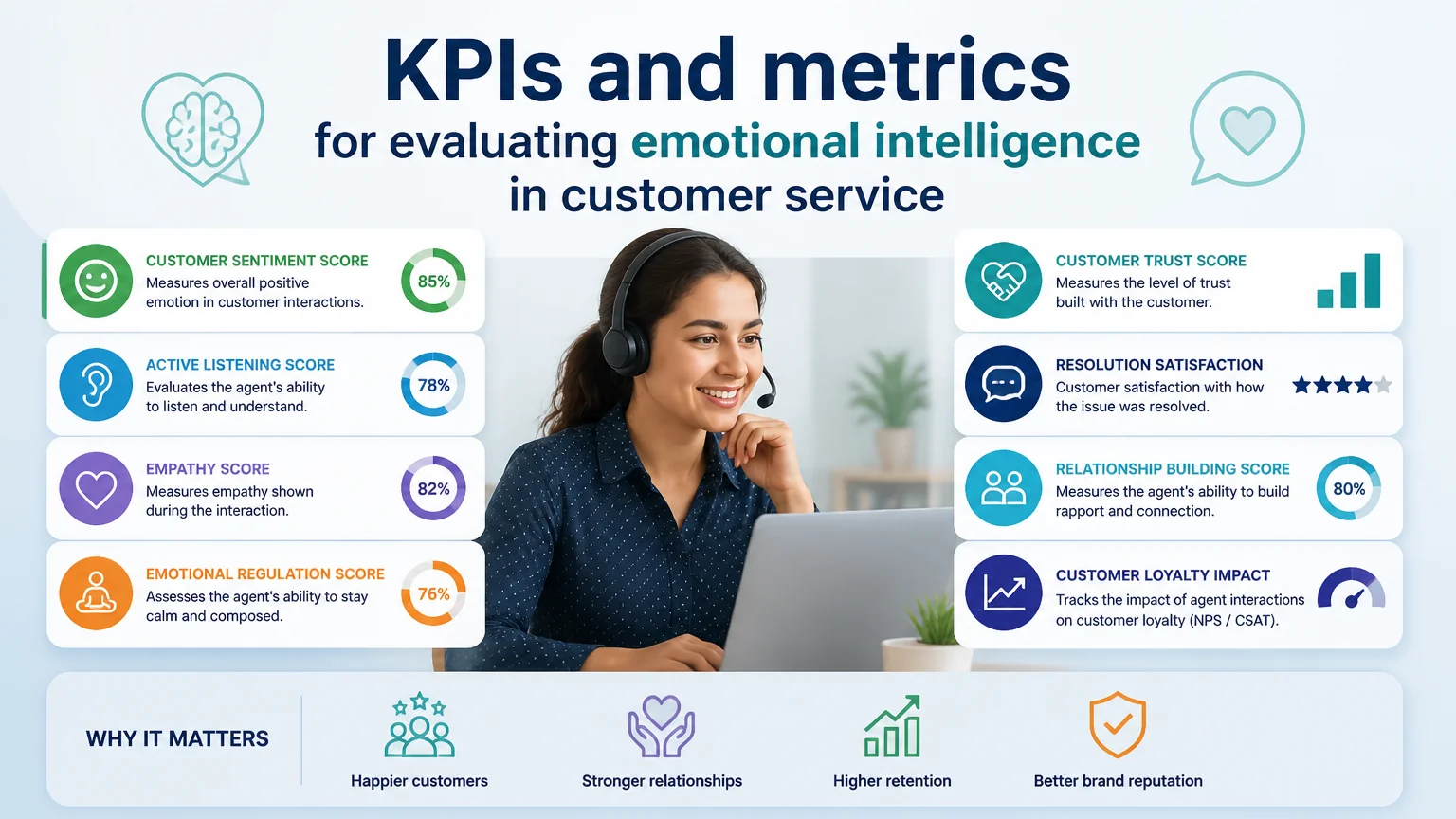
To obtain clear results, it is useful to define indicators that link emotional interaction and customer experience. There is no single perfect KPI, but a combination of quantitative and qualitative metrics can provide a robust view.
Numerical metrics must be complemented by techniques that explore the meaning behind the data. Qualitative methods allow us to understand how customers feel and why they make decisions following an interaction.
Speaking directly with customers helps identify key moments where emotional intelligence made a difference. Open-ended questions about feelings, expectations, and perceptions help reconstruct the emotional journey.
In a controlled setting, several customers can discuss similar experiences, making it easier to detect common emotional patterns, recurring language, and pain points that often trigger strong reactions.
Reviewing transcripts of calls, chats, and emails with a focus on tone, keywords, and emotional structure reveals how agents influence the customer’s state. This analysis can be manual or aided by tools that identify sentiments.
Quantitative metrics allow for comparing, prioritizing, and justifying investments in training or technology. It is key to collect consistent data and segment it to draw actionable conclusions.
Today, there are technological solutions that automate much of emotional measurement, but their effectiveness depends on proper implementation and human interpretation of the results.
These tools process large volumes of text and classify basic emotions (positive, neutral, negative) or more specific emotions (frustration, joy, outrage). They are useful for detecting trends and patterns.
Integrating emotional indicators into the CRM allows you to link emotional states to the customer’s history and take personalized actions. For example, triggering proactive follow-ups after high-intensity negative interactions.
A clear dashboard that combines emotional and business KPIs helps managers make quick decisions. Visualizations showing trends over time and segmentation by product, channel, or agent are particularly valuable.
Measuring without acting is a waste of resources. Interpretation should focus on identifying causes and prioritizing solutions that generate impact. Not all signals require the same response.
A structured approach helps implement measurements in an orderly manner with measurable impact. Below is a practical guide that can be adapted to companies of different sizes.
Repeated patterns are observed across various companies: empathy reduces conflicts, quick and humane emotional management turns complaints into loyalty, and in some cases, customers value the feeling of being heard more than speed. Learning from real-world cases allows for refining actions.
For example, a call center that implemented active listening training saw its CSAT score rise while the number of follow-up calls decreased. Another case showed that the use of rigid scripts worsened emotional perception, so adapting scripts to allow for more human responses proved to be key.
Measuring the impact of emotional intelligence on satisfaction is not a one-time task, but an ongoing process that combines data, observation, and action. Starting with clear objectives, using a mix of quantitative and qualitative metrics, leveraging technology, and, above all, transforming findings into concrete improvements in service are the steps that make a difference.
By adopting this approach, the organization will not only improve satisfaction but also foster more authentic and lasting relationships with its customers, which will have a positive effect on business results and reputation.
Search
Popular searches