For Onlinecourses55
|
2026-09-05
For Onlinecourses55
|
2026-09-05

Active listening techniques for customer service teams - customer service emotional intelligence
Improve your active listening abilities by enrolling in the intriguing course focused on emotional awareness and rapport building, so you can create stronger connections with your customers.
In customer service, listening well is both an art and a technique. Active listening is not just about hearing the customer’s words, but about understanding their intent, their emotions, and the needs behind the message. When a team masters these skills, it improves problem-solving, reduces response times, and builds stronger relationships with users. Below are clear explanations, practical techniques, and specific exercises so that any customer service professional can incorporate active listening into their daily routine and measure its impact.
Active listening involves paying intentional and conscious attention to the customer, showing interest, and confirming understanding. It is not a passive skill: it requires engagement, appropriate questions, and feedback that demonstrates the agent truly understands the situation. In customer service contexts, active listening reduces misunderstandings, prevents repeated complaints, and increases satisfaction. Additionally, it allows for the identification of opportunities for improvement in processes and products by capturing details and nuances that superficial listening might overlook.
Maintaining focus on the interaction, free from internal or external distractions, is the first step. This involves silencing distractions, avoiding multitasking, and dedicating mental energy to the customer. Mindfulness makes it easier to pick up on tone of voice, pauses, and expressions that help better interpret the speaker’s emotional context.
Repeating what the customer has said in your own words and asking for confirmation helps validate the information. Paraphrasing shows that you are listening and allows you to correct misunderstandings immediately. Asking for clarification, rather than making assumptions, reduces errors and speeds up problem resolution.
The way things are said matters just as much as the content. Variations in tone, speed, and volume can indicate frustration, haste, or confusion. Paying attention to these cues allows you to adapt your response to calm, speed up, or elaborate as appropriate.
Open-ended questions encourage explanation and help uncover useful information that the customer would not provide with closed-ended questions. For example, asking "What has happened since you noticed the problem?" often yields relevant details that speed up the diagnosis.
Not being afraid of silence is a powerful technique. Pauses allow the client to finish their thoughts, reveal additional information, and feel that their message has been received. Avoiding the urge to fill every silence with words demonstrates confidence and respect for the communication process.
At the end of the interaction, providing a summary of the key points and next steps ensures that both parties share the same understanding. Confirmation can be simple: “So, what I’ll do now is…” This prevents rework and reduces the need for follow-up calls.
When dealing with an angry customer, the first step is to listen without interrupting and validate their experience. Phrases like “I understand that this has caused you inconvenience” help defuse tension. Validation does not mean automatically admitting fault; it is acknowledging the emotion to create a foundation for dialogue.
Showing empathy helps build connection and trust, but it’s also necessary to set boundaries when the conversation becomes abusive. Maintaining a professional tone, repeating key information, and proposing concrete solutions guides the interaction toward a resolution without giving in to aggression.
Incorporating brief, repeated exercises into the team’s routine improves active listening in a sustained way. Here are some useful activities that require little time and yield visible results.
Simulate calls or interactions in pairs using common and challenging scenarios. One member acts as the client, and the other practices active listening. At the end, specific feedback is provided on the use of paraphrasing, open-ended questions, and emotional management.
After a real interaction, the agent summarizes what they heard to a colleague acting as a supervisor. The colleague corrects omissions or misinterpretations, helping to refine the ability to extract essential information.
Spend five minutes before your shift practicing open-ended questions or paraphrasing with a colleague. Consistency in these micro-exercises leads to changes in how you automatically respond to customers.
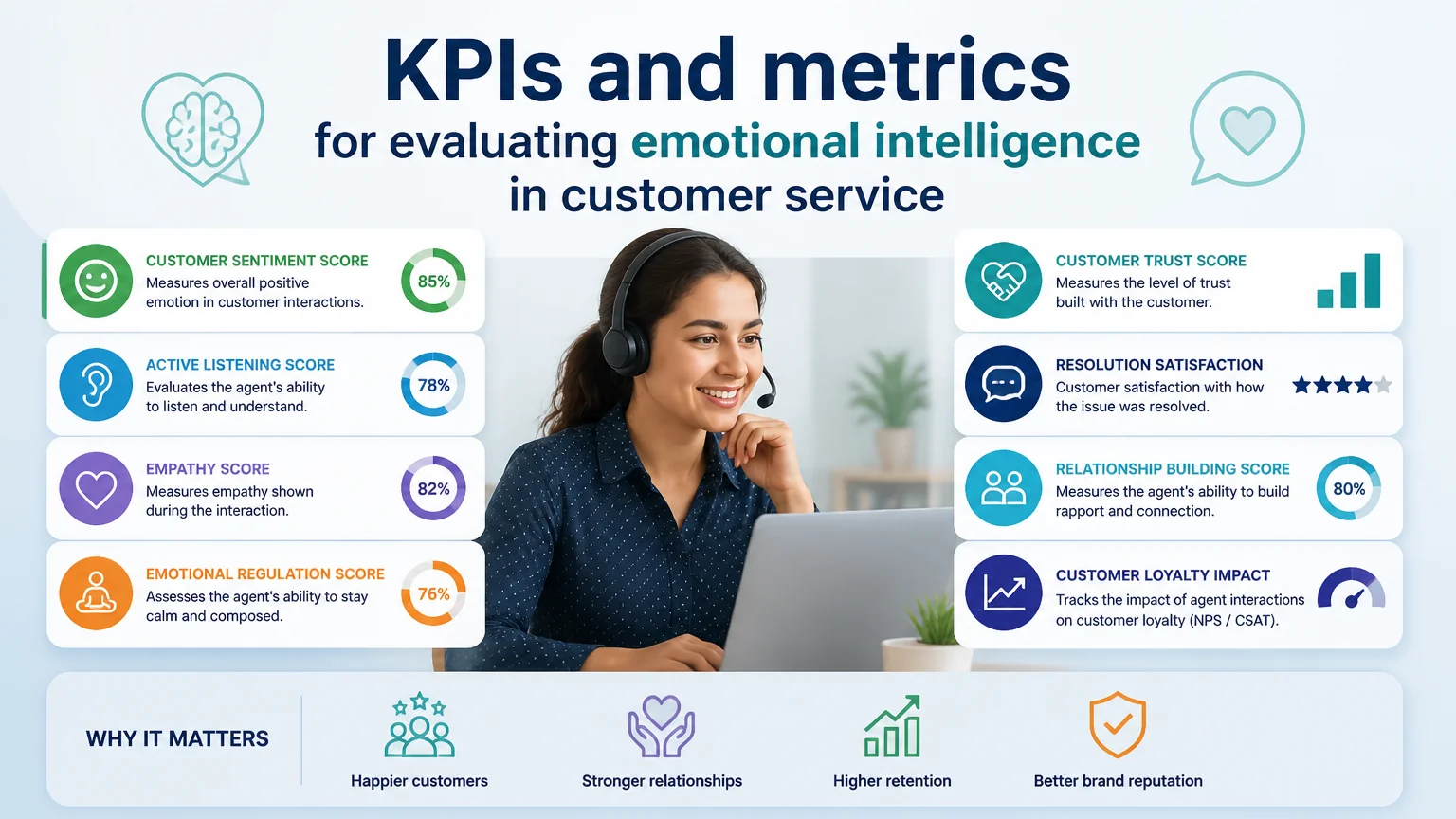
To evaluate the effectiveness of active listening, it is useful to combine quantitative and qualitative metrics. Indicators such as resolution time, callback rate, and NPS show measurable results, while reviewing recordings and quality surveys provide context on the perceived experience.
Implementing regular feedback sessions where specific cases are reviewed, best practices are shared, and improvements are recognized motivates the team. It is important that feedback be specific, action-oriented, and accompanied by support for practicing new behaviors.
Active listening is not a static skill: it requires practice, discipline, and a willingness to improve. By incorporating simple techniques such as paraphrasing, open-ended questions, and strategic pauses, customer service teams can transform tense interactions into efficient solutions and positive experiences. Regular exercises and clear metrics ensure that these improvements endure and translate into greater customer satisfaction and loyalty.
Search
Popular searches