For Onlinecourses55
|
2026-10-20
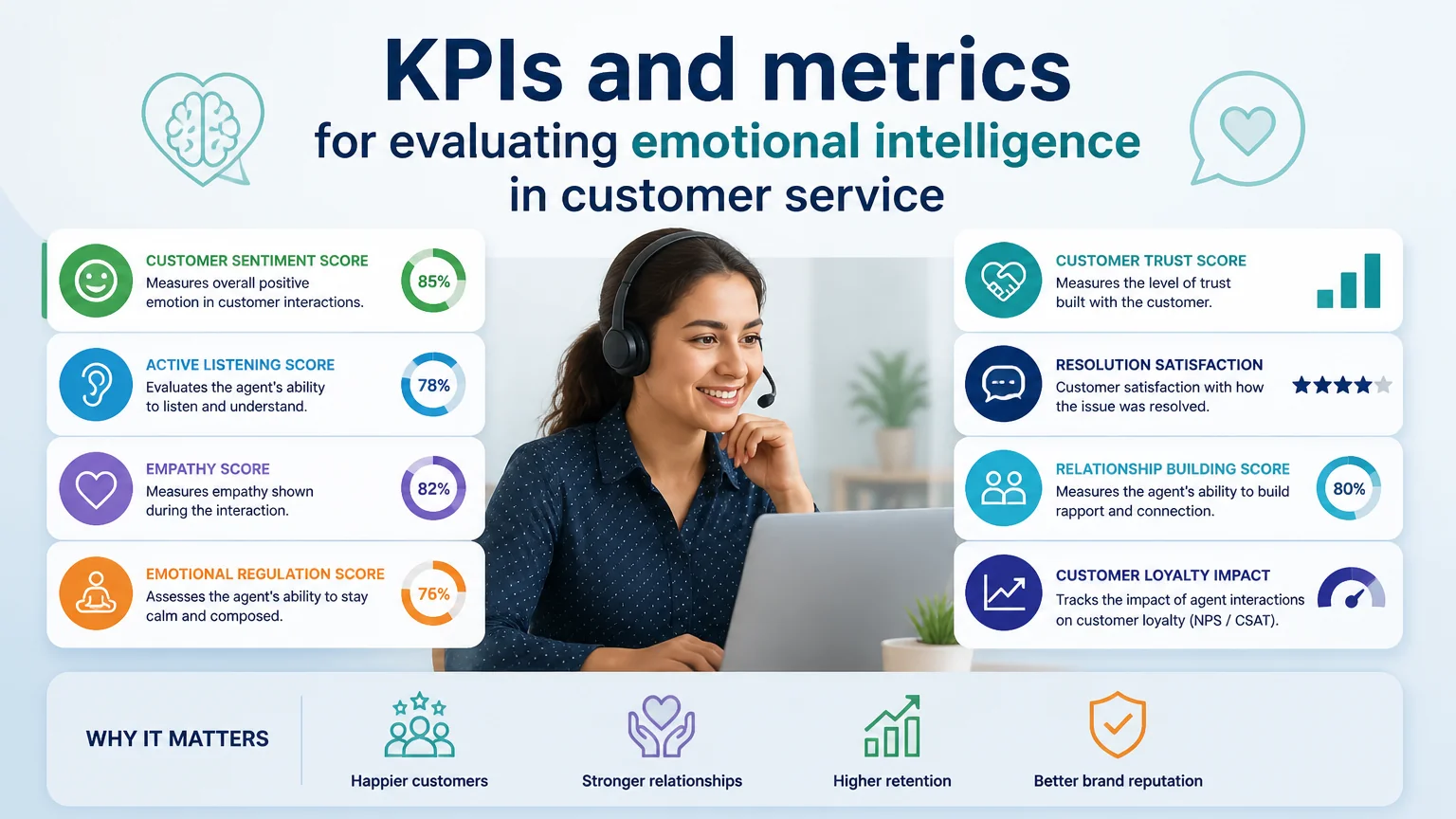
Kpis and metrics for evaluating emotional intelligence in customer service - customer service emotional intelligence
Assessing and enhancing emotional intelligence is crucial; get started with the practical course that guides you through effective measurement techniques, ensuring a high-quality customer experience.
Emotional intelligence in customer service teams is not an abstract concept: it translates into more empathetic conversations, more satisfied customers, and long-term relationships. Measuring it correctly allows you to adjust processes, training, and culture so that the human quality of service is tangible and can be improved. Below are practical criteria and actionable metrics that help evaluate and enhance emotional intelligence in every interaction.
Measuring this dimension helps identify gaps between what the company expects and what the customer actually experiences. Beyond times and numbers, it allows you to assess agents’ ability to read emotional states, adapt their language, and resolve conflicts while maintaining a positive relationship. When appropriate indicators are incorporated, empathy can be correlated with business metrics such as retention, repeat purchases, and recommendations.
Indicates how long it takes the team to resolve an inquiry, taking into account the quality of the interaction, not just speed. An optimal AHT combines technical efficiency with the time needed to manage emotions and ensure customer satisfaction.
First-contact resolution is crucial: when an agent resolves a problem on the first try and also achieves a positive emotional resolution, customer frustration is reduced. It is useful to track whether the resolution included elements of empathy and emotional validation.
More useful than an overall CSAT is segmenting it by emotional variables: questions that assess the feeling of being heard, the clarity of the explanation, and friendly treatment. This segmentation reveals whether technique or empathy has a greater influence on the experience.
The NPS can be enriched with short qualitative questions that explain the score: knowing whether the recommendation is motivated by a human touch or by operational efficiency helps prioritize actions.
Recurring escalations and recurring issues often indicate emotional failures in the original interaction: incomplete explanations, lack of validation, or poorly managed promises. Monitoring these rates allows us to identify agents or processes with emotional shortcomings.
Natural language processing helps identify tones, words of frustration, or relief. It is useful to combine these automated signals with human evaluations to calibrate sentiment interpretation according to the brand’s context.
Internal or external reviewers score interactions based on clear criteria: active listening, recognition of emotions, reassuring language, and positive closure. Creating a rubric with examples facilitates consistency and subsequent training.
Open-ended questions allow customers to explain how they felt. Qualitative analysis by category (treatment, clarity, speed, solutions offered, tone) reveals patterns that numerical KPIs do not show.
A practical dashboard includes: monthly FCR, quality-adjusted TMR, CSAT segmented by emotional dimension (treatment, listening, solution), percentage of interactions rated with high empathy (according to rubric), and escalation rate. Setting quarterly objectives and continuous improvement goals (e.g., increase the empathy score by X% in six months) facilitates tracking and accountability.
Correlating emotional indicators with churn, repeat purchases, or average ticket demonstrates their economic impact. Conduct cohort analyses to see how customers who reported high empathy behave over time compared to those who did not. These links make the investment in emotional training and measurement tools meaningful to management.
Assessing emotional intelligence in customer service requires a combination of quantitative KPIs and qualitative metrics, technological tools, and human judgment. With clear definitions, calibrated rubrics, and training and feedback cycles, it is possible to turn empathy into a measurable asset that improves the customer experience and business results. Implementing these practices incrementally and reviewing them with real data ensures sustainable and measurable improvements.
Search
Popular searches