For Onlinecourses55
|
2026-10-05
For Onlinecourses55
|
2026-10-05
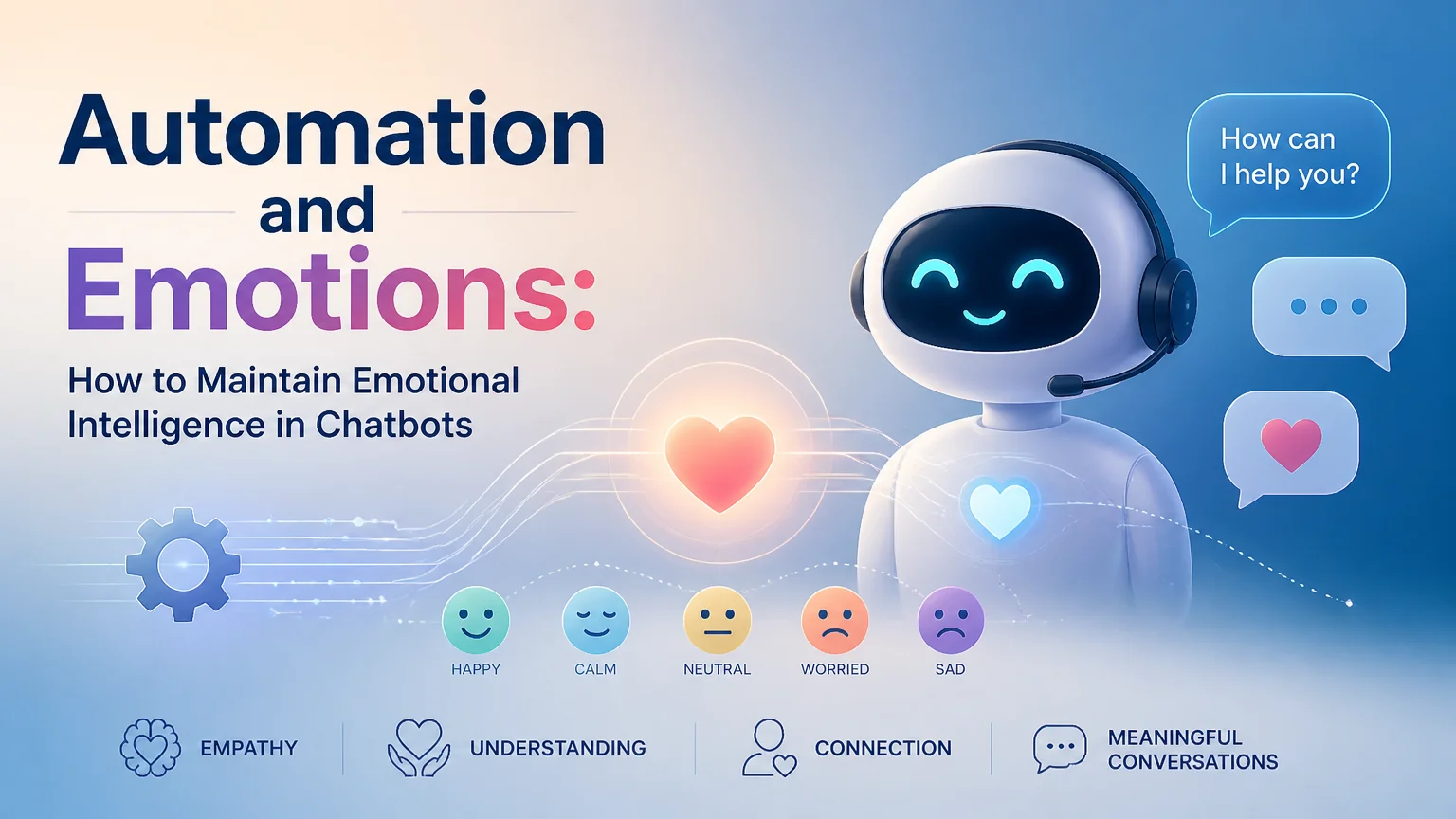
Automation and emotions: how to maintain emotional intelligence in chatbots - customer service emotional intelligence
Explore the nuances of effectively managing emotions in client engagements through the specialized training course in emotional intelligence, ensuring a more pleasant and successful customer experience.
In everyday interactions with automated systems, the way a machine recognizes and responds to human emotions makes the difference between a cold experience and a pleasant conversation. Emotional intelligence applied to assistants and chatbots does not seek to replace human empathy, but rather to complement it: allowing automation to interpret cues, regulate tone, and respond with sensitivity to resolve problems, alleviate frustrations, and guide decisions. Below, we explore practical approaches, limitations, and recommendations for maintaining emotionally intelligent behavior in conversational systems.
A user who feels understood tends to stay longer on the platform, complete processes, and recommend the service. When a system detects annoyance, confusion, or joy and adapts its response, it reduces friction and improves satisfaction. This is especially critical in sectors such as customer service, mental health, and education, where tone and understanding affect concrete outcomes.
The ability to respond thoughtfully helps build trust. Users perceive services that not only solve tasks but do so with emotional consistency as more trustworthy. That perception translates into loyalty and repeat usage—a valuable asset when automation competes with human or hybrid channels.
The first step is to detect the interlocutor’s emotional state using textual cues, conversational context, and, when available, additional data such as tone of voice or facial expressions. Sentiment analysis techniques and classification models must be combined with contextual rules to avoid false positives. It is important to prioritize accuracy in clear signals and adopt a conservative approach when emotion is not evident.
Once an emotion is identified, the system must adapt its tone: being calmer in the face of frustration, more concise in the face of impatience, and more enthusiastic in response to positive news. This is achieved through variable templates, control of detail level, and lexical selection. Maintaining naturalness involves avoiding rigid responses and making small variations that simulate human nuances without pretending to have feelings of its own.
Models learn from examples; therefore, the quality of emotional labeling is crucial. It is recommended to use human annotators with clear guidelines that define emotional categories and to conduct reviews to measure consistency. Avoiding ambiguity in labels and maintaining balanced datasets help reduce bias and improve generalization across different contexts and demographics.
When labeled data is lacking, the controlled generation of examples or the use of transfer techniques from related domains can be helpful. However, synthetic data must be validated through human testing to ensure it generates appropriate responses. Continuous adaptation using real user feedback is the best method for refining the system’s emotional behavior.
A system with good emotional intelligence has persuasive power; therefore, it is ethical to limit its use in contexts where manipulation could harm the user. Transparency regarding the agent’s automated nature and explicit limits on persuasive tactics help maintain responsible practices. Designing safeguards prevents simulated empathy from being used to induce uninformed decisions.
Models can amplify biases present in the data, resulting in inappropriate responses for certain groups. It is essential to audit and correct biases, and to handle emotional information with strict privacy policies. Sensitive data regarding mental health or mood requires explicit consent and additional protective measures.
Evaluation includes both quantitative metrics and human judgment. Usability tests, satisfaction surveys, and interviews allow us to capture nuances that automated metrics do not detect. Implementing A/B testing cycles with variations in tone and response strategies makes it easier to identify which approaches work best for different segments.
Metrics such as first-interaction resolution rate, retries, conversation duration, and NPS scores provide insights into the actual impact of emotional adaptation. Combining them with log analysis to identify recurring issues helps prioritize improvements and demonstrate the return on investment of investing in emotional intelligence.
Incorporating emotional intelligence into automated agents is neither a one-size-fits-all nor a static solution. It requires user-centered design, quality data, ethical boundaries, and continuous evaluation. The most effective approach is an iterative one: test, measure, learn, and adjust. With careful implementation focused on real user utility, automation can become more human in its service without sacrificing the efficiency that technology offers.