For Onlinecourses55
|
2026-02-03
For Onlinecourses55
|
2026-02-03

Online or in-person educational coaching course? advantages and disadvantages of each modality - educational coach
Educational coaching enhances various competencies, so joining a course focused on applying coaching principles in education will empower you to implement these strategies effectively.
Educational coaching is a support process that enhances learning, motivation and autonomy for students, teachers and leadership teams. Unlike purely theoretical training, it focuses on practice: powerful questions, active listening, goal setting, designing action plans and evaluating progress. A solid course teaches you models, tools and, above all, how to apply them ethically and contextually in the classroom, in tutorials or in institutional projects.
In a well-designed program you will see frameworks such as GROW, effective feedback conversations, emotional management in learning, growth mindset and habit design. Transversal competencies are also worked on: assertive communication, regulation of academic stress, conflict resolution and pedagogical leadership. The choice of modality greatly influences how these practices are experienced, the type of interaction with the trainer and the ease of transferring what you learned to day-to-day practice.
Learning from anywhere allows you to fit training into a demanding schedule. You can progress outside school hours, avoid commuting and use short breaks to watch lessons or complete exercises. In addition, you have access to trainers and communities from different countries, which enriches perspective with diverse cases and approaches. This diversity often translates into more applicable ideas and innovative perspectives to face common challenges in educational centers.
Many online courses combine video content, readings and asynchronous activities with live sessions. This mix allows you to pause, review and deepen where you need it most. Platforms include rubrics, quizzes and forums that offer immediate feedback. If the instructional design is solid, the experience becomes very learner-centered: optional pathways, case banks and staggered challenges for different experience levels (novices, tutors, guidance counselors, leadership teams).
The remote modality is usually less expensive than in-person due to savings on space, logistics and travel. It often includes digital libraries, downloadable templates, conversation guides and session recordings. That digital “toolbox” makes it easier to turn concepts into real practices with your students: goal sheets, learning journals, commitment contracts and checklists for classroom observation.
Without a physical schedule and a group waiting for you in a classroom, it is easier to postpone. The lack of structure can leave modules unfinished. To mitigate this, look for courses with a clear timeline, reminders, weekly mini deliverables and tutor support. Scheduling fixed blocks and studying in a distraction-free space makes a difference.
The screen can limit nuances of nonverbal communication and make it harder to practice complex role-plays. Choose programs that include small work rooms, peer observation, evaluation rubrics and personalized feedback from the trainer. The combination of recorded tasks and one-to-one review raises the quality of practice.
Unstable connections, poor microphones or cameras and unintuitive platforms reduce fluency. Before enrolling, check requirements, offer a technical trial and verify that there is agile support. A clear navigation map and updated mobile apps are signs of a well-maintained environment.
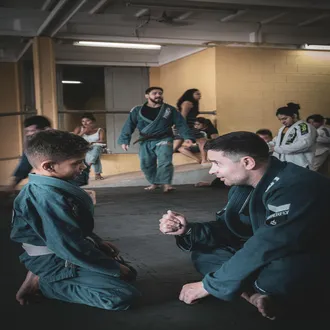
Sharing space enhances emotional connection, trust and reading of body language. In-person dynamics invite spontaneous participation and community building. In coaching, where presence and rapport matter, this closeness accelerates the learning curve.
Face-to-face simulations and role-plays allow adjustments to tone, silences and posture with immediate feedback from the trainer and peers. Experiential learning is also facilitated with group dynamics, coaching walks, conversation labs and direct classroom observation when the course takes place within an educational center.
Meeting professionals from your area opens doors to joint projects, mentorships and cross-visits between centers. This local network supports implementation: you are more likely to stay in contact to exchange materials, observe real sessions and sustain practice after the course.
The main barrier is logistical: rigid schedules, commuting and added costs (transportation, meals, substitute teachers). If the group is large, individual practice time can be diluted. Also, the diversity of approaches is usually lower than in international cohorts. To compensate, look for small groups, guaranteed supervised practice and digital support materials for the post-course period.
There is no universal answer: it depends on your goals, learning style and work context. Consider these factors before deciding:
The combination of key in-person meetings (for intensive practice and bonding) with online modules (for theory and follow-up) brings together the best of both worlds. It is especially effective for those who need flexibility without giving up supervised practice. If available, verify that the in-person parts focus on skills and that the online offers real feedback, not just canned content.
If you value flexibility, diversity of perspectives and extensive digital resources, the remote option fits very well. If your priority is intensive practice with presence, human connection and immediate feedback, the in-class option can accelerate your mastery. The hybrid alternative balances theory and practice when you need the best of both environments. The key is to align modality with goals, availability and real opportunities for supervised practice.
With an informed choice and a sustained practice plan, educational coaching becomes a transformative tool for learning, well-being and the culture of your center.