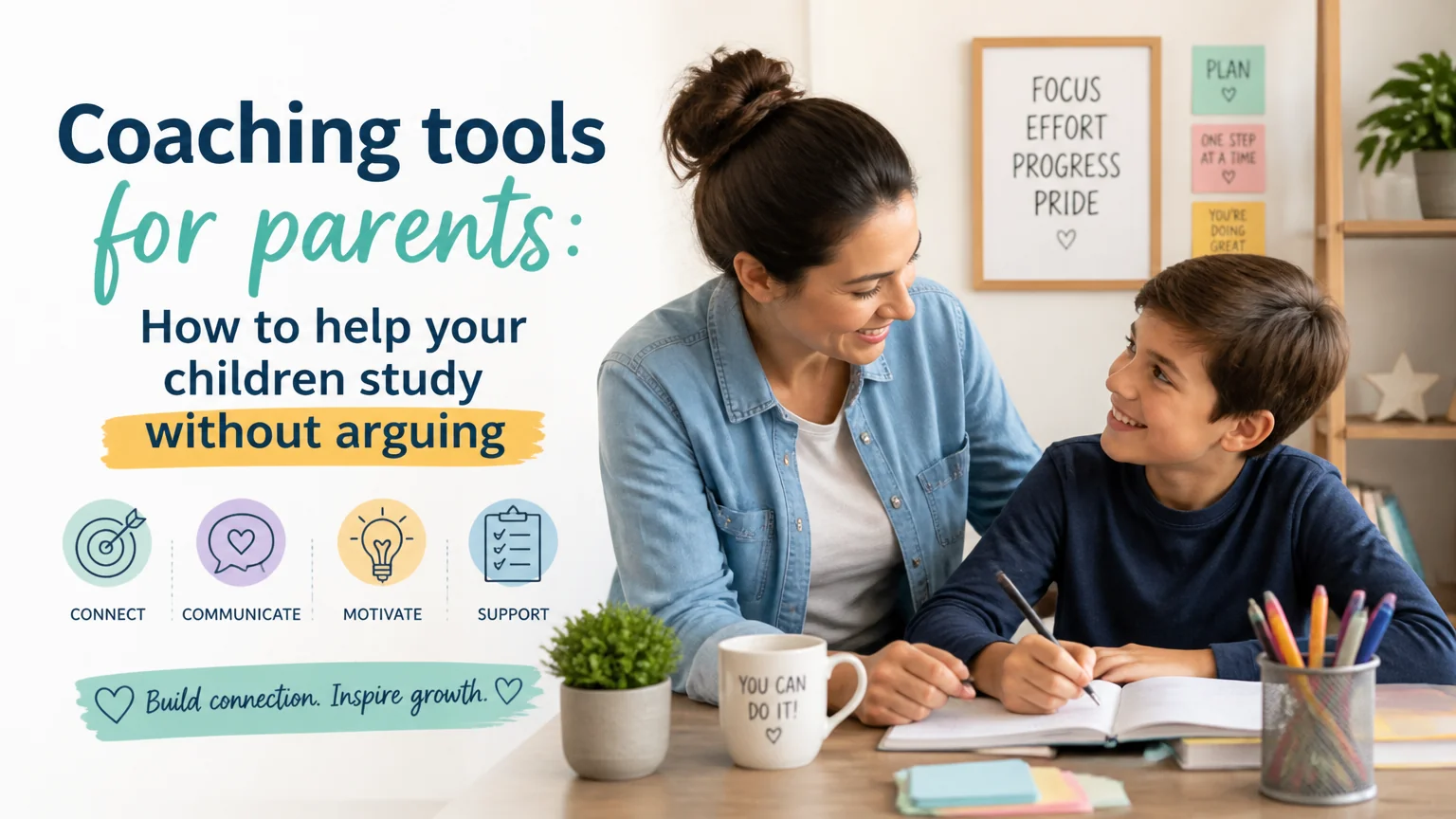
Emotional intelligence plays a pivotal role in student success; consider enhancing your capacities with a program in educational coaching for emotional awareness that fosters resilience and motivation.
The role of emotional intelligence in the classroom and beyond
Grades often tell almost everything, but they do not explain everything. Among formulas, dates and definitions, there is a silent layer that determines whether a student perseveres, asks when they do not understand, manages frustration, or recovers after a stumble. That layer is emotional intelligence: the ability to perceive, understand and regulate one’s own emotions and those of others. When cultivated, it turns effort into sustainable progress and pressure into focus; when absent, it multiplies stress and drains motivation.
Far from being a soft garnish, it influences how one studies, participates in class, works in teams and faces exams. It is not about 'feeling less', but about feeling better: recognizing what is happening inside and using it in favor of learning. There its silent power appears.
How it impacts cognitive processes
Attention, memory and comprehension
A scattered mind remembers little. Intense, poorly regulated emotions hijack attention and reduce working memory, which is key to solving problems and understanding complex texts. With good emotional management, the student gains clarity, prioritizes better and maintains focus long enough to encode and retrieve information. Calm is not the absence of challenge: it is directed energy.
Decision-making and self-regulation
Studying means deciding many times: what, when and how. Emotional self-regulation prevents impulse from dictating the agenda (procrastinating, giving up at the first failure) and favors goal-based decisions. It also reduces biases like the 'all-or-nothing' response to an error and allows adjusting strategy: stop, review, ask for help or change technique without sinking self-esteem.
Essential components that make the difference
- Self-awareness: putting a name to what is felt and detecting early signs of stress, apathy or enthusiasm. Without emotional language, the mind cannot intervene.
- Self-regulation: choosing useful responses to what is felt. Includes mindful breathing, brief pauses, planning and habits that prevent anxiety spikes.
- Motivation: connecting effort with a purpose. Not just 'wanting to get a grade', but understanding why it matters and how each session brings you closer to the goal.
- Empathy: reading the group's climate, understanding points of view and adjusting communication. In collaborative work, it prevents misunderstandings and speeds up agreements.
- Social skills: asking for help, giving and receiving feedback, negotiating roles. Social competence reduces friction and frees up time for learning.
Practical signs in day-to-day life
When it is present
- Quick recovery after a poor result: analysis without dramatizing and an adjustment plan.
- Energy management: brief breaks, movement and prioritized sleep during exam periods.
- Clear communication with teachers and peers to resolve doubts and conflicts.
- Flexible self-discipline: a stable routine with margins for the unexpected.
- Sustained curiosity: questions aimed at understanding, not just passing.
When it's lacking
- Chronic procrastination and last-minute studying with anxiety peaks.
- Blocks in the face of errors: 'I'm no good at this' and abandonment of the difficult task.
- Recurring team conflicts due to poor communication or rigidity.
- Neglect of self-care: irregular sleep, chaotic eating, sedentary habits.
- Avoiding asking for help for fear of judgment or shame.
Concrete strategies for students
Micro-habits in class
- 10-second emotional check at the start: identify state (bored, tense, curious) and choose an intention ('listen for key ideas').
- 3-2-1 technique: at the end, write 3 key ideas, 2 questions and 1 next action. Anchors learning and reduces anxiety about what remains to be done.
- 4-2-6 breathing before participating or presenting: four seconds inhale, two hold, six exhale.
- Reframing the error: write what went wrong, what I learned and what I will do differently. Closes the emotional cycle.
Individual study and at home
- Design the context: clear desk, phone away, timer in sight. Emotion follows the environment.
- 40/10 blocks with a change of posture or a short walk. The body regulates the mind.
- Two-minute start ritual: organize materials, one deep breath and define the first small step.
- Study emotional journal: what I felt, what helped me, what I will do tomorrow. Feeds back into self-regulation.
What teachers and families can do
- Normalize error as information, not identity. Value the process and strategies, not just the result.
- Model regulation: say out loud how frustration or uncertainty is managed when solving a problem.
- Design assessments in stages: draft, feedback and final version. Reduces fear and improves learning.
- Teach emotional vocabulary and active listening in brief class dynamics.
- Establish pre-exam routines: guided review, spaced practice and sleep guidelines.
- Create safe channels to ask for help without stigma.
How to measure progress without extra exams
What is not measured fades. Evaluating emotional intelligence does not require complex tests; consistent and observable indicators that guide decisions are enough. The key is to look at processes and trends, not an isolated moment.
- Daily 1-10 scale of emotional clarity before and after studying. Goal: increasing stability.
- Recovery time after a setback (minutes or hours until resuming the plan).
- Frequency of planned breaks versus impulsive interruptions.
- Quality of team feedback: specific, respectful and with clear actions.
- Consistency of sleep and perceived energy during high-demand weeks.
Practical 30-day plan to consolidate it
- Days 1-7: emotional map. Record three study moments per day with predominant emotion, trigger and response. Choose one regulation technique.
- Days 8-14: environment architecture. Implement 40/10 blocks, eliminate distractors and add a start ritual. Practice 4-2-6 breathing before difficult tasks.
- Days 15-21: communication and feedback. Practice asking for specific help once per subject and offer constructive feedback in a group assignment.
- Days 22-30: positive stress. Simulate a timed mini-exam per subject, apply calming techniques and post-exercise reflection with a plan for improvement.
Long-term benefits beyond grades
School and university end; the ability to learn under pressure, collaborate with others and sustain motivation remains. Investing in emotional intelligence not only improves immediate performance, but creates an internal scaffold to face transitions, interviews, ambitious projects and uncertain stages without breaking.
- Resilience: ability to bounce back faster and better after failures.
- Autonomous learning: knowing how to identify needs, ask for resources and evaluate one's own progress.
- Quality relationships: support networks that boost academic and professional opportunities.
- Collaborative leadership: influence based on listening, clarity and shared responsibility.
- Sustainable well-being: balance between ambition and self-care that prevents burnout.
When emotions are integrated into study as allies, effort yields more, stress becomes manageable and goals stop depending on chance. That is the silent foundation that supports solid academic trajectories and, over time, careers and lives with purpose.
 For Onlinecourses55
|
2026-07-03
For Onlinecourses55
|
2026-07-03