For Onlinecourses55
|
2026-05-28
For Onlinecourses55
|
2026-05-28

Myths and facts about emotional nutrition - emotional nutrition
Embracing the concept of emotional connection with food is transformative, and you are invited to explore the insightful course that emphasizes understanding emotional eating's underlying motives for lasting change.
Emotional nutrition refers to the relationship between our emotions and the way we eat: why we choose certain foods, how our body and mind respond, and how food can influence our mood. It's not just what we put on our plate, but also the motives behind those choices and the internal signals we sometimes ignore. Understanding this concept helps to differentiate between physiological hunger and emotional hunger, and to build more conscious and sustainable habits.
Not all impulsive eating is a sign of a disorder. It is normal to resort to food as a comfort in moments of stress or sadness. What makes the difference is the frequency, the intensity, and whether the behavior prevents you from handling emotions in other ways. Identifying isolated episodes and offering compassion is often more helpful than harsh self-criticism.
Emotional eating is not a matter of willpower. It is influenced by biological, social and environmental factors: hormone levels, sleep patterns, family customs, food availability and emotional states. Labeling someone as weak is not only unfair, but also makes it difficult to seek effective and compassionate solutions.
Not necessarily. Emotional eating can involve high caloric choices, but it can also manifest in binge eating followed by restriction, in eating relatively neutral foods, or in sporadic episodes that do not significantly change weight. The impact on weight depends on the overall eating pattern, physical activity and metabolism.
Emotions and body are connected: stress activates the hypothalamic-pituitary-adrenal axis and can alter appetite; serotonin and dopamine influence the feeling of reward; sleep deprivation modifies hormones such as leptin and ghrelin. Thus emotional nutrition has both psychological and biological components and requires strategies that address both aspects.
Banning foods or labeling them as "bad" can increase their appeal and lead to more emotional episodes. A rigid restriction-based approach is often counterproductive because it generates hunger, frustration and feelings of loss of control. Instead of avoidance, it is more effective to learn to enjoy in moderation and to identify the internal cues that drive consumption.
Research shows that the relationship between emotions and eating is complex and multifactorial. Some realities to keep in mind:
Recognizing the difference is key to responding appropriately. Some signs that can help:
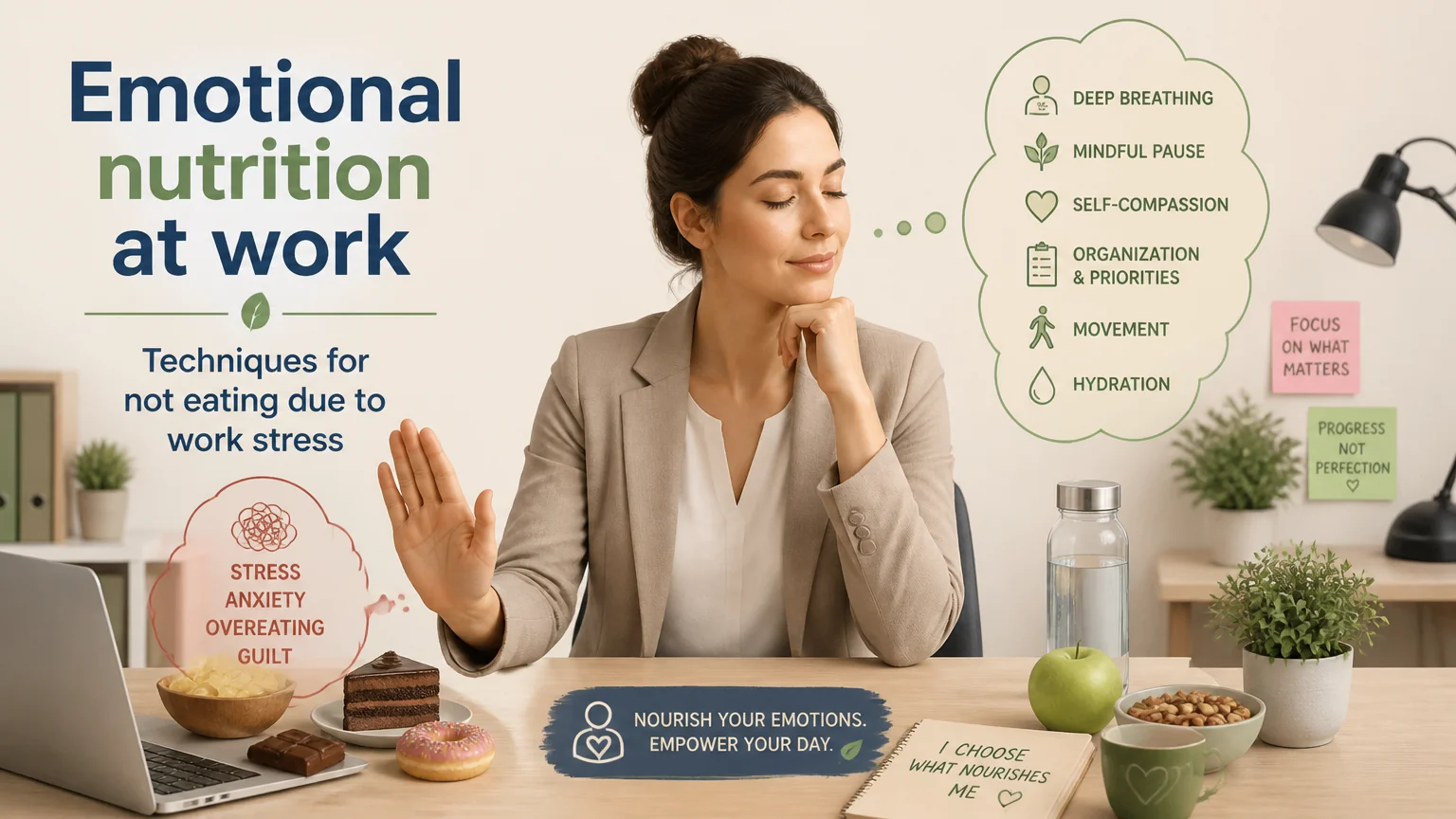
Practicing pauses of a few minutes before eating and asking oneself for the real reason can facilitate more conscious choices. Simple techniques such as drinking water, taking deep breaths or noting the emotion can reveal if it is really hunger.
There are concrete tools to help reduce impulsive episodes and improve the relationship with food:
If emotional eating significantly affects quality of life, physical health or self-esteem, professionals should be consulted. Some indicators to seek support include recurrent episodes of binge eating, intense feelings of guilt or shame after eating, social isolation due to fear of eating in front of others, or using food as the only way to manage emotions. A behavioral nutritionist, a psychologist specializing in eating disorders, or a therapist who works with emotional regulation can offer personalized strategies.
The goal is not to eliminate emotional eating altogether, but to reduce its frequency and improve the way we take care of ourselves. Small, sustainable changes are often more effective than radical transformations. Celebrating progress, being kind to setbacks and focusing on overall wellness - not just strict dietary rules - facilitates a healthier relationship with food and with oneself.
Emotional nutrition is a field where myths and realities coexist; understanding both allows you to act with greater clarity. It is not a matter of blaming oneself for eating in difficult moments, but of learning signals, expanding the repertoire of coping strategies and seeking help when necessary. With patience and the right tools, it is possible to build a relationship with food that nourishes both body and emotions.
Search
Popular searches