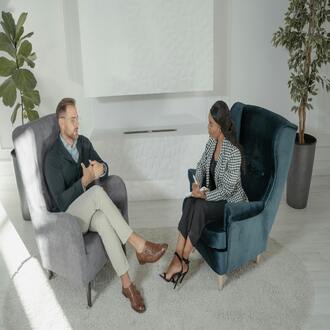
Body language and first impression: how to win the interview before speaking - job interview
You can enhance your interview performance by exploring our nonverbal communication techniques to create a great first impression and build rapport with interviewers.
There is an unwritten rule in hiring: "You're hired for your technical skills, but you're rejected for your behavior." Studies in psychology indicate that a large part of communication is nonverbal. In a job interview, your body shouts while your mouth barely whispers. From how you enter the door to how you sit, every micro-gesture is being evaluated, often unconsciously, by the recruiter.
In this in-depth article, based on the Nonverbal Communication Module of our course, we break down the secrets to projecting confidence, professionalism and empathy without saying a single word.
1. Unconscious Judgments: The First Seconds Count
Before you can say "Good morning," the interviewer has already formed an opinion about you. This is what we call the "Halo Effect." If the first impression is positive, they will tend to view your subsequent answers more favorably. If it is negative, you'll spend the rest of the interview trying to catch up.
- Visual Communication:Posture and presence: Slouching in conveys defeat; entering with the chin excessively high conveys arrogance. The balance is an upright posture, relaxed shoulders and a steady stride.
- Dress Code:Adapting to the context: You don't get a second chance at a first impression. Research the company's "dress code." In traditional sectors (banking, law), a suit is the norm. In startups, "business casual" is more appropriate. Safety rule: When in doubt, it's always better to dress slightly more formally than the average employee.
2. The Greeting and Arrival Ritual
The interview doesn't start in the office; it starts at reception. Being polite to security or reception staff is vital; many recruiters later ask: "How did the candidate behave while waiting?".
- In the Waiting Room:Avoid digital isolation: Hunching over and staring at your phone makes you appear anxious or disinterested. Sit upright, review your mental notes or simply observe the surroundings calmly.
- The Handshake:Firmness and warmth: It should be firm (without crushing bones) and dry. A sweaty hand (from nerves) or a "dead fish" (no strength) generates instinctive rejection.
- Eye Contact:The key to confidence: Look people in the eye when greeting and smile. A genuine smile is the most powerful tool to break the ice and show that you're someone they'd enjoy working with.
3. During the Interview: Managing Your Body
Once seated, your body must accompany your message. If you say "I'm very motivated" in a monotone voice with slumped shoulders, the verbal message is nullified.
- Posture in the Chair:Occupy your space: Sit up straight, using the backrest. Leaning slightly forward when the interviewer speaks demonstrates interest and active listening. Avoid reclining too far back (disinterest) or sitting on the edge of the chair (insecurity).
- The Hands:Communication tools: Use them to emphasize points, but don't over-gesture. Avoid hiding them: Keeping your hands visible (on the table or on your knees) is a psychological signal of honesty. Hiding them in your pockets or under the table creates distrust.
- Gestures to Avoid (Nervous Tics):Self-control: Constantly touching your hair or face, clicking a pen or moving your leg compulsively distracts the interviewer and screams "I'm nervous".
4. Building Rapport (Tuning In)
Ultimate success depends on human connection. The "Rapport" or "Mirroring" technique is subtle but effective.
- Subtle Synchronization:Adaptation: If the interviewer is energetic and quick, try to slightly match their energy. If they are calm and reflective, slow your pace. It's not about imitating, but tuning into frequencies.
- Active Listening:More than hearing: Nod occasionally to show understanding. Maintain eye contact (if there are multiple interviewers, distribute your gaze, but focus on the person who asked the question).
5. Hygiene and Final Details
Sometimes a perfect candidate loses the job because of a sensory detail.
- Smells and Perfumes:Neutrality: Avoid strong perfumes or overpowering colognes in enclosed spaces. Watch your breath (avoid coffee and tobacco right before).
- Visual Order:Minimalism: Don't arrive loaded with bags. Carry only a neat folder or briefcase. Pulling a wrinkled resume out of a messy backpack reflects poorly on your organizational skills.
Your body is your most honest calling card. Training your nonverbal language will give you the competitive edge when technical skills are matched.
 For Onlinecourses55
|
2025-12-08
For Onlinecourses55
|
2025-12-08