For Onlinecourses55
|
2025-12-21
For Onlinecourses55
|
2025-12-21

Icf-accredited life coaching course - life coaching
Are you searching for clarity in these tumultuous times? A well-structured coaching course might provide the insights and strategies you need to reclaim your sense of purpose and direction. Begin your transformative journey now!
In a constantly changing world with ever-increasing challenges, finding clarity, purpose, and direction in life can seem like a daunting task. That's where life coaching comes in. More than just simple advice or a shoulder to lean on, life coaching offers a structured and proven process for you to unlock your potential, achieve your goals, and live a more fulfilling and satisfying life.
If you feel lost, undecided, or simply want to give your life a boost, a life coaching course can be the ideal starting point. But with so many options available, how do you choose the right course? And why is accreditation by the ICF (International Coaching Federation) so important?
In this comprehensive guide, we will explore everything you need to know about ICF-accredited life coaching courses, from the benefits of becoming a certified coach to how to select the ideal program for you. Get ready to embark on a journey of self-discovery and transformation!
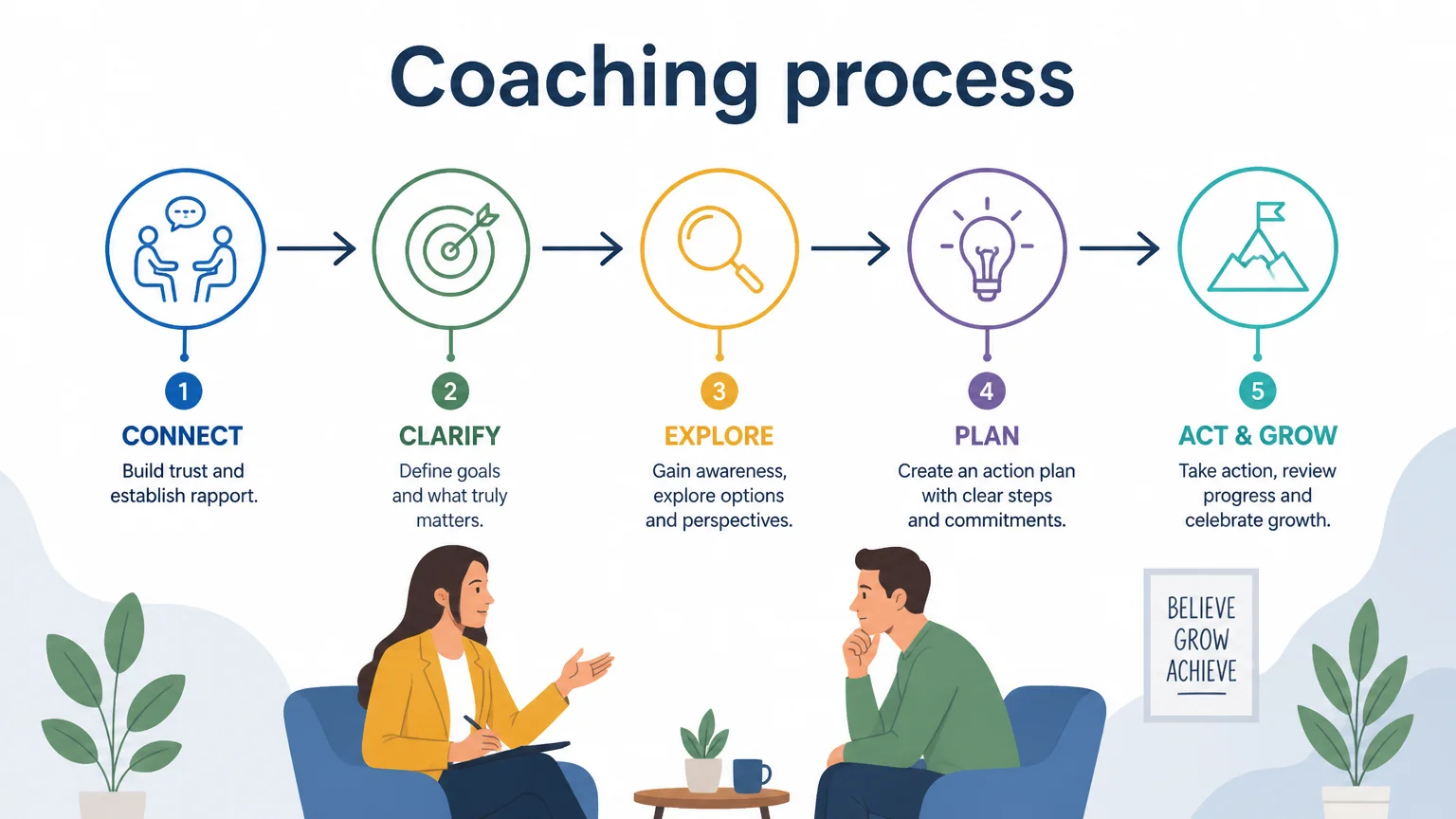
Life coaching is a collaborative process that seeks to help people identify their goals, overcome obstacles, and reach their full potential. Unlike therapy, which generally focuses on the past to resolve emotional problems, life coaching concentrates on the present and the future, empowering the client to create the life they desire.
A life coach acts as a facilitator, using proven techniques and tools to help the client to:
Define clear and achievable goals: Transform vague dreams into concrete action plans.
Identify and overcome limiting beliefs: Break negative thought patterns that hinder progress.
Develop self-confidence and resilience skills: Strengthen the ability to deal with challenges and adversity.
Take responsibility for their choices: Become the protagonist of their own life.
Improve personal and professional relationships: Build more meaningful and healthy connections.
The effectiveness of life coaching lies in its personalized approach and focus on the client's development as a whole. Instead of offering ready-made solutions, the coach empowers the client to find their own answers and chart their own path.
The ICF (International Coaching Federation) is the largest and most recognized coaching organization in the world. Its mission is to advance the coaching profession by setting standards of excellence and ensuring the ethics and quality of the services offered.
An ICF-accredited life coaching course has undergone a rigorous evaluation process and meets specific quality criteria regarding:
Curriculum: Comprehensive and up-to-date content, covering the core competencies of a professional coach.
Faculty: Qualified and experienced instructors, with relevant credentials in the coaching field.
Teaching methodology: A practical and interactive approach that allows students to apply the knowledge acquired.
Supervision: Individualized support to help students develop their coaching skills.
Ethics: Commitment to the ICF's ethical principles, ensuring confidentiality, integrity, and respect for clients.
By choosing an ICF-accredited life coaching course, you are guaranteed to be investing in high-quality training that will prepare you to act as a competent and ethical professional coach. Furthermore, ICF certification is a significant differentiator in the job market, increasing your chances of success in a coaching career.
Investing in an ICF-accredited life coaching course can bring countless benefits, for both your personal and professional life.
Self-knowledge: Discover your talents, passions, and life purpose.
Self-confidence: Strengthen your belief in yourself and your abilities.
Emotional intelligence: Learn to manage your emotions in a healthy and effective way.
Communication: Improve your communication and interpersonal relationship skills.
Leadership: Develop your ability to inspire and motivate other people.
Balance: Find a balance between your personal and professional life.
Fulfillment: Live a more fulfilling and satisfying life.
New career: Become a certified life coach and help other people transform their lives.
Professional development: Apply coaching skills in your field of work to improve your performance and achieve your goals.
Leadership: Use coaching to lead teams more effectively and inspiringly.
Entrepreneurship: Use coaching to develop your own business and achieve financial success.
Recognition: Obtain ICF certification and be recognized as a competent and ethical professional coach.
There are several types of ICF-accredited life coaching courses, each with its own characteristics and approaches. Some of the most common types include:
In-person courses: They offer the opportunity to learn and interact with other students and instructors in a classroom environment.
Online courses: They allow you to study at your own pace and schedule, from anywhere in the world.
Hybrid (blended) courses: They combine in-person and online classes, offering the best of both worlds.
Specialization courses: They focus on specific areas of coaching, such as career coaching, health coaching, relationship coaching, etc.
When choosing a course, it is important to consider your goals, your learning style, your budget, and your time availability. Research the different options available, compare the curricula, prices, and instructor credentials, and choose the program that best suits your needs and expectations.
With so many options available, choosing the ideal ICF-accredited life coaching course can seem like a challenging task. To make your decision easier, follow this step-by-step guide:
1. Define your goals: What do you hope to achieve with the course? Do you want to become a certified life coach? Do you want to apply coaching skills in your field of work? Or do you simply want to improve your communication and interpersonal relationship skills?
2. Research the available options: Check the ICF website to find a list of accredited coaching schools and programs. Read reviews and testimonials from students to get an idea of the quality of the courses.
3. Compare the curricula: Verify if the course covers the core competencies of a professional coach, such as active communication, empathetic listening, powerful questioning, goal planning, etc.
4. Analyze the faculty: Check the credentials and experience of the instructors. Make sure they are ICF-certified coaches and have practical experience in the coaching field.
5. Consider the teaching methodology: Does the course offer a practical and interactive approach? Does it allow you to practice coaching skills with other students? Does it offer individualized supervision?
6. Evaluate the price: Compare the prices of different courses and check if there are financing or scholarship options available.
7. Check the school's reputation: Research the school's reputation in the market. Check the ICF website and other sources to verify if the school has a history of quality and professional ethics.
8. Contact the school: Talk to school representatives to resolve your doubts and get more information about the course.
9. Visit the school (if possible): If the course is in-person, visit the school to see the facilities and talk to students.
10. Make your decision: After considering all the factors, choose the course that best suits your needs and expectations.
A successful life coach needs to master a series of core competencies that enable them to help their clients achieve their goals and live a more fulfilling and satisfying life. Some of the most important competencies include:
Active communication: Knowing how to listen attentively and understand the client's needs and goals.
Empathetic listening: Knowing how to put yourself in the client's shoes and understand their emotions and perspectives.
Powerful questioning: Knowing how to ask questions that challenge the client to reflect on their beliefs and behaviors.
Goal planning: Knowing how to help the client define clear and achievable goals and create an action plan to achieve them.
Constructive feedback: Knowing how to give feedback to the client honestly and respectfully, encouraging them to improve their performance.
Progress management: Knowing how to track the client's progress and adjust the action plan when necessary.
Professional ethics: Knowing and following the ICF's ethical principles, ensuring confidentiality, integrity, and respect for clients.
In addition to core competencies, a life coach also needs to know and master a variety of coaching tools and techniques that help them assist their clients in overcoming challenges and achieving their goals. Some of the most common tools and techniques include:
Wheel of Life: A visual tool that allows the client to assess their satisfaction in different areas of life, such as career, relationships, health, finances, etc.
SWOT Analysis: A tool that allows the client to identify their strengths, weaknesses, opportunities, and threats.
Creative visualization: A technique that allows the client to visualize their goals being achieved, increasing their motivation and confidence.
Positive affirmations: A technique that allows the client to replace limiting beliefs with empowering ones.
NLP (Neuro-Linguistic Programming): A set of techniques that allow the client to reprogram their thought and behavior patterns.
Mindfulness: A practice that allows the client to focus on the present moment, reducing stress and increasing mental clarity.
The job market for life coaches is constantly growing, driven by the increasing demand for personal and professional development. The opportunities are diverse, and coaches can work in different areas, such as:
Individual coaching: Serving clients individually, helping them achieve their personal and professional goals.
Group coaching: Leading group coaching sessions, helping participants learn from each other and support one another.
Organizational coaching: Working in companies and organizations, helping employees improve their performance and achieve their goals.
Conferences and workshops: Giving conferences and workshops on topics related to personal and professional development.
Consulting: Offering consulting services to companies and organizations, helping them improve their culture and results.
However, the job market for life coaches also presents some challenges, such as strong competition and the need to stand out from the crowd. To succeed in a coaching career, it is important to invest in your training, develop your marketing and networking skills, and build a strong and authentic personal brand.
If you want to become a successful life coach, follow these tips:
Invest in your training: Take an ICF-accredited life coaching course and continue to improve throughout your career.
Develop your marketing and networking skills: Learn to promote your services and build relationships with other professionals in the field.
Build your personal brand: Define your market niche, create a website and social media profiles, and share relevant and valuable content for your audience.
Offer a high-quality service: Be an attentive, ethical, and committed coach dedicated to your clients' success.
Ask for feedback: Request feedback from your clients and colleagues to identify your strengths and weaknesses and improve your performance.
Never stop learning: Stay up-to-date on the latest coaching trends and techniques.
Be passionate about what you do: Passion is fundamental for success in any area, and coaching is no different.
There are countless success stories of life coaches who are making a difference in the world, helping people transform their lives and achieve their goals. These stories can serve as inspiration for those who wish to pursue this career.
Research stories of life coaches who work in areas that interest you, such as career coaching, health coaching, relationship coaching, etc. Read their books, watch their videos, participate in their events, and learn from their experiences.
In summary, an ICF-accredited life coaching course is a valuable investment in your future and in the future of other people. It can transform your personal and professional life, empowering you to achieve your goals, live a more fulfilling and satisfying life, and help other people do the same.
If you are looking for a new career, a way to improve your leadership skills, or simply a way to give your life a boost, an ICF-accredited life coaching course may be the answer you were looking for.
Don't waste any more time! Invest in your training, become a certified life coach, and start making a difference in the world! Believe in your potential, follow your dreams, and chart the path to success!