For Onlinecourses55
|
2026-06-11
For Onlinecourses55
|
2026-06-11

Healthy vegetarian recipes - nutrition vegetarian
Are you eager to discover scrumptious vegetarian recipes? You can enhance your culinary skills through our course on the delightful world of vegetarian cooking that ensures you maintain a healthy eating lifestyle.
Hello to all healthy food lovers! Are you looking for new ways to nourish your body and delight your palate at the same time? If so, you've come to the right place! In this article, you will immerse yourself in the wonderful world of healthy vegetarian recipes, discover why they are an excellent choice, and we will provide you with delicious and easy-to-prepare ideas for every meal. Get ready for a culinary journey full of flavor and wellness!
Have you ever wondered why more and more people are adopting a vegetarian diet? It's not just a passing trend—there are compelling reasons for it!
A well-planned vegetarian diet can offer a number of health benefits. It reduces the risk of heart disease, type 2 diabetes, some types of cancer, and obesity. This is because vegetarian diets are usually low in saturated fat and cholesterol, and rich in fiber, vitamins, and minerals. It's like giving your body a superpower!
But it's not just about your personal health, it's also about the planet! Meat production has a significant environmental impact, from intensive use of natural resources to the emission of greenhouse gases. By opting for vegetarian recipes, you help reduce your ecological footprint and contribute to a more sustainable future. Isn't it great to be able to take care of yourself and the planet simultaneously?
It is often thought that vegetarian food is boring or limited, but nothing could be further from the truth! The options are endless and full of flavor. From colorful salads to comforting stews, and exotic curries, the vegetarian world opens up a range of culinary possibilities that will surprise you. Go ahead and experiment and discover new flavors!
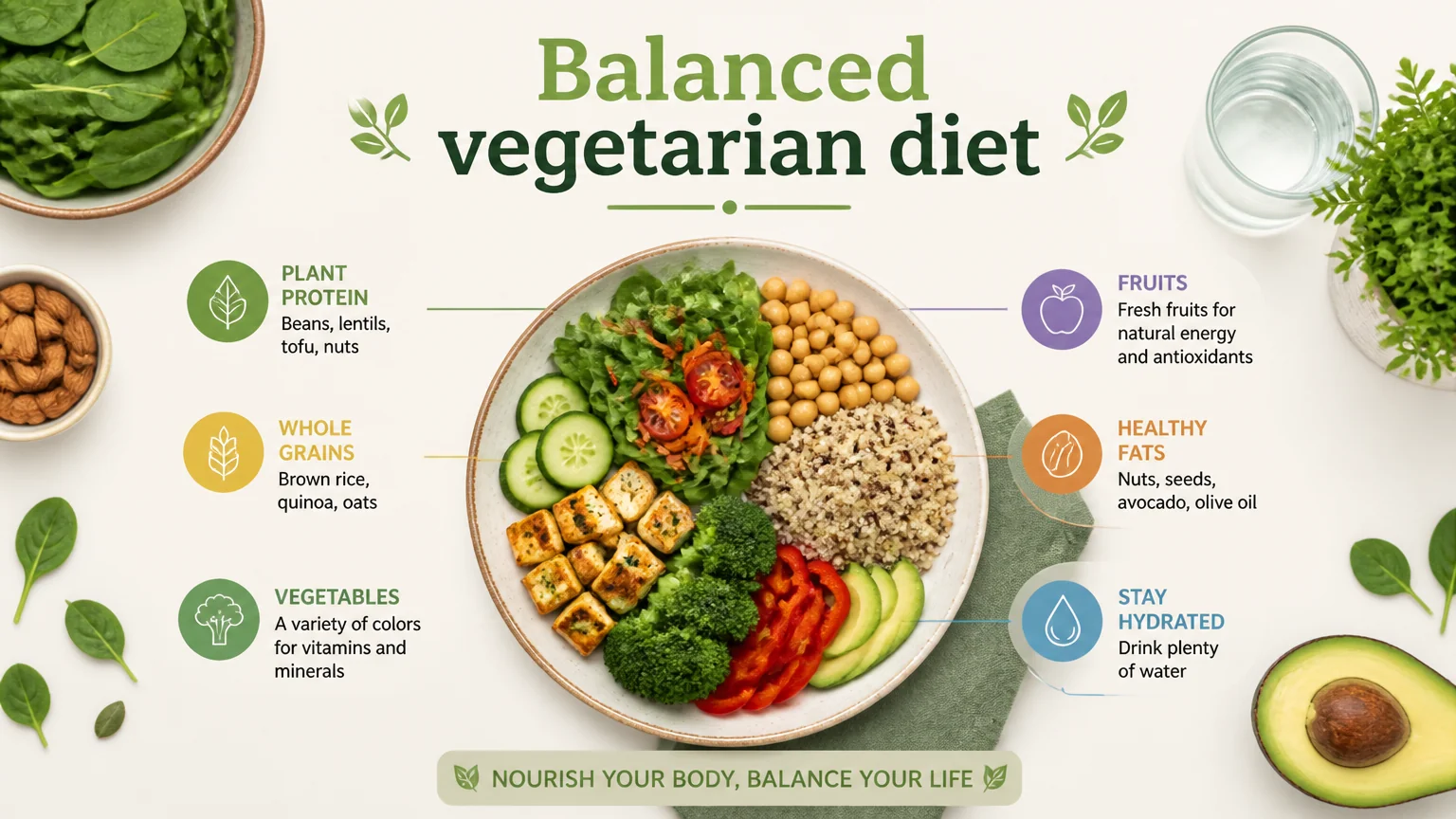
For a vegetarian diet to be truly healthy, it is essential to ensure you get all the necessary nutrients. Here are some key ingredients:
Proteins are essential for tissue building and repair. If you are vegetarian, don't worry, there are many sources of plant protein! Tofu, legumes (such as lentils, chickpeas, and beans), and seitan are excellent options. Include them in your daily meals to keep your muscles strong and your body in optimal condition.
Fats are necessary for vitamin absorption and proper brain function. However, it is important to choose healthy fats, such as those found in avocado, nuts (walnuts, almonds, etc.), and olive oil. These fats will help keep your heart healthy and your skin radiant.
Carbohydrates are the main source of energy for the body. Opt for complex carbohydrates, such as those found in whole grains (brown rice, quinoa, oats) and vegetables. These carbohydrates will provide sustained energy and help maintain stable blood sugar levels.
Now for the good stuff! Here are some delicious and easy-to-prepare vegetarian recipes for every meal of the day:
Start the day with a smoothie full of vitamins and energy. It's quick, easy, and delicious!
1 cup frozen fruit (berries, banana, mango, etc.)
1/2 cup plant milk (almond, soy, oat, etc.)
1 tablespoon chia seeds
1 teaspoon honey or maple syrup (optional)
A handful of spinach (optional, but you won't taste it!)
1. Place all ingredients in a blender.
2. Blend until smooth and creamy.
3. Pour into a glass and enjoy with a serving of homemade granola.
A complete, nutritious, and flavorful salad. Perfect for a light and energetic lunch!
1 cup cooked quinoa
1 red bell pepper, chopped
1 zucchini, chopped
1 red onion, chopped
1/2 cup black olives, pitted
1/4 cup vegan feta cheese (optional)
Dressing: olive oil, lemon juice, salt, and pepper to taste
1. Preheat the oven to 200°C (400°F).
2. Mix the peppers, zucchini, and red onion with olive oil, salt, and pepper.
3. Spread the vegetables on a baking sheet and roast for 20-25 minutes, or until tender and lightly golden.
4. In a large bowl, mix the cooked quinoa with the roasted vegetables, black olives, and vegan feta cheese (if using).
5. Dress with olive oil, lemon juice, salt, and pepper to taste.
A comforting and nutritious dish, perfect for a family dinner. It will warm your soul!
1 cup brown lentils
1 onion, chopped
2 carrots, chopped
2 cloves garlic, minced
1 green bell pepper, chopped
1 can crushed tomatoes
1 liter vegetable broth
Spices: sweet paprika, cumin, bay leaf, salt, and pepper to taste
Olive oil
1. Soak the lentils in water for at least 30 minutes.
2. In a large pot, sauté the onion, carrot, garlic, and green bell pepper in olive oil until tender.
3. Add the crushed tomatoes and spices and cook for a few minutes.
4. Drain the lentils and add them to the pot along with the vegetable broth.
5. Bring to a boil, then reduce the heat and simmer for about 45 minutes, or until the lentils are tender.
6. Serve hot.
It's not enough just to eat vegetables—you have to do it right! Here are some tips to ensure your vegetarian diet is truly healthy:
Planning your meals will help ensure you are getting all the necessary nutrients. Make a grocery list based on your weekly menus and avoid impulse purchases. Planning is the key to success!
Vitamin B12 is an essential nutrient found mainly in animal products. If you are vegetarian, it is important that you take a Vitamin B12 supplement to avoid deficiencies. You may also consider iron, calcium, and Vitamin D supplements if you are not getting enough of these nutrients through your diet.
Don't limit yourself to eating the same thing every time. Vary your meals and try new ingredients. The more varied your diet, the more likely you are to get all the nutrients you need. Explore, experiment, and have fun in the kitchen!
Do you have an important dinner or a celebration coming up? Don't worry! Here are some vegetarian recipes to surprise your guests:
An elegant and delicious tart, perfect for any occasion.
An exotic and flavorful dish that will transport you to India.
Starting a vegetarian diet can be exciting, but it is important to avoid some common mistakes:
Make sure to include enough sources of plant protein in your diet, such as tofu, legumes, and seitan.
Avoid relying too heavily on processed vegetarian foods, such as vegan burgers and sausages. Prioritize whole and natural foods.
Vary your meals and try new ingredients to ensure you get all the nutrients you need.
Do you want to learn more about healthy vegetarian cooking? Here are some additional resources:
Look for vegetarian cookbooks with easy-to-follow recipes that suit your tastes.
There are many websites and blogs that offer delicious and healthy vegetarian recipes. Explore and discover your favorites!
Congratulations! Now you have all the tools necessary to enjoy a healthy and delicious vegetarian diet. Remember that the key lies in planning, variety, and experimentation. Dare to try new recipes, discover new flavors, and take care of your health and the planet at the same time! Enjoy your vegetarian culinary journey!
1. Is it difficult to get enough protein on a vegetarian diet? No, it is not difficult to get enough protein on a vegetarian diet if you plan your meals and consume enough sources of plant protein such as tofu, legumes, seitan, and nuts.
2. Do I need to take a Vitamin B12 supplement if I am vegetarian? Yes, it is advisable to take a Vitamin B12 supplement if you are vegetarian, as this nutrient is primarily found in animal products.
3. Can I lose weight on a vegetarian diet? Yes, a well-planned vegetarian diet can help you lose weight, as it is generally low in saturated fat and high in fiber.
4. Which type of plant milk is the most nutritious? Soy milk is a good option because it is rich in protein. Almond milk is low in calories, and oat milk is rich in fiber. Choose the one that best suits your needs and preferences.
5. Is it expensive to eat vegetarian? Not necessarily. You can save money by buying ingredients in bulk, cooking at home, and taking advantage of seasonal offers. Legumes and whole grains are economical and nutritious options.
Search
Popular searches