For Onlinecourses55
|
2026-07-20
For Onlinecourses55
|
2026-07-20

Daily planning - productivity work life home
To truly master your time and enhance your output, consider the insights offered in a course about daily planning and effective time management techniques that can transform your approach.
Have you ever wondered how some people seem to achieve so much in a day while you struggle to keep up? The answer might lie in something as simple as daily planning. In this article, we will explore in depth what daily planning is, why it is crucial for success, how you can implement it effectively, and how to overcome common obstacles that may arise.
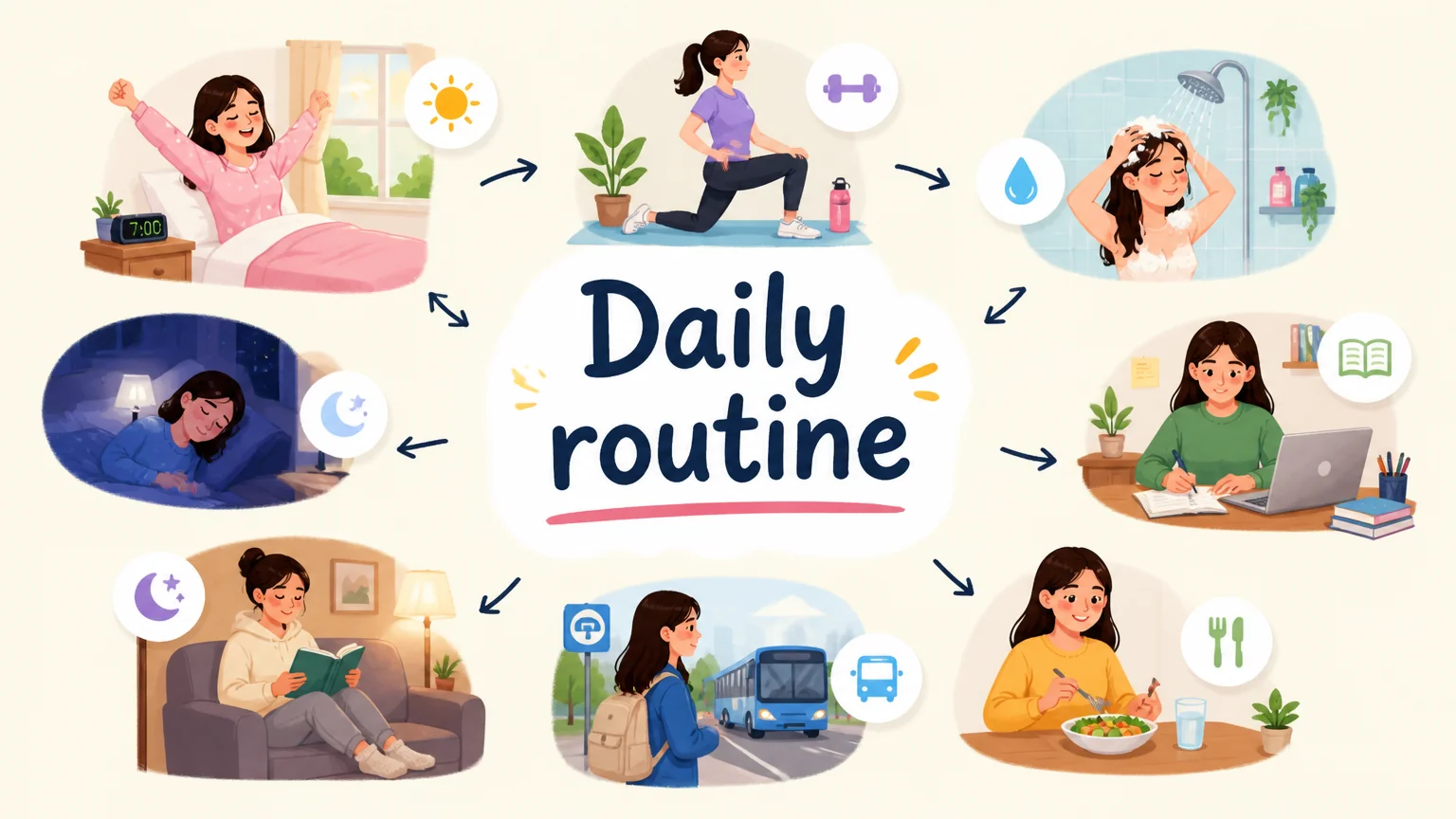
Daily planning is the act of organizing your tasks and activities for a specific day. It is a way to take control of your time and ensure you are investing your efforts in the things that truly matter.
Why should you care about this? Imagine you have an important trip. Would you get on the plane without knowing where you are going? Of course not! Daily planning is like having a map for your day. It helps you to:
Prioritize tasks: Identify what is most important and tackle it first.
Optimize your time: Avoid wasting time on meaningless activities.
Reduce stress: Have a clear vision of what you need to do.
Increase productivity: Achieve more in less time.
Achieve your goals: Accumulate small daily victories that bring you closer to your long-term objectives.
If you are not yet convinced, consider these additional benefits:
Greater clarity: When you plan, you force yourself to think about what you really want to achieve.
Better decision-making: You know which tasks are essential and which you can delegate or eliminate.
Less procrastination: When you have a plan, it is easier to start and stay focused.
Greater motivation: Seeing your progress motivates you to keep going.
Better balance: You can ensure you dedicate time to all important areas of your life (work, family, health, etc.).
The good news is you do not need sophisticated tools to get started. Here are some options:
Planner or notebook: The classic and simple way to write down your tasks.
Calendar apps: Google Calendar, Outlook Calendar, etc.
Task management apps: Todoist, Trello, Asana, etc.
The Eisenhower Matrix: Classify your tasks according to their urgency and importance.
The Pomodoro Technique: Work in focused time blocks with short breaks.
The 80/20 rule (Pareto Principle): Identify the 20% of tasks that generate 80% of the results.
Here is a practical guide to creating an effective daily plan:
1. Review your long-term goals: Make sure your daily tasks are aligned with your most important objectives.
2. Make a list of all tasks: Do not worry about the order or priority at this moment.
3. Prioritize your tasks: Use a technique like the Eisenhower Matrix to determine what is most important.
4. Assign time to each task: Be realistic about how much time each activity will take.
5. Schedule your tasks in your calendar: Block specific time for each task.
6. Leave room for unforeseen events: Do not plan every minute of your day.
7. Review and adjust your plan: At the end of the day, reflect on what worked and what did not, and adjust your plan for the next day.
Even with the best intentions, it is easy to make mistakes when planning. Here are some tips to avoid the most common ones:
Being too ambitious: Do not try to fit too many things into a single day.
Not prioritizing tasks: All tasks seem important, but some are more so than others.
Not leaving room for unforeseen events: Life happens.
Not being realistic about time: Overestimating or underestimating how long a task takes you.
Not reviewing or adjusting your plan: Planning is an ongoing process.
Even with a perfect plan, procrastination can creep in. Here are some strategies to combat it:
Break large tasks into smaller parts: Instead of feeling overwhelmed by a large project, focus on one small task at a time.
Eliminate distractions: Turn off notifications, close unnecessary tabs, and find a quiet place to work.
Set rewards: Give yourself a small prize for completing a difficult task.
Find an accountability partner: Ask a friend or colleague to help you stay on track.
Forgive yourself: If you get off track, do not beat yourself up. Just start again.
While planning is important, it is also crucial to be flexible. Life is full of surprises, and sometimes things do not go as planned. Instead of getting frustrated, adapt your plan as needed.
Learn to prioritize tasks on the go and adjust your schedule based on circumstances. Remember that the goal of daily planning is to help you be more productive and efficient, not to become a slave to your schedule.
For daily planning to be truly effective, it must be connected to your long-term goals. Ask yourself: how can I use my time today to get closer to my future objectives?
For example, if your goal is to write a book, schedule time each day to write, even if it is just for 30 minutes. If your goal is to improve your health, plan your meals and schedule time to exercise.
Daily planning is not only good for productivity, it is also excellent for your mental well-being. By having a plan, you reduce stress, anxiety, and the feeling of being overwhelmed.
Additionally, planning allows you to dedicate time to activities you enjoy, such as spending time with loved ones, practicing your hobbies, or simply relaxing. A balanced daily plan helps you maintain a more fulfilling and satisfying life.
Daily planning is not a magic solution, but it is a powerful tool that can transform your life. By making it a habit, you can take control of your time, increase your productivity, and achieve your goals.
Remember that consistency is key. Do not get discouraged if you do not see immediate results. Keep practicing and adjusting your plan until you find what works best for you. Over time, you will be surprised at how much you can achieve!
Daily planning is an investment in your future. It is the foundation for a more organized, productive, and meaningful life. It does not matter if you are a student, a professional, or an entrepreneur, daily planning can help you reach your full potential. So, what are you waiting for? Start planning your day today!
Search
Popular searches