For Onlinecourses55
|
2026-01-18
For Onlinecourses55
|
2026-01-18
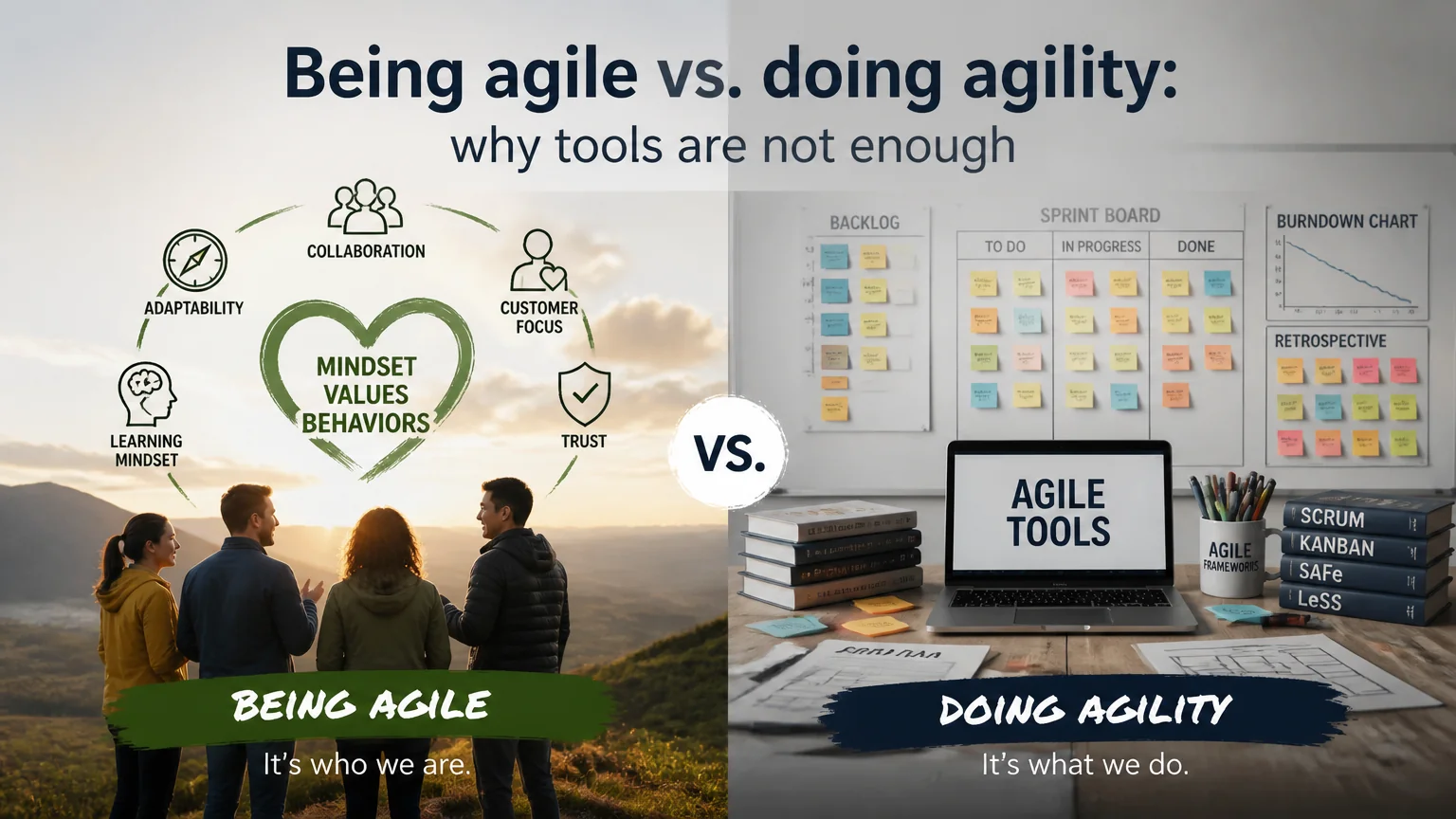
Being agile vs. doing agility: why tools are not enough - professional agile coach
To truly embrace the concept of agility and foster a cultural shift in your organization, you can start your journey by discovering the essential training for aspiring agile coaches who want to make a lasting impact.
In today’s fast-paced business world, the "agility" has become a mantra, an omnipresent buzzword. However, behind the proliferation of agile methodologies and tools, a crucial truth is hidden: It is not enough simply to do agile; it is imperative to be agile. This article unravels this fundamental distinction and explores how to transform your organization from the inside out, cultivating a genuine agile culture that drives innovation and sustainable growth.
When we talk about "doing agile", we refer to the implementation of specific agile frameworks and practices, such as Scrum, Kanban, or Lean. It involves adopting project management tools, holding daily stand-ups, creating sprints, and using visual boards. However, doing agile focuses primarily on the superficial implementation of processes, without necessarily changing the underlying mindset of teams and the organization.
The problem is that these tools alone do not guarantee real agility. An organization can follow all the steps of Scrum to the letter, but if team members do not understand the principles behind agility—such as collaboration, transparency, adapting to change, and continuous improvement—they will simply be following a process without gaining the real benefits.
Imagine a company that uses Scrum to develop software, but team members feel compelled to follow a rigid plan, with no room for experimentation or feedback. In this scenario, Scrum becomes a straitjacket rather than a tool for agility. The Scrum ceremonies are being "done", but the organization is not being agile in how it thinks, collaborates, and makes decisions.
Unlike "doing agile", being agile implies a deep transformation of organizational culture, based on the principles and values of the Agile Manifesto. It is about fostering a mindset that embraces change, experimentation, collaboration, transparency, and continuous improvement.
When an organization is agile, teams are empowered to make decisions, autonomy and accountability are encouraged, and an environment is created where learning and adaptation are valued. Continuous delivery of customer value is prioritized, and constant feedback is sought to improve products and services.
The transformation toward being agile requires a shift in leadership. Leaders must stop being controllers and become facilitators, coaches, and mentors. They must create an environment where teams feel safe to experiment, fail, and learn from their mistakes. They must promote transparency and open communication, and be willing to delegate decision-making.
The transition from "doing agile" to "being agile" is not an easy process, but the long-term benefits are significant:
The transformation to being agile is a continuous journey, not a destination. Here are some practical strategies to help your organization cultivate a genuine agile culture:
Search
Popular searches