Body type without hang-ups: tips to highlight your best features [no matter your shape] - professional personal image coach
Explore how to accentuate your uniqueness with the personalized guidance of an image expert to convey your best self in every situation.
A no-nonsense, objective approach to styling
The most flattering style isn’t about hiding anything, but about directing the eye toward what makes you unique. Clothing is a tool to communicate who you are and to feel comfortable in your own skin. Instead of obsessing over “fixing” your body, choose to enhance your strengths: perhaps your shoulders, your waist, your legs, your neckline, or your smile. When the focus shifts, the experience in front of the mirror shifts too.
Bringing out your best means understanding proportions, discovering cuts that suit you, and creating visual balance. This applies to any size, age, and height. There are no rigid rules: there are useful tricks you can adapt to your reality and your personal style.
How to recognize your silhouette without rigid labels
Measurement points and an honest mirror
- Look at shoulders, bust, waist, and hips. You don’t need exact measurements; look for relationships: which area appears wider or more defined?
- Stand in front of the mirror wearing fitted clothing or a plain T-shirt. Step back and notice where the eye lands first.
- Take a full-body photo. The camera reveals proportions the eye sometimes misses in motion.
- Identify two or three features you love about yourself. That will be your starting point for creating focus.
Common traits by silhouette (a flexible guide)
- Triangle: hips more pronounced than shoulders. Strengths: legs, glutes, waist.
- Inverted triangle: shoulders wider than hips. Strengths: back, arms, neckline.
- Hourglass: shoulders and hips similar, defined waist. Strengths: balanced curves.
- Rectangle: shoulders, waist, and hips in line. Strengths: athletic figure, minimalism.
- Oval: midsection more prominent. Strengths: bust, legs, face.
Remember: you can combine traits from several silhouettes. Use these descriptions as a map, not a cage.
Universal principles that flatter everyone
Proportion and balance
- 1:1 or 2:1 rule. Top and bottom in similar proportions, or one shorter and the other longer to lengthen the figure.
- Define a focal point. A defined waist, an interesting neckline, or striking shoes. One focal point per look works better than several competing.
- Structure where you need it. Slightly defined shoulders and garments with a clean drape clarify the silhouette.
Lines, volumes, and textures
- Vertical lines elongate; horizontal lines add stability. Use them strategically.
- Balanced volume: if you add fullness on top, go for something more fitted on the bottom, and vice versa.
- Structured fabrics sculpt; fluid fabrics move with you and soften.
Color and print as allies
- Monochrome streamlines and elongates. Tones close to each other do too.
- Dark and matte recede; light and shiny attract. Place the bold color on your strong point.
- Medium prints are the most versatile. Place them in the area you want to highlight.
Key tips by silhouette to enhance strengths
Triangle (pronounced hips)
- Top: subtly structured shoulders, boat necks, discreet ruffles. Light colors in tops.
- Bottom: straight or slightly flared pants, A-line skirts. Avoid bulky side pockets.
- Dresses: fit & flare styles that define the waist and open from there.
- Coats: straight or with shoulder structure; lengths below the hip.
Inverted triangle (pronounced shoulders)
- Top: V necklines, fluid fabrics, darker or neutral colors.
- Bottom: volume, pleats, prints, and bright colors to balance.
- Dresses: empire waist or skirts with flare.
- Coats: with a soft drape and without exaggerated shoulder pads.
Hourglass (defined waist)
- Top: wrap tops, fitted shirts, fabrics that follow the shape.
- Bottom: pencil, straight, bootcut; avoid excess volume if curves are already pronounced.
- Dresses: wrap, bodycon with good weight, midi that follows the body line.
- Coats: belt or back shaping to accentuate the waist.
Rectangle (straight line)
- Top: controlled volume, pockets, layers, asymmetrical necklines.
- Bottom: paper-bag waists, pleats, flared skirts to create shape.
- Dresses: with a waist seam or a belt to draw it in.
- Coats: belted or with shoulder structure and slightly fitted.
Oval (prominent midsection)
- Top: V or U necklines, fluid fabrics that don’t cling, vertical panels.
- Bottom: straight cuts, drapey fabrics, mid to high rises to lengthen legs.
- Dresses: empire waist, wrap styles, diagonal drapes.
- Coats: straight, without excess volume at the center, lengths that create a column.
Adjustments and details that make the difference
Necklines and sleeves
- A V-neck elongates the neck and centers the eye on the face and torso.
- A boat neck visually broadens the shoulders if you need it.
- Three-quarter sleeves streamline the arm and show the wrist (a delicate point).
Lengths and hems
- Pants hitting at the instep lengthen the leg; cropped with a pointed shoe compensates.
- A skirt just above or below the knee flatters almost everyone.
- Clean hems of the right thickness prevent unnecessary visual breaks.
Belts and rise
- A slim belt highlights the waist without shortening the torso.
- High rise lengthens legs; mid rise balances if you have a short torso.
- Avoid bunching fabric at the midsection: better darts, flat elastics, or strategic gathers.
Footwear and accessories
- Slightly pointed toes streamline; modest platforms add height without losing comfort.
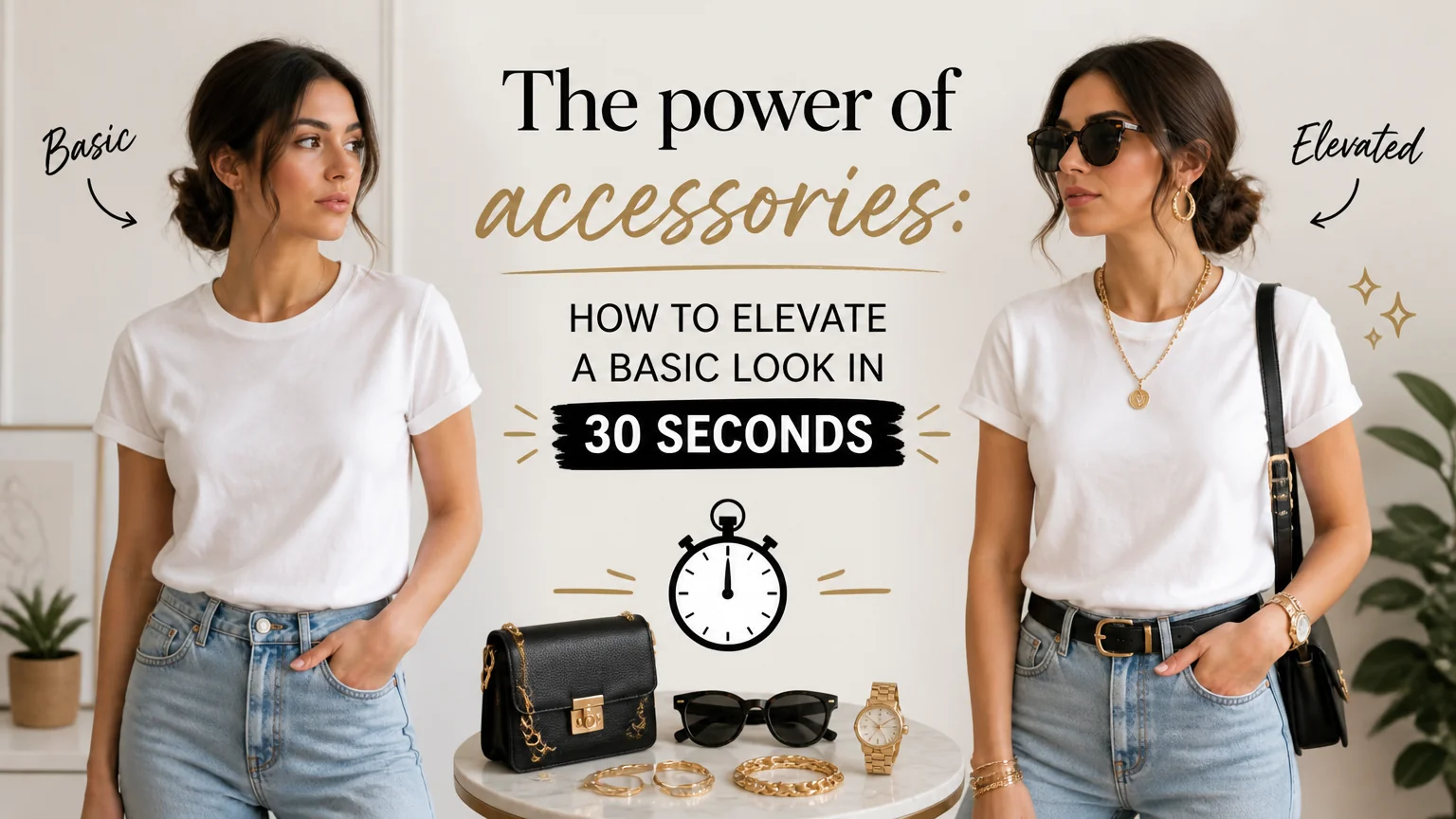
- Long necklaces create a vertical line; earrings draw attention to the face.
- Bags in proportion to your height: medium sizes are a safe bet.
Outfit formulas for everyday life
Work
- Structured blazer + V-neck blouse + straight pants + loafers. Balance and presence.
- Midi wrap dress + slim belt + mid-shaft ankle boots.
Casual
- Plain T-shirt front-tucked + bootcut jeans + clean sneakers.
- Light sweater over the shoulders + A-line skirt + comfortable sandal.
Event/party
- Jumpsuit with a waist seam + pointed-toe sandals + statement earrings.
- Slip dress with a short jacket + comfortable heels + clutch.
Sport/athleisure
- High-waist leggings + a top with adequate support + zip-up jacket worn open.
- Monochromatic tracksuit + minimalist sneakers for a visual column.
Common mistakes and how to avoid them
- Buying only by size. Prioritize fit: the label is guidance, not a verdict.
- Forcing trends that don’t represent you. Adapt them to your personal language.
- Too many competing details. Less is more when you want focus.
- Ignoring the right length. A well-placed hem changes the look completely.
- Poor materials that don’t drape well. Choose fabrics with weight and structure.
Practical 5-step method to get dressed today
- Choose a strong point you want to highlight (waist, shoulders, legs, bust).
- Select a hero piece that enhances it (a V-neck top, an A-line skirt, a belt).
- Balance the rest of the look with simple cuts and complementary colors.
- Add a vertical touch: V neckline, open layer, monochrome, or a long pendant.
- Try, take a photo, and adjust: tuck, raise hems, change footwear. An extra minute polishes the result.
Attitude, care, and coherence
Confidence is the best garment. An upright posture, a determined step, and a smile add more than any trick. Keep your garments cared for, tailor what needs it, and build a wardrobe consistent with your real life: pieces that mix and match, colors that flatter you, and fabrics that withstand the daily pace.
Enhancing your strengths isn’t disguising yourself; it’s recognizing yourself. When the mirror shows you a version aligned with your essence, everything flows better: you move freely, express yourself without fear, and enjoy style as a creative game. Whoever you are, there’s a perfect outfit waiting in your closet. You just have to compose it with intention and without hang-ups.
 For Onlinecourses55
|
2026-10-17
For Onlinecourses55
|
2026-10-17
![Body type without hang-ups: tips to highlight your best features [no matter your shape] - professional personal image coach](/images/postDuplicados/onlinecourses55-body-type-without-hang-ups-tips-to-highlight-your-best-features-no-matter-your-shape.webp "Body type without hang-ups: tips to highlight your best features [no matter your shape] - professional personal image coach")