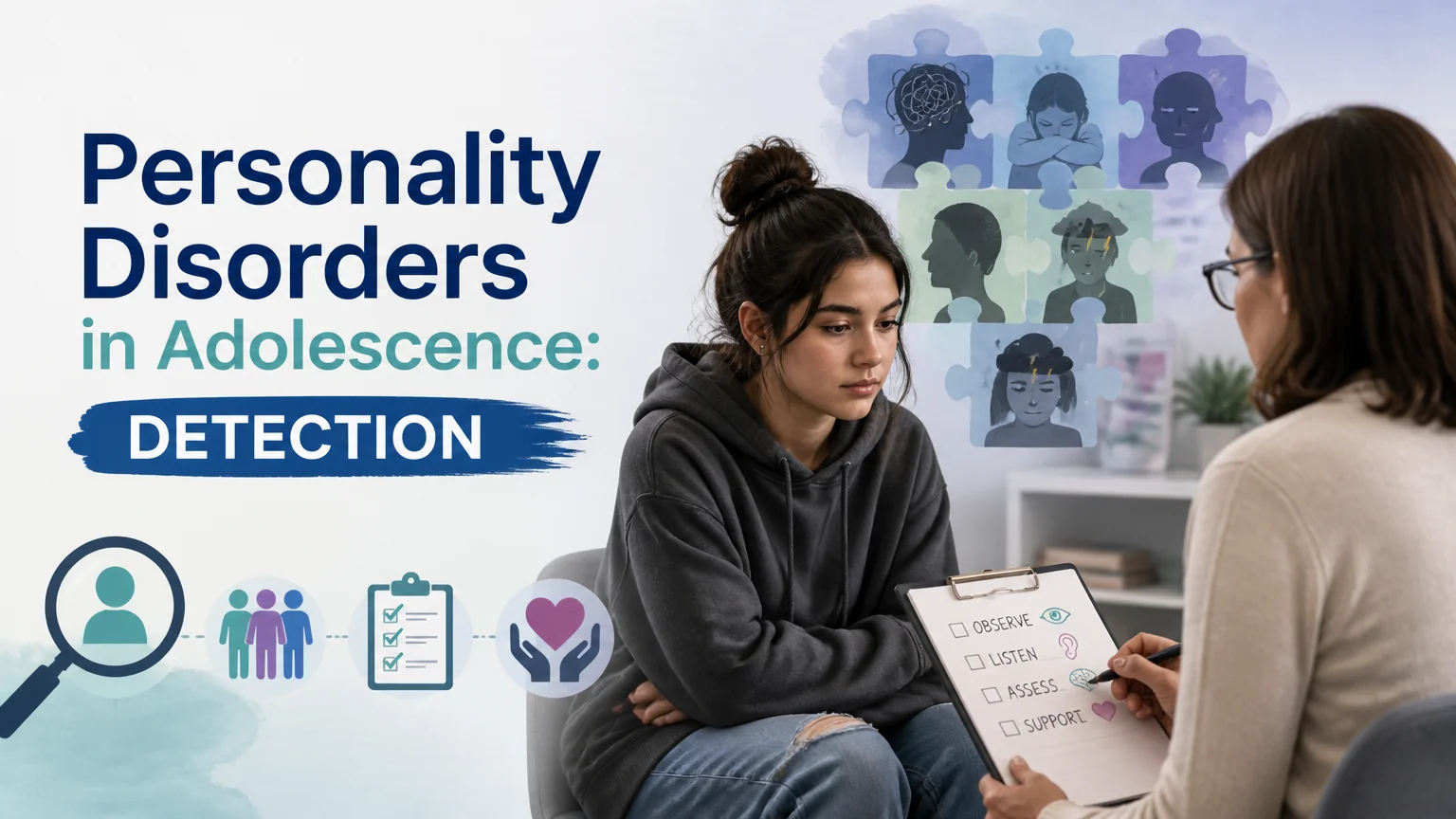
Understanding the distinctive characteristics of personality disorders is vital for anyone seeking to improve their mental well-being. Our engaging course on personality disorders offers valuable insights and strategies for managing these challenges effectively, paving the way for healthier relationships and personal growth.
What are personality disorders
Personality disorders are persistent patterns of thinking, feeling and behaving that deviate from culturally expected norms, typically begin in adolescence or early adulthood, and cause significant distress or difficulties in key life areas such as relationships, work or study. They are not a “character flaw” or a choice; they are styles of mental and relational functioning that have consolidated over time and can change with appropriate support. Personality is present across contexts, which is why these patterns are usually seen in multiple situations and not only during times of stress. Although the diagnostic label may sound rigid, many people improve markedly with specific treatments and ongoing support.
This information is educational and does not replace evaluation by a mental health professional. If you identify with what is described, consider seeking clinical guidance.
How they are classified
A common way to organize personality disorders is by clusters or groups, according to predominant traits. This classification helps understand affinities, but does not define a person. Comorbidity is frequent and boundaries are not always clear-cut.
Cluster A: odd or eccentric
- Paranoid: persistent distrust and suspiciousness; interprets others' intentions as malicious.
- Schizoid: preference for solitude, emotional detachment and little interest in close relationships.
- Schizotypal: unusual perceptual experiences, magical thinking and marked social anxiety.
Cluster B: dramatic, emotional or erratic
- Antisocial: disregard for rules and others' rights, impulsivity and risky or deceitful behaviors.
- Borderline: emotional instability, fear of abandonment, impulsivity and intense relationships.
- Histrionic: need for attention, striking emotionality and seeking approval.
- Narcissistic: grandiosity, need for admiration and sensitivity to failure or criticism.
Cluster C: anxious or fearful
- Avoidant: social inhibition, feelings of inferiority and hypersensitivity to rejection.
- Dependent: excessive need for care, difficulty making decisions and fear of separation.
- Obsessive-compulsive personality disorder: rigid perfectionism, control and concern for order at the expense of flexibility.
It is common to have traits from different groups in the same person. Diagnosis should consider life history, cultural context and functional impact.
Causes and risk factors
Personality disorders arise from the interaction of multiple factors. There is no single cause; they are best understood from a biopsychosocial model.
- Genetics and temperament: certain heritable traits, such as impulsivity or inhibition, can increase vulnerability.
- Early experiences: childhood adversity, trauma, neglect or inconsistent attachment relationships influence the development of schemas and coping strategies.
- Environment and learning: parenting styles, cultural norms, community or school violence shape expectations and behaviors.
- Neurobiology: differences in circuits for emotional regulation, reward and inhibitory control.
- Protective factors: supportive relationships, early intervention, emotional education and environmental stability buffer risk.
It is important to remember that risk is not destiny: two people with similar experiences can evolve differently depending on internal resources and external supports.
Common signs and symptoms
Personality disorders involve inflexible patterns that appear across areas: cognition (how we interpret the world and ourselves), affectivity (intensity and regulation of emotions), interpersonal functioning (relationships, empathy, boundaries) and impulse control. To be considered a disorder, they must cause notable distress or interfere with functioning, be relatively stable over time and not be better explained by substances, other medical conditions or acute psychiatric episodes.
- Extreme sensitivity to rejection or criticism.
- Impulsivity that leads to risks in finances, sexuality, substance use or driving.
- Emotional instability with sudden mood shifts and chronic emptiness.
- Persistent distrust, hostile interpretations or unfounded jealousy.
- Need for control, rigidity and perfectionism that make it hard to delegate or enjoy life.
- Difficulty setting boundaries, excessive dependency or avoidance of intimacy.
We all have traits; it is called a disorder when inflexibility and impact are sustained and significant.
Diagnosis and assessment
Diagnosis is made by a trained professional, such as a clinical psychologist or psychiatrist, through a clinical interview, developmental history and, when appropriate, standardized questionnaires. The goal is not to label, but to guide a personalized treatment plan.
- Exploration of life history, relationships, emotional patterns and repetitive behaviors.
- Assessment of common comorbidities, such as anxiety, depression, ADHD, trauma or substance use.
- Differential diagnosis with other conditions, for example bipolar episodes, autism spectrum disorders or OCD.
- Evaluation of current risks, including self-harm or dangerous impulsivity, and development of a safety plan if necessary.
Self-diagnosis can be confusing. If you are concerned about your functioning or that of someone close, professional consultation offers clarity and help options.
Evidence-based treatments
Psychotherapies
- Dialectical Behavior Therapy (DBT): trains skills in emotion regulation, distress tolerance, mindfulness and interpersonal effectiveness.
- Schema Therapy: identifies and modifies rigid life patterns and core beliefs learned early in life.
- Mentalization-Based Treatment (MBT): strengthens the capacity to understand one's own and others' mental states to improve relationships and regulation.
- Transference-Focused Psychotherapy (TFP): works on relational patterns within the therapeutic relationship to promote integration and stability.
- Cognitive Behavioral Therapy (CBT): addresses problematic thoughts and behaviors with concrete, gradual strategies.
A stable therapeutic alliance and a clear framework are key. Regular frequency, defined goals and progress monitoring increase effectiveness.
Medication
There is no medication that “cures” a personality disorder, but medication can relieve specific symptoms such as intense anxiety, depression, irritability or impulsivity. Depending on the case, antidepressants, mood stabilizers or antipsychotics at low doses may be used. Prescription and monitoring must be done by a physician, weighing benefits, side effects and possible interactions.
Psychosocial interventions
- Psychoeducation for the person and their environment: understanding the problem reduces stigma and facilitates support.
- Crisis plans and early warning signs: agreeing on steps to take when emotional intensity rises.
- Skills groups or peer support, moderated by professionals.
- Work with family or partner to improve communication and boundaries.
- Health habits: sleep, physical activity, substance reduction and structured routines.
Living with a personality disorder
- Compassionate self-knowledge: observing patterns without judging and naming emotions helps choose more useful responses.
- Flexible routines: daily structure with time for rest, relationships and leisure.
- Interpersonal skills: asking for what you need, negotiating boundaries and repairing ruptures.
- Support network: friends, groups and professionals who offer containment and honest feedback.
- Realistic goals: gradual progress with achievable expectations and celebrating advances.
The prognosis is more hopeful than is often thought. With treatment, many people manage to reduce symptoms, stabilize relationships and build a meaningful life.
Myths and realities
- Myth: “They have no solution.” Reality: symptoms can improve substantially with specialized therapies and ongoing support.
- Myth: “The person does not want to change.” Reality: change is possible, but it requires time, safety and appropriate strategies.
- Myth: “Everything is manipulation.” Reality: many behaviors express suffering and difficulties regulating emotions, not an intention to harm.
- Myth: “The diagnosis defines you.” Reality: it is a clinical tool, not an identity. A person is more than a label.
When to seek help and what to expect
Seek help if you feel the patterns described cause persistent distress, repeated conflicts or prevent you from reaching important goals. Also if there is self-harm, suicidal thoughts, problematic substance use or violence in relationships.
- First steps: consult primary care, a clinical psychologist or a psychiatrist for initial assessment and referral.
- What to expect: interviews about your history, goals and difficulties, and treatment proposals appropriate to your situation.
- Preparation: bring concrete examples of situations, a list of medications, history and questions you want to address.
If there is an immediate risk to you or others, go to emergency services or a local crisis hotline. Asking for help is a strength.
Frequently asked questions
- Can someone have more than one personality disorder? Yes, overlaps can occur; the therapeutic plan is adapted to the priority problems.
- Is borderline disorder the same as bipolar disorder? No. They share emotional instability, but bipolar disorder occurs in mood episodes; borderline is a persistent relational and emotional pattern.
- Does the exact diagnosis matter? It helps guide treatment, but the focus is on working on the person's concrete needs and goals.
Key takeaways
- They are persistent patterns that affect how you think, feel and relate, and they are treatable.
- Clustering helps orient, but each trajectory is unique.
- Specialized therapies, social support and healthy life habits make a difference.
- With time, patience and appropriate help, it is possible to build a life with more stability and meaning.
 For Onlinecourses55
|
2026-04-28
For Onlinecourses55
|
2026-04-28