To learn how to effectively present your offerings and utilize consumer psychology, explore an insightful course that delves into marketing tactics for better decision making.
What It Is and Why It Works
Some purchasing decisions aren’t made by comparing the absolute value of each option, but by judging which one seems most worthwhile within a group. When you add a third alternative designed to make your target option stand out, perceptions shift. This tactic relies on what is known as asymmetric dominance: one option is clearly inferior to another in every relevant respect, so it acts as a point of comparison and encourages customers to choose the option that is more profitable for your business.
In practice, this means presenting three options: a budget choice, a “premium” choice (your target), and an intermediate choice that makes the premium option seem like the obvious pick. The aim isn’t to “deceive” customers, but to arrange the choices so the real value of your offer is easy to see.
The Biases Behind It
This strategy works because it draws on familiar cognitive mechanisms. When comparing options, we look for shortcuts and signals that make decisions easier. Three key biases help explain its effectiveness:
- Relative comparison: we assess options against one another, not in isolation.
- Loss aversion: if the extra cost seems small compared with the added value, we prefer not to “lose” the benefits.
- Anchoring: a nearby reference point with a similar price but less value makes the target plan more appealing.
Everyday Examples
If you’ve seen popcorn menus with three sizes where the medium costs almost as much as the large, you already know the idea. It also appears in digital subscriptions: a “Standard” plan that costs only slightly less than “Pro” but comes with significant limitations. That small difference makes “Pro” look like a great deal.
Other practical examples:
- Software: a limited Basic plan, an Intermediate plan priced close to Pro but with restrictions that frustrate active users, and a Pro plan with unrestricted access to the most valued features.
- Restaurants: a daily menu, a special menu priced only slightly below the gourmet option, and a gourmet menu with notable extras; the special menu serves as the comparison point.
- Tourism: a standard room, a superior room that costs only slightly less than the suite but has no view or breakfast; the suite stands out.
Design an Effective Decoy
Option Structure
Your aim is to make the profitable choice clearly superior to the option it is directly compared with, while keeping the price difference relatively small.
- Three plans are usually ideal: A (budget), B (decoy), C (target).
- The decoy (B) should be close to C in price, but offer less value in ways that matter to the customer.
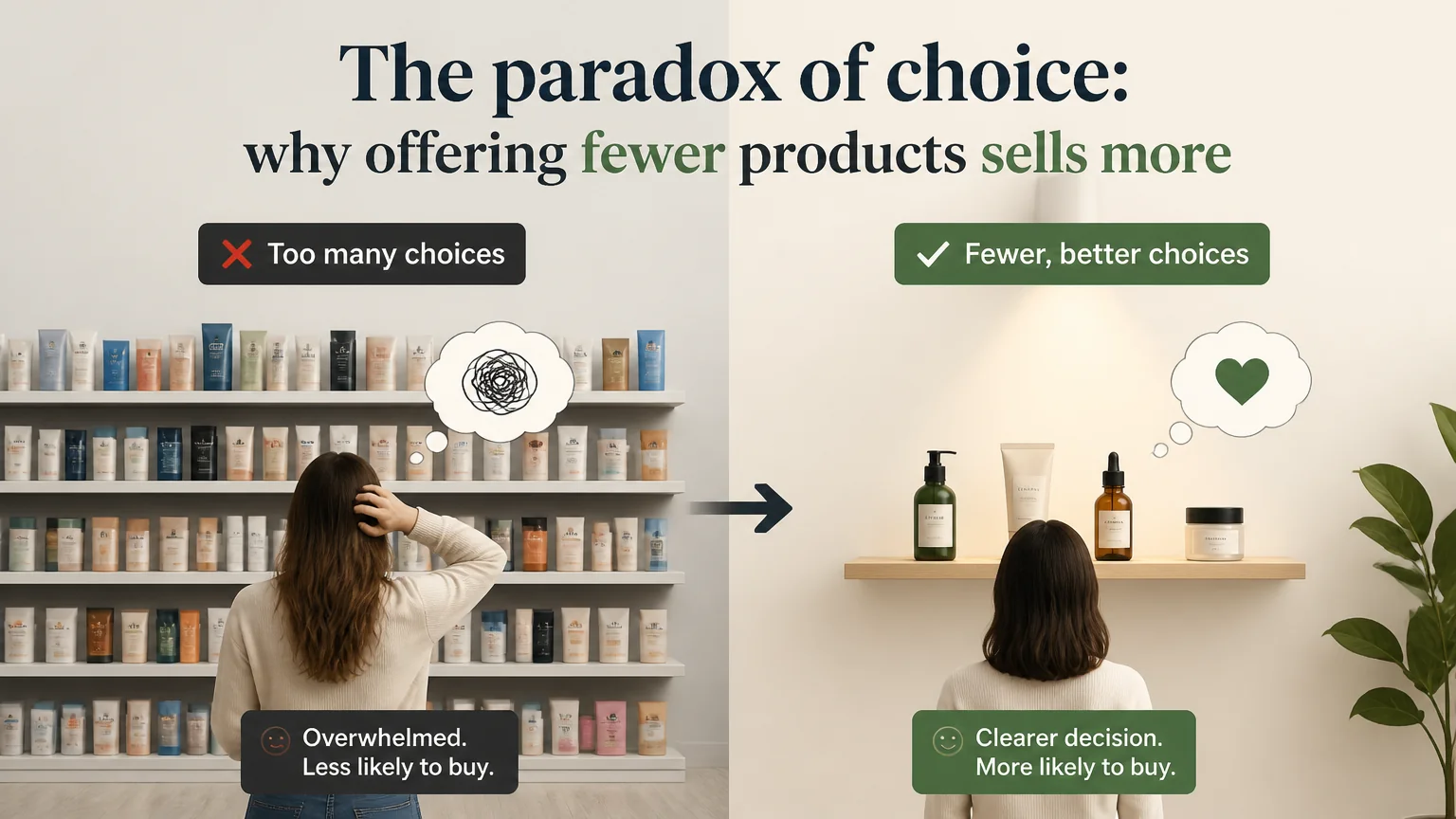
- Avoid four or more choices unless your category requires them; too many options make decisions harder.
Price and Differences
- Set the decoy’s price 5% to 20% below your target, depending on the transaction size and price elasticity.
- Make the difference in perceived value clear: limitations, a missing key feature, or less favorable terms.
- The budget plan should have a clear purpose (basic access) without taking customers away from your target.
Perceived Value
- Emphasize meaningful benefits: time savings, guarantees, removed limits, priority support.
- Avoid cosmetic perks; the contrast should matter in actual use.
Steps to Implement It in Your Business
- Research your customers: identify which benefits are deal-breakers and which are simply desirable.
- Define your target plan: the one that optimizes margin, ARPU, and retention.
- Create the decoy: price it close to the target, but give it a significant shortcoming for your main segment.
- Adjust the budget plan: make it viable and useful for attracting customers, without diverting higher-value users.
- Prototype a pricing table: place the target plan in the center or make it visually prominent.
- Test with users: conduct brief interviews and simulated choice exercises.
- Run controlled A/B tests: vary relative prices, labels, and benefits.
Copy and Presentation That Strengthen the Tactic
- Plan name: label the target plan “Most Popular,” “Best Value,” or “Recommended.”
- Emphasize key benefits with a short, specific list rather than jargon.
- Use contrast-focused microcopy: “Just €5 more for unlimited access,” “Save 30% of your time with this feature.”
- Use subtle badges, a soft background color, and a prominent button for the target plan.
- Use a logical order: Budget — Recommended — Advanced; make the recommended option stand out visually.
Metrics for Measuring Impact
- Selection rate by plan: how much does the target plan’s share grow?
- ARPU and margin per customer: genuine success is measured in revenue, not just clicks.
- Revenue per visitor and overall conversion rate.
- Retention/churn: check that the target plan retains customers well; if churn rises, the promise was a poor fit.
- Support tickets: clues that the offer may be causing friction or confusion.
Common Mistakes and How to Avoid Them
- An unconvincing decoy: if no one considers it, it won’t provide an anchor or contrast; adjust the price or benefits.
- Too much complexity: too many rows and technical terms cause confusion; simplify to 3–5 bullets per plan.
- Irrelevant differences: create contrast in attributes customers truly value.
- Misalignment with costs: don’t give away costly benefits without adjusting the price.
- Insufficient testing: without A/B tests and feedback, you’re optimizing blindly.
When Not to Use It
- Regulated purchases or formal tenders: an internal comparison option adds little.
- Markets with complete transparency around features and pricing: the tactic loses its impact.
- High-risk situations or those requiring exceptional trust: prioritize clarity and radical simplicity.
- Portfolios with a single offering: introducing a third choice feels less natural.
Applications by Sector
Software and SaaS
A Basic plan with strict limits, an Intermediate plan priced close to Pro but restricted in the number of users or key automations, and a recommended Pro plan. Make sure the restriction affects something the target segment considers central.
Education and Courses
A basic course, a course with “light” mentoring as the decoy, and a complete program with hands-on guidance. The tangible difference lies in the mentor’s level of involvement and access to projects.
E-commerce
A standard warranty, an extended warranty (the decoy) priced only slightly below a premium bundle with express shipping, free returns, and VIP support.
Professional Services
A diagnostic, a diagnostic plus partial implementation (the decoy), and a comprehensive package with KPIs and follow-up. The comprehensive package is the target.
Combine It with Other Pricing Strategies
- Initial anchoring: show “starting at” or “was” prices only when they are accurate and consistent.
- Bundles and upsells: the decoy prepares the ground for a logical increase in value.
- Commitment discounts: annual versus monthly pricing, strengthening the target plan with a better TCO.
- Guarantees and free trials: reduce perceived risk and boost conversion for the recommended plan.
Pre-Launch Checklist
- Is your target plan defined by margin and retention, rather than simply by its high price?
- Is the decoy close in price and lower in value on critical attributes?
- Is the budget plan useful for attracting customers without taking sales away from the target?
- Is the pricing table simple, with 3 options and 3–5 bullets per plan?
- Does the copy highlight the key benefit with concrete figures?
- Do you have test hypotheses and an A/B plan with clear metrics?
- Are the terms explained transparently, without misleading fine print?
Ethics and Transparency
Structuring choices isn’t manipulation when you do it honestly. Don’t withhold information, exaggerate comparisons, or create artificially defective versions that frustrate users. Explain benefits and limitations clearly, and prioritize the fit between customer needs and what you offer. This way, you can increase sales while building long-term trust.
In short, the key is to understand whom you want to serve, what value they consider essential, and how to present your options so the best decision is also the most profitable. Design, test, measure, and adjust; the magic isn’t in the trick, but in how precisely you align perception with real value.
 For Onlinecourses55
|
2026-03-10
For Onlinecourses55
|
2026-03-10