For Onlinecourses55
|
2026-04-28
For Onlinecourses55
|
2026-04-28
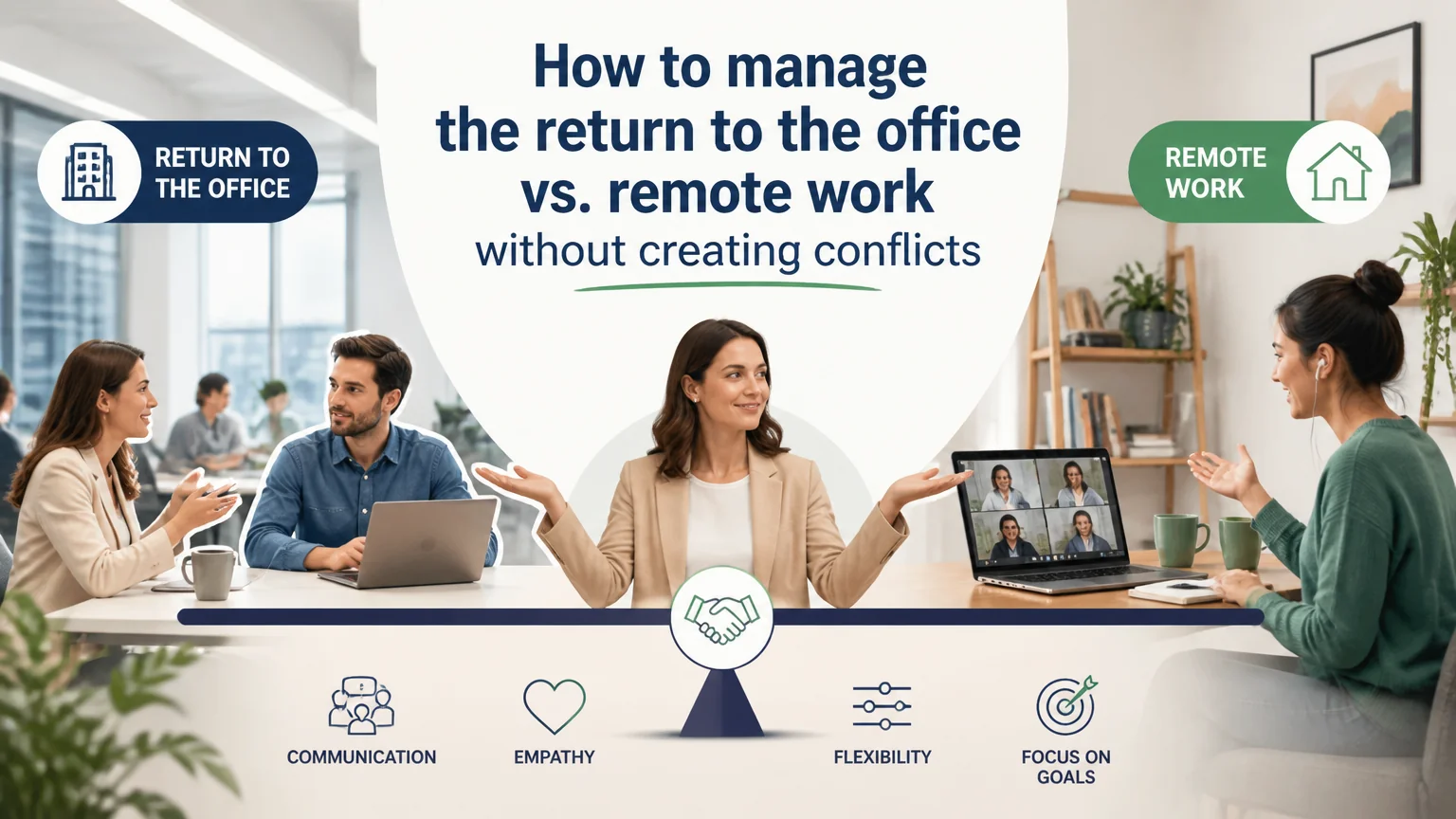
How to manage the return to the office vs. remote work without creating conflicts - psychology organizational
To navigate the unique dynamics of returning to office work effectively, our course on psychological strategies for team reintegration offers practical advice for maintaining harmony.
The labor landscape has undergone a radical transformation in recent years, with the rise of remote work and, now, the gradual return to the office. This transition, although necessary for some companies, can generate tensions and conflicts if not managed properly. This article offers you a practical guide to navigate this process successfully, ensuring a harmonious and productive work environment.
Before addressing solutions, it is essential to understand why the return to the office can be a point of friction. Some of the most common reasons include:
To avoid or minimize conflicts, it is crucial to implement a series of strategies that prioritize communication, flexibility and employee well-being.
From the outset, it is essential to communicate clearly and transparently the reasons behind the decision to return to the office. Explain the benefits the company expects to obtain, such as greater collaboration, innovation or team cohesion. Actively listen to employees' concerns and answer their questions honestly and empathetically.
Consider the possibility of adopting a hybrid work model, which combines remote work days with office days. This option can offer a good balance between flexibility and in-person collaboration. Allow employees some autonomy to choose the days they work in the office, within defined parameters.
Flexibility remains a key factor for job satisfaction. To the extent possible, offer options for employees to adapt their work schedule or workplace (for example, with flexible workspaces or "hot desking"). Demonstrate that you trust your employees' ability to be productive, regardless of where they work.
Foster a healthy and safe work environment. Implement hygiene and safety measures to reduce the risk of contagion. Offer resources for emotional well-being, such as psychological support programs or stress management workshops. Organize activities that promote team cohesion and a sense of belonging.
Clearly define expectations regarding office attendance, availability, communication and goal fulfillment. Make sure all employees understand the policies and procedures related to hybrid work or the return to the office. Be fair and consistent in the application of these policies.
Regardless of whether employees work in the office or remotely, it is essential to encourage collaboration and communication. Use online collaboration tools to facilitate communication between teams. Organize regular meetings, both in-person and virtual, to keep everyone informed and connected.
Leadership plays a crucial role in managing the transition. Leaders must be empathetic, understanding and willing to listen to their teams' concerns. They should communicate clearly and transparently, and lead by example in complying with policies and procedures. A good leader can help create a positive and productive work environment, even in times of change.
Search
Popular searches


![How to give negative feedback without demotivating the employee [psychological techniques]](/images/postDuplicados/onlinecourses55-how-to-give-negative-feedback-without-demotivating-the-employee-psychological-techniques.webp)