For Onlinecourses55
|
2026-10-10
For Onlinecourses55
|
2026-10-10
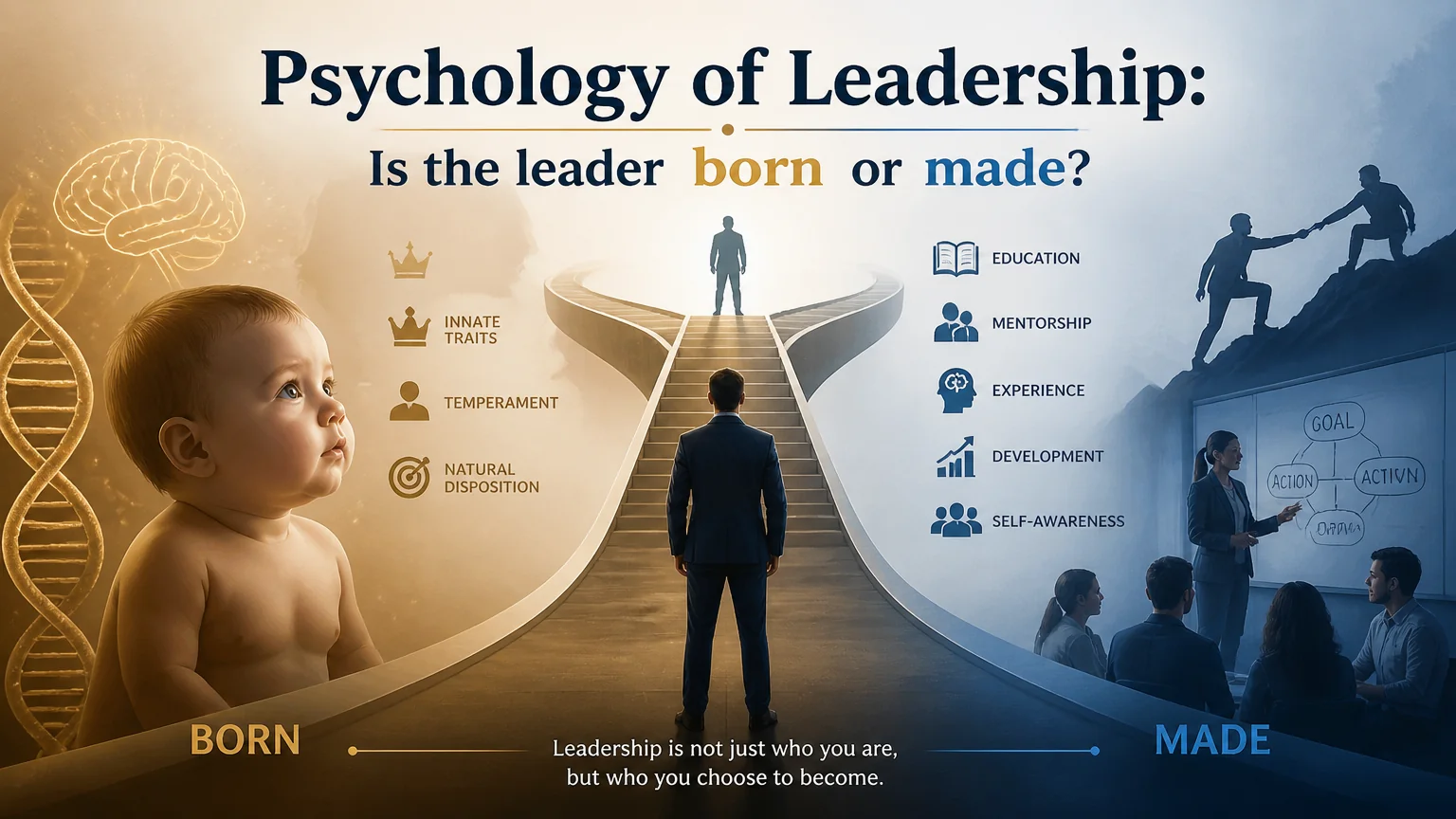
Psychology of leadership: is the leader born or made? - psychology organizational
Dive into the psychology of effective leadership and learn strategies to develop your own leadership skills through our comprehensive course on leadership development through psychological insights that create effective leaders.
Leadership, a quality as admired as it is necessary, has been the subject of study and debate for centuries. The fundamental question that arises again and again is: is leadership an innate ability, reserved for a select few, or is it a set of skills and behaviors that can be learned, practiced, and perfected? In this article, we will delve into the psychology of leadership to explore both perspectives, analyzing the theories, key skills, and strategies that can transform any individual into an effective leader.
Throughout history, various theories have been developed to explain the phenomenon of leadership. Understanding these theories provides us with a solid foundation for analyzing the different facets of leadership and its development.
This theory, one of the oldest, posits that leaders are born, not made. According to this view, leaders possess innate characteristics, such as charisma, superior intelligence, and a strong will, that distinguish them from others. While it is true that some people may have certain natural predispositions, this theory ignores the importance of learning, experience, and context in the development of leadership.
Similar to the "Great Man" theory, trait theory focuses on identifying the personality traits that characterize successful leaders. These traits may include self-confidence, integrity, emotional intelligence, and communication skills. However, research has shown that there is no definitive list of traits that guarantee leadership, and that the importance of certain traits can vary depending on the situation.
Unlike the previous theories, behavioral theories focus on what leaders do, rather than what they are. These theories identify different leadership styles based on behavior, such as autocratic leadership, democratic leadership, and laissez-faire leadership. Research has shown that the most effective leadership style depends on the situation and on the characteristics of the team.
These theories recognize that there is no single "ideal" leadership style for all situations. Instead, effective leadership depends on the leader's ability to adapt their style to the demands of the context. Factors such as the task to be performed, the characteristics of the team, and the organizational environment influence the most appropriate leadership style.
Transformational leadership focuses on inspiring and motivating followers to reach their full potential. Transformational leaders create a shared vision, foster innovation and personal development, and empower their teams. In contrast, transactional leadership is based on the exchange of rewards and punishments to achieve objectives. While both styles can be effective, transformational leadership tends to generate greater long-term commitment and performance.
Regardless of whether leadership has an innate or acquired basis, developing certain skills is fundamental to becoming an effective leader.
A leader must be able to communicate their vision clearly and persuasively, listen actively to others, and provide constructive feedback. Effective communication is essential for building strong relationships, motivating teams, and resolving conflicts.
Emotional intelligence refers to the ability to understand and manage one's own emotions, as well as the emotions of others. A leader with high emotional intelligence can build trusting relationships, inspire teams, and handle difficult situations with empathy and diplomacy.
A leader must be able to analyze information, evaluate options, and make informed and timely decisions. Effective decision making requires critical thinking, problem-solving ability, and the willingness to take calculated risks.
Leaders constantly face challenges and obstacles. The ability to identify problems, analyze their causes, and develop creative solutions is fundamental to success.
An effective leader does not try to do everything alone. They delegate tasks to team members, provide them with the resources and autonomy necessary to succeed, and empower them to make decisions.
Leadership is not a destination, but a continuous journey of learning and development. Here are some strategies you can use to improve your leadership skills:
Volunteer to lead projects, join committees, or mentor others. The more you practice leadership, the more confidence and skill you will develop.
Ask your colleagues, supervisors, and subordinates to give you honest feedback about your strengths and weaknesses as a leader. Use this feedback to identify areas for improvement.
Observe successful leaders, read biographies and case studies, and seek mentors who can share their experience and knowledge with you.
Many organizations offer training and leadership development programs that can help you acquire new skills and knowledge.
Growth happens when you face new challenges. Look for opportunities to step out of your comfort zone and try new things.
Search
Popular searches


![How to give negative feedback without demotivating the employee [psychological techniques]](/images/postDuplicados/onlinecourses55-how-to-give-negative-feedback-without-demotivating-the-employee-psychological-techniques.webp)