For Onlinecourses55
|
2026-10-13
For Onlinecourses55
|
2026-10-13
How to develop a five-year strategic sports management plan - sports management
Crafting a five-year strategic plan can elevate your organization’s performance; gain insights by taking our course focused on developing sustainable management plans for sports that yield measurable results.
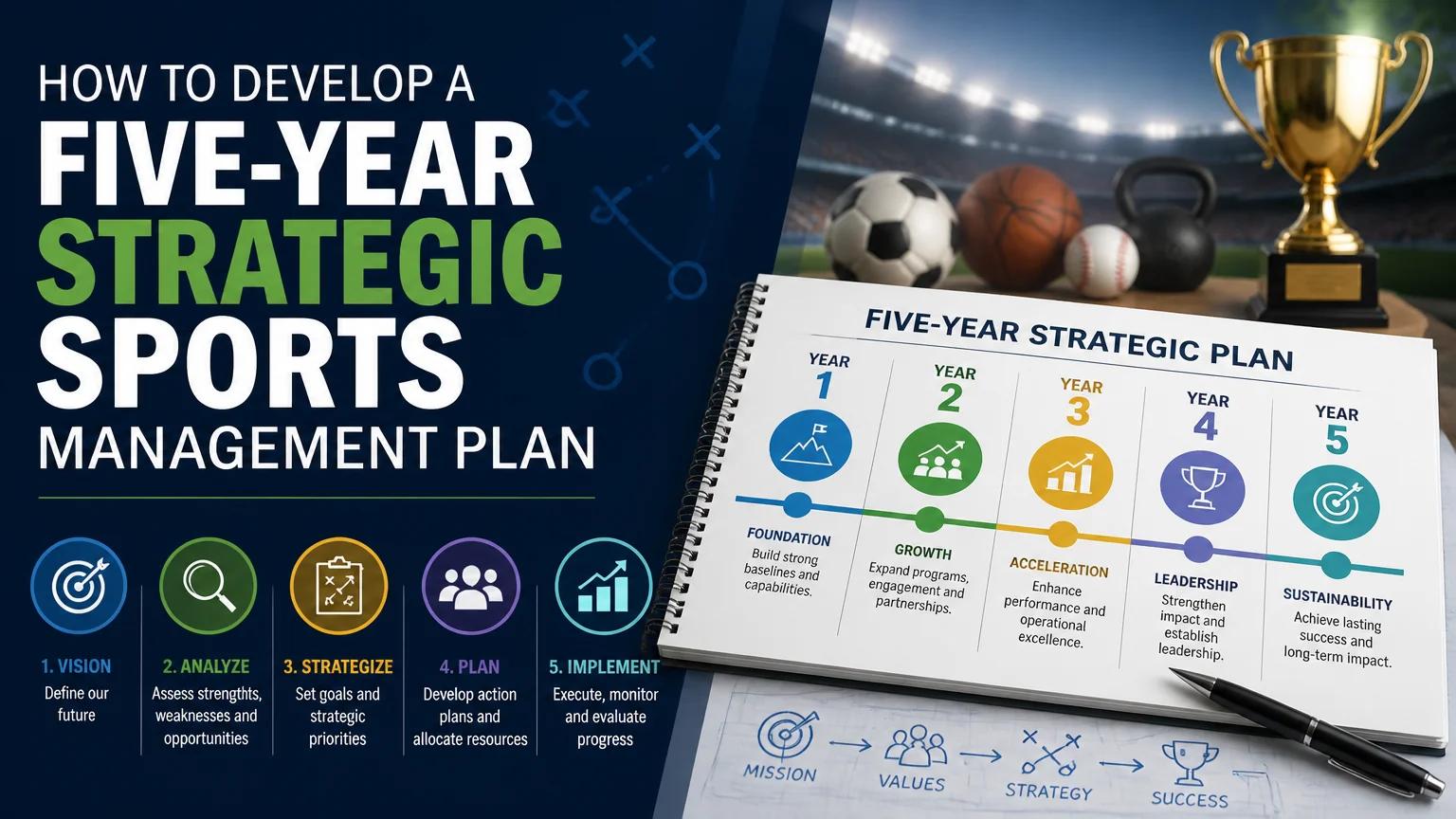
A five-year strategic sports management plan serves as a roadmap to guide decisions, prioritize resources, and measure progress in organizations, clubs, and federations. Designing it with clarity and realism increases the likelihood of achieving sports, financial, and social objectives. Below is a practical, step-by-step guide to building a solid plan, from diagnosis to ongoing evaluation, with recommendations applicable to different contexts.
Before setting goals, it is essential to understand the current situation. The assessment should combine qualitative and quantitative data: infrastructure, human resources, athletic performance, financial status, institutional identity, community relations, and the legal framework. Use tools such as SWOT analysis, stakeholder surveys, competitor reviews, and operational audits. Involving coaches, athletes, executives, and sponsors ensures a broad perspective and avoids bias. Document strengths, weaknesses, opportunities, and threats, and prioritize those that affect the achievement of medium-term objectives.
Defining an inspiring five-year vision allows for the alignment of efforts. The mission should explain the operational purpose and the contribution to athletes and the community. Strategic objectives are formulated using SMART criteria: specific, measurable, achievable, relevant, and time-bound. Establish sports goals (results and processes), institutional development goals (governance, human talent), financial goals (sustainability, revenue diversification), and social goals (participation, inclusion, community programs). Prioritize three to five strategic objectives that will guide key actions.
Strategies translate objectives into general lines of action. They must consider the local context, existing capacity, and timelines. Combine high-impact strategies with tactical actions that yield early results. Examples: developing training centers, improving scouting processes, implementing nutrition and health programs, professionalizing administrative management, and marketing the institutional brand. Each strategy must have associated indicators and assigned responsible parties.
Select priority programs that align with the objectives and the assessment. A program must include: scope, key activities, timeline, necessary resources, estimated budget, performance indicators, and a responsible party. Prioritize programs that are scalable and generate synergies across sports, training, and commercial areas. Seek initiatives that attract sponsorship or can become self-sustaining in the medium term. Programs must include a component of ongoing training for coaches and staff.
Turn strategies into projects with clear deliverables. The annual operational plan breaks down activities by quarter or month, assigns responsible parties, allocates resources, and defines metrics. Use a RACI matrix to clarify roles: responsible, approver, consulted, and informed. Define key milestones for each year and set interim objectives to evaluate progress. Ensure that each project has a risk plan with mitigation actions and a threshold for reviewing continuity or adjustments.
Developing a multi-year budget is essential. It must account for investments in infrastructure, salaries, training, technology, logistics, and marketing. Estimate recurring and non-recurring costs and break down line items by program. Define funding sources: sponsorships, membership fees, grants, service sales, and strategic partnerships. Include a contingency fund and project conservative, expected, and optimistic scenarios. Review financial viability before approving programs and adjust timelines based on resource availability.
Establish a monitoring system that integrates sports, operational, financial, and social impact indicators. Each indicator must have a formula, data source, measurement frequency, and a designated person responsible. Implement dashboards to visualize progress by area and use regular meetings to review deviations. Annual evaluations allow for the analysis of results, efficiencies, and lessons learned. Complement these with external audits every two or three years to ensure transparency and credibility with sponsors and the community.
Develop a communications strategy that positions the sports initiative and strengthens the organization’s image. This includes internal communications to align the team and accountability practices toward members and sponsors. Plan membership recruitment campaigns, brand activations, and media management. Foster partnerships with local stakeholders, schools, and social organizations to expand the participant base. A strong narrative and digital presence increase commercial opportunities and the social impact of the programs.
Strengthens the governance structure with clear policies, codes of ethics, and transparent decision-making processes. Defines the responsibilities of the board of directors, technical leadership, and support departments. Promotes leadership and management training for executives and sports managers. Stable, professional leadership reduces turnover and facilitates plan execution. Considers mechanisms for community and athlete participation to legitimize decisions and improve accountability.
Although the horizon is five years, the environment changes and the plan must be flexible. Schedule biannual reviews to adjust strategies based on results and the external context. Maintain alternative scenarios and clear criteria for reorienting investments if priorities change. Foster a learning-oriented organizational culture where failures are analyzed and turned into improvements. Adaptability ensures that the plan remains relevant and effective in the face of unforeseen events.
Implementation requires operational leadership, effective communication, and monitoring mechanisms. Prioritize projects with high social and financial returns in the early years to build momentum. Continuously train staff and document processes to facilitate scalability. Seek to diversify revenue and build long-term relationships with sponsors and strategic partners. Regularly assess social and sports impact and use the results to improve the proposal and attract new resources.
Involve the community in design and evaluation processes, promote transparency, and use data to make decisions. Document success stories and failures for institutional learning. Establish equity and inclusion indicators to ensure access and opportunities. Always seek a balance between ambition and realism: challenging goals motivate, but unattainable objectives demoralize. Maintain constant communication with stakeholders and report progress in an understandable way. With discipline, periodic review, and committed leadership, the plan will be more likely to generate sustained impact.
Remember that a good plan is a living document: it requires daily commitment, learning, and constant adjustments. Start with concrete steps, measure and report honestly, celebrate achievements, and correct deviations. Financial sustainability, talent development, and community relations are pillars that will sustain the results. Build partnerships and cultivate trust so that the benefits endure over the long term.
Search
Popular searches