For Onlinecourses55
|
2026-09-28
For Onlinecourses55
|
2026-09-28
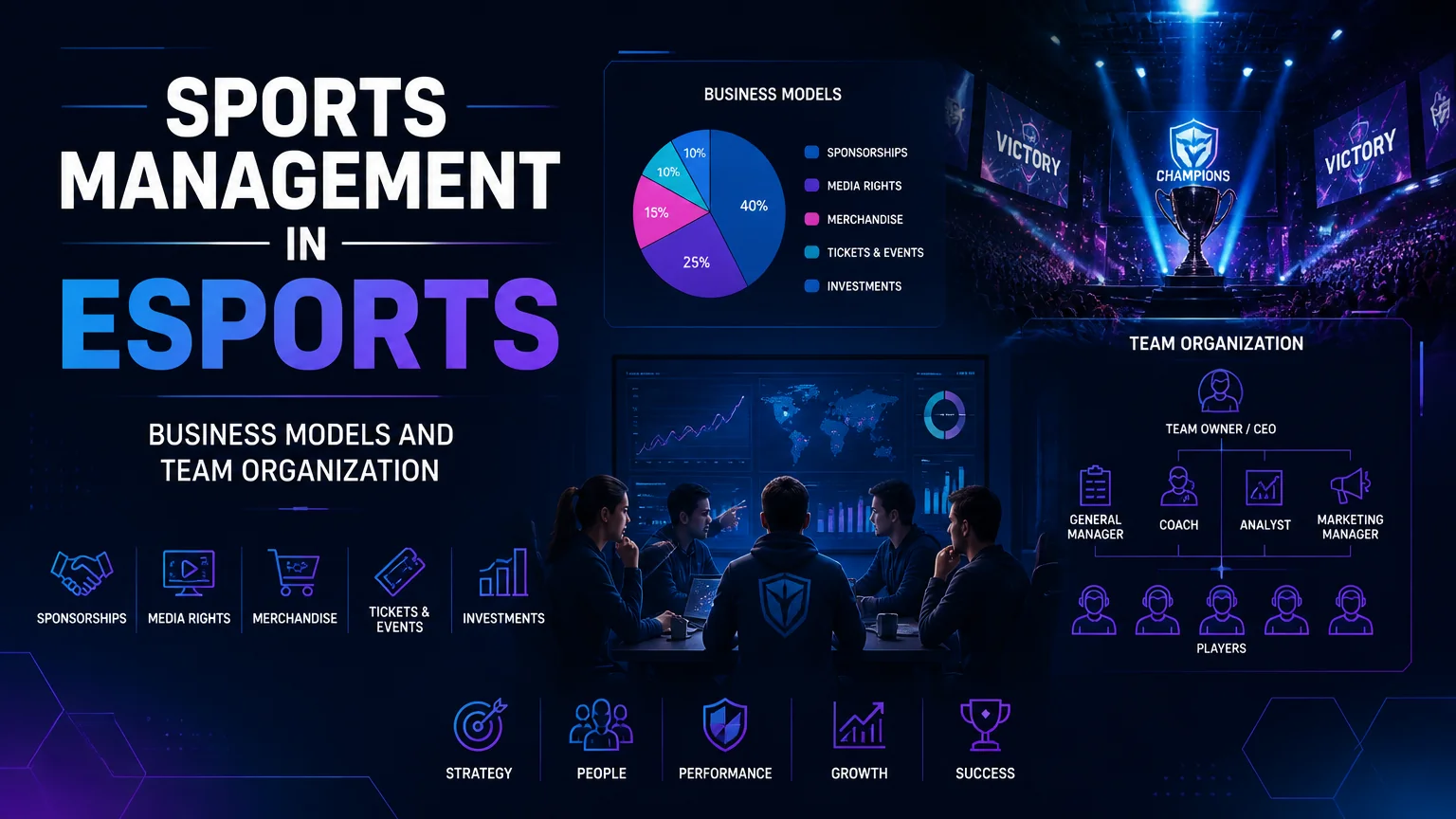
Sports management in esports: business models and team organization - sports management
Management in the competitive video game arena requires a hybrid approach combining traditional sports management with digital culture. Teams not only compete in matches but also operate as multimedia brands, content producers, and businesses that must attract revenue and talent. This involves designing clear internal structures, diversified business models, and performance management processes that address both athletic objectives and commercial goals.
There are several models that ensure the financial viability of a competitive organization. Some teams operate like startups with external investment and a focus on rapid growth, while others rely on recurring revenue from sponsorships and content. Understanding and combining these sources is key to stability.
An effective strategy combines immediate revenue with projects that build long-term value, such as academies or consistent content. Creating proprietary IP (brands, show formats, competitions) helps reduce dependence on third parties. It is also advisable to build passive income streams through digital merchandising and courses.
The internal organization must combine sports, content creation, and commercial capabilities. The structure varies depending on size, but there are essential roles that ensure professional operations: management, coaching, analytics, marketing, operations, and player well-being.
Talent is the primary asset. Selection must combine scouting on platforms, in academies, and at youth competitions with assessments of character, attitude, and adaptability. Beyond technical skills, the ability to communicate and work as a team makes all the difference.
Performance combines data and human effort. Telemetry and analytics platforms allow us to measure playing patterns, efficiency, and areas for improvement. However, it is essential to translate that data into personalized training plans and focused practice sessions.
Engagement with the community is just as vital as results. A well-executed marketing strategy converts followers into revenue and a stable base for sponsors. Authenticity and direct interaction often yield better results than purely promotional moves.
Contracts must protect both the player and the organization. Terms regarding duration, image rights, exit clauses, and confidentiality agreements are essential. Financial management requires controls over variable revenue and planning for periods without tournaments or exceptional income.
Building a positive culture prevents turnover and improves long-term results. Ethics in hiring, treatment of players, and community responsibility define the organization’s reputation. Investing in well-being, personal development, and professional training increases retention and performance.
Once the foundation is established, expansion can involve adding divisions for other titles, opening regional academies, or creating larger-scale original content. Each step must be evaluated in terms of return on investment, operational burden, and alignment with the brand. Internationalization requires understanding local markets and adapting the value proposition.
Managing a competitive esports organization requires both a sports and business mindset. A sustainable model combines multiple revenue streams, a professional structure, talent development, and community-focused marketing strategies. Prioritizing team well-being, rigorous analysis, and diversification will be key to solid and lasting growth.