For Onlinecourses55
|
2026-10-17
For Onlinecourses55
|
2026-10-17
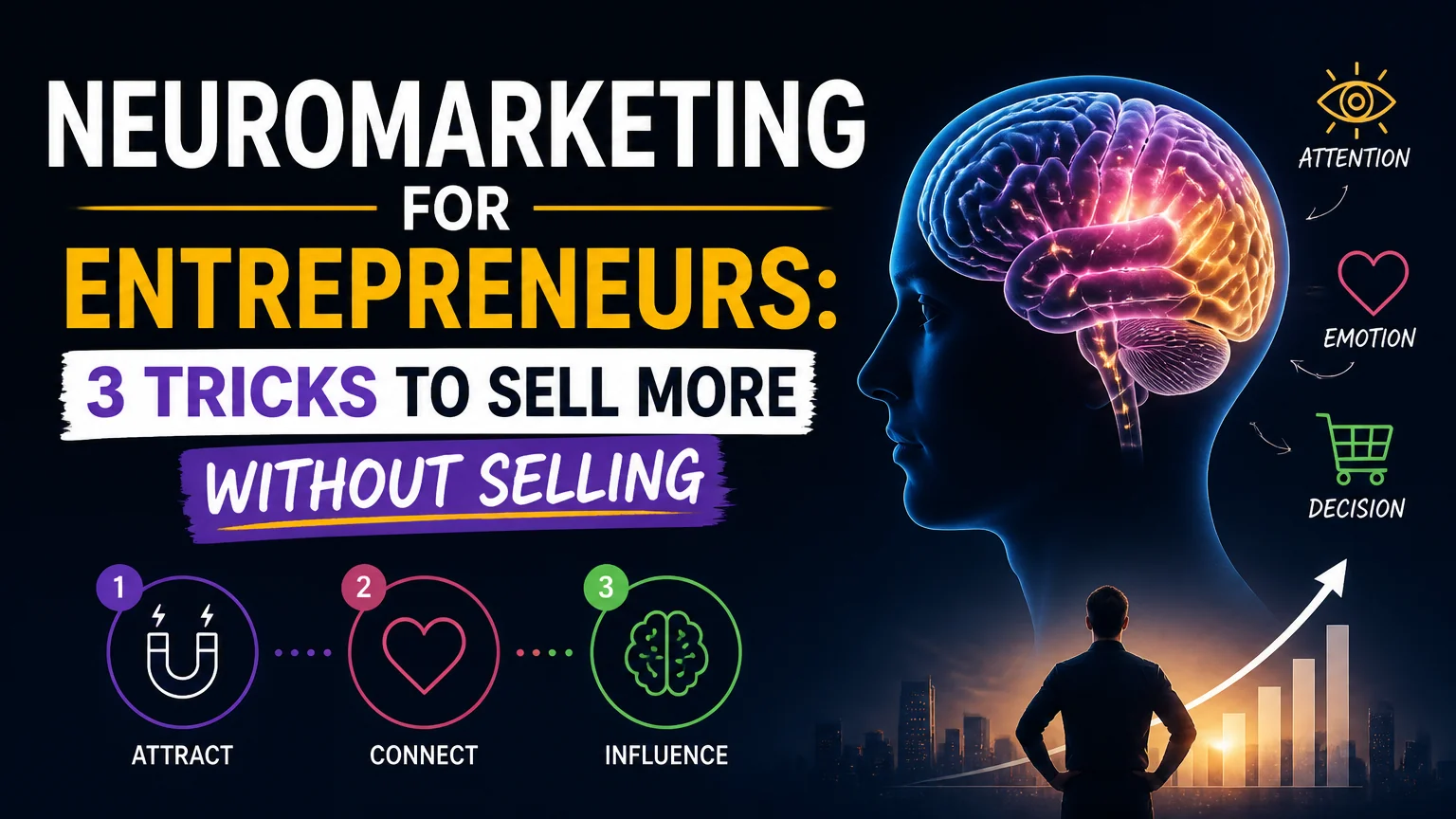
Neuromarketing for entrepreneurs: 3 tricks to sell more without selling - techniques persuasion manipulation
To truly resonate with your customers, understanding their motivations is essential. Enhance your marketing techniques by diving into effective persuasion methods that bring you closer to meeting their wants and needs.
Can you imagine understanding your customers' minds and knowing exactly what motivates them to buy? Neuromarketing, the science that studies brain responses to marketing stimuli, offers you precisely that. It's not about manipulation, but about better understanding how the human brain works to offer products and services that truly resonate with its needs and desires. For entrepreneurs, mastering neuromarketing is an unmatched competitive advantage.
Neuromarketing combines neuroscience, psychology and marketing to analyze consumers' brain responses to different advertising, product or brand stimuli. Through techniques like functional magnetic resonance imaging (fMRI) and electroencephalography (EEG), we can measure brain activity and obtain valuable insights about the emotions, attention and memory that our campaigns provoke. In short, neuromarketing lets you move from assumptions to concrete data.
Why should you care? Because it allows you to:
A mental anchor is a numerical value that influences the perception of a product or service price. It works as an initial reference point that the brain uses to evaluate other options. For example, if you see a coat that costs $500 and then find a similar one for $300, the second will seem like a bargain, even if $300 is still a high price.
How to apply it in your business:
Buying decisions are largely emotional. Storytelling, or the telling of stories, is a powerful tool to connect with your customers emotionally and trigger the release of neurotransmitters like dopamine (pleasure), oxytocin (trust) and serotonin (well-being). A good story can create a deep and lasting connection with your brand.
How to apply it in your business:
The principle of scarcity states that people value more what is limited or hard to get. Urgency, for its part, creates a sense of immediacy that drives action. Combined, these two mental triggers can be incredibly effective at increasing sales.
How to apply it in your business:
Search
Popular searches

![How to say no to an expert manipulator [step-by-step guide]](/images/postDuplicados/onlinecourses55-how-to-say-no-to-an-expert-manipulator-step-by-step-guide.webp)