For Onlinecourses55
|
2025-12-30
For Onlinecourses55
|
2025-12-30
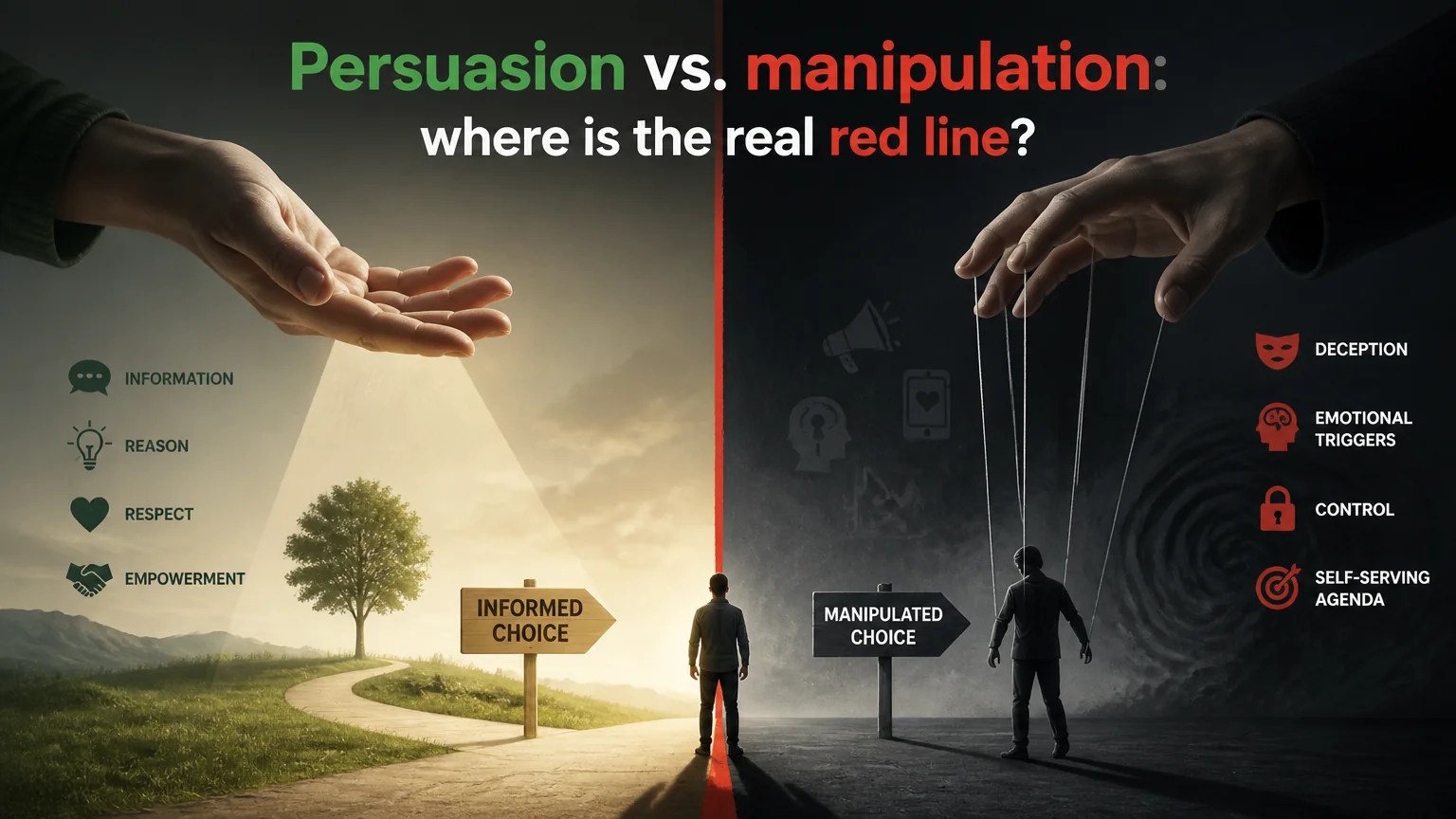
Persuasion vs. manipulation: where is the real red line? - techniques persuasion manipulation
Effective persuasion is essential for success in every area of life. Gain the necessary skills to influence others ethically by exploring powerful persuasive strategies that contribute to building trust and respect.
Persuasion is an essential skill in personal and professional life. It is the art of influencing others to adopt an idea, change an attitude, or take an action, but always in an ethical and respectful way. Essentially, persuasion is based on transparent communication, the presentation of sound arguments, and the building of a trusting relationship with the audience.
Effective persuasion involves understanding the needs, desires, and values of the other person. It means presenting information in a way that resonates with them, highlighting mutual benefits and respecting their autonomy. A good persuader neither coerces nor deceives; instead, they offer a valuable perspective that the other person can freely choose to accept or reject.
Some common persuasion techniques include:
Manipulation, unlike persuasion, is characterized by the use of deceptive, coercive, or dishonest tactics to control or exploit another person. The main goal of manipulation is not mutual benefit, but rather the obtaining of personal advantages at the expense of the other. Manipulation undermines trust, damages relationships, and can have negative consequences for the victim's mental and emotional health.
Manipulation relies on the exploitation of the other person's emotional vulnerabilities, such as fear, guilt, insecurity, or the need for approval. Manipulators often use tactics such as guilt, victimization, threats, emotional blackmail, and gaslighting (making someone doubt their own sanity) to achieve their goals.
Key characteristics of manipulation:
The difference between persuasion and manipulation can often be subtle and subjective. However, there are some key indicators that can help you discern between ethical influence and harmful manipulation:
If you feel you are being pressured, deceived, or exploited, you are likely a victim of manipulation. Trust your intuition and do not hesitate to set clear boundaries and protect your emotional wellbeing.
Manipulation can be difficult to detect, especially when it comes from people close to you. However, there are some strategies you can use to protect yourself:
Remember that you have the right to make your own decisions and to protect your emotional wellbeing. Don't allow anyone to control or exploit you.
Search
Popular searches

![How to say no to an expert manipulator [step-by-step guide]](/images/postDuplicados/onlinecourses55-how-to-say-no-to-an-expert-manipulator-step-by-step-guide.webp)