How to create a mandatory workplace harassment protocol step by step - workplace harassment
An effective workplace harassment protocol is critical for company integrity. Learn how to implement one effectively with our interactive course on workplace harassment protocols that prioritize employee safety.
Introduction: The Vital Importance of a Workplace Harassment Protocol
In today’s work environment, preventing workplace harassment has become an unavoidable priority for any company that aspires to create a healthy, productive and respectful workplace. A workplace harassment protocol is not simply a legal requirement, but a tangible demonstration of the organization’s commitment to the well‑being of its employees. Ignoring this obligation can lead to serious legal, economic and reputational consequences. It also fosters a culture of fear and mistrust that negatively impacts employee morale and performance.
This article will guide you step by step in creating a mandatory and effective workplace harassment protocol, adapted to current legislation and best practices in occupational risk prevention. You will learn to identify the key elements, involve all stakeholders and implement concrete measures to prevent, detect and address any harassment situation.
What Is Workplace Harassment and Why Do You Need a Protocol?
Workplace harassment, also known as *mobbing*, is defined as exposure to negative, repeated and prolonged behaviors over time, directed at a worker by one or more persons, with the aim of destabilizing them, isolating them and, ultimately, forcing them to leave their job. These behaviors may include humiliation, insults, isolation, overload or lack of work, constant and unjustified criticism, and other forms of psychological abuse.
The need for a workplace harassment protocol is justified by:
- Legal obligation: Spanish legislation (Law on the Prevention of Occupational Risks, Workers' Statute) requires companies to guarantee the safety and health of their employees, which includes the prevention of workplace harassment.
- Employee well‑being: A protocol protects the mental and physical health of workers, creating a safe and respectful work environment.
- Improvement of the work climate: Preventing workplace harassment contributes to a positive work environment, increasing motivation, productivity and talent retention.
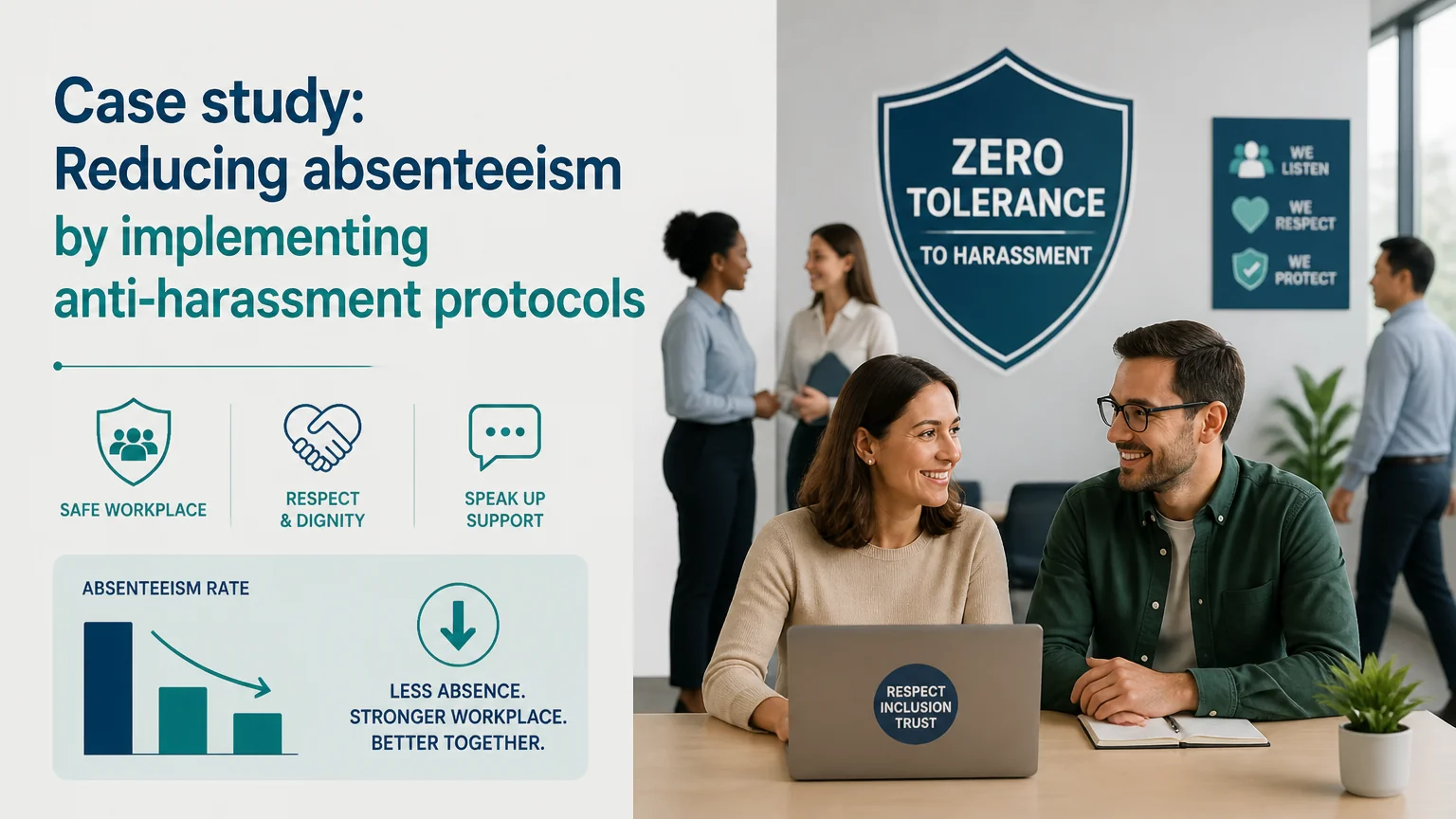
- Cost reduction: Workplace harassment can lead to absenteeism, sick leave, reduced performance, and even litigation, which implies significant economic costs for the company.
- Corporate image: A company committed to preventing workplace harassment improves its image and reputation, attracting customers, investors and quality employees.
Step by Step: How to Create an Effective Workplace Harassment Protocol
Below we present a detailed guide to create a workplace harassment protocol that complies with legal requirements and is truly effective in preventing and managing these situations:
- Management Commitment: The first step is to obtain the explicit commitment of top management. This commitment should be manifested in a formal statement that establishes zero tolerance toward workplace harassment and the willingness to implement measures to prevent and address it.
- Formation of a Prevention Committee: Create a committee made up of company representatives (human resources, occupational risk prevention, legal department) and workers (union representatives, employee representatives). This committee will be responsible for developing, implementing and supervising the protocol.
- Psychosocial Risk Analysis: Carry out a comprehensive assessment of psychosocial risks in the company to identify the areas most vulnerable to workplace harassment. This assessment may include surveys, interviews and data analysis on absenteeism, staff turnover and workplace conflicts.
- Drafting the Protocol: Write a clear, concise and accessible protocol that defines workplace harassment, establishes the principles of action, describes the complaint and investigation procedure, and guarantees the confidentiality and protection of victims and complainants. The protocol should include:
- Clear and precise definition of workplace harassment.
- General principles of action (zero tolerance, respect, confidentiality, impartiality).
- Complaint procedure (communication channels, timelines).
- Investigation procedure (evidence gathering, interviews, reports).
- Protection measures for the victim and the complainant.
- Sanctions for the harasser.
- Follow‑up and evaluation procedure for the protocol.
- Dissemination and Training: Communicate the protocol to all employees through internal channels (intranet, email, noticeboards) and organize training sessions to raise awareness about workplace harassment, explain the content of the protocol and promote a culture of respect and collaboration.
- Protocol Implementation: Ensure that the protocol is applied effectively and consistently throughout the company. Appoint a person or department responsible for managing complaints and conducting investigations.
- Monitoring and Evaluation: Perform periodic monitoring of the protocol to assess its effectiveness and detect possible areas for improvement. Collect data on the number of complaints received, the time taken to resolve investigations and the protocol’s impact on the work environment.
- Review and Update: Review and update the protocol periodically (at least once a year) to adapt it to legislative changes, new company needs and lessons learned in practice.
Key Elements of a Successful Workplace Harassment Protocol
For a workplace harassment protocol to be truly effective, it must include the following key elements:
- Clarity and Concision: The language should be clear, simple and easy to understand for all employees.
- Confidentiality: Ensuring the confidentiality of complaints and investigations is fundamental to protect victims and foster trust in the protocol.
- Impartiality: Investigations should be carried out by impartial and objective persons who guarantee respect for the rights of all parties involved.
- Rapidity: Complaints should be investigated quickly and efficiently to prevent the harassment situation from being prolonged.
- Protection: Provide protection measures for the victim and the complainant to avoid reprisals by the harasser.
- Sanctions: Establish sanctions proportional to the severity of the harassing conduct.
- Training: Offer continuous training to all employees on workplace harassment, the protocol and ways to prevent and address it.
Spanish Legislation on Workplace Harassment: What You Need to Know
Although there is no specific law that regulates workplace harassment in Spain, several legal norms refer to this issue and require companies to prevent and sanction it:
- Law on the Prevention of Occupational Risks (LPRL): Requires companies to guarantee the safety and health of their employees, including the prevention of psychosocial risks such as workplace harassment.
- Workers' Statute: Recognizes workers’ right to dignity and physical and moral integrity, and prohibits any form of discrimination or harassment.
- Organic Law on Effective Equality between Women and Men: Establishes measures to prevent and sanction sexual harassment and harassment based on sex in the workplace.
- Criminal Code: Criminalizes workplace harassment behaviors that cause serious harm to the victim’s mental health.
Additional Tips to Prevent Workplace Harassment in Your Company
- Foster a culture of respect and collaboration.
- Promote open and transparent communication.
- Establish accessible and confidential complaint channels.
- Train middle managers in detecting and managing workplace harassment.
- Carry out periodic evaluations of the work environment.
- Intervene early at any sign of workplace conflict.
- Offer psychological support to victims of workplace harassment.
 For Onlinecourses55
|
2026-03-01
For Onlinecourses55
|
2026-03-01