For Onlinecourses55
|
2026-09-28
For Onlinecourses55
|
2026-09-28
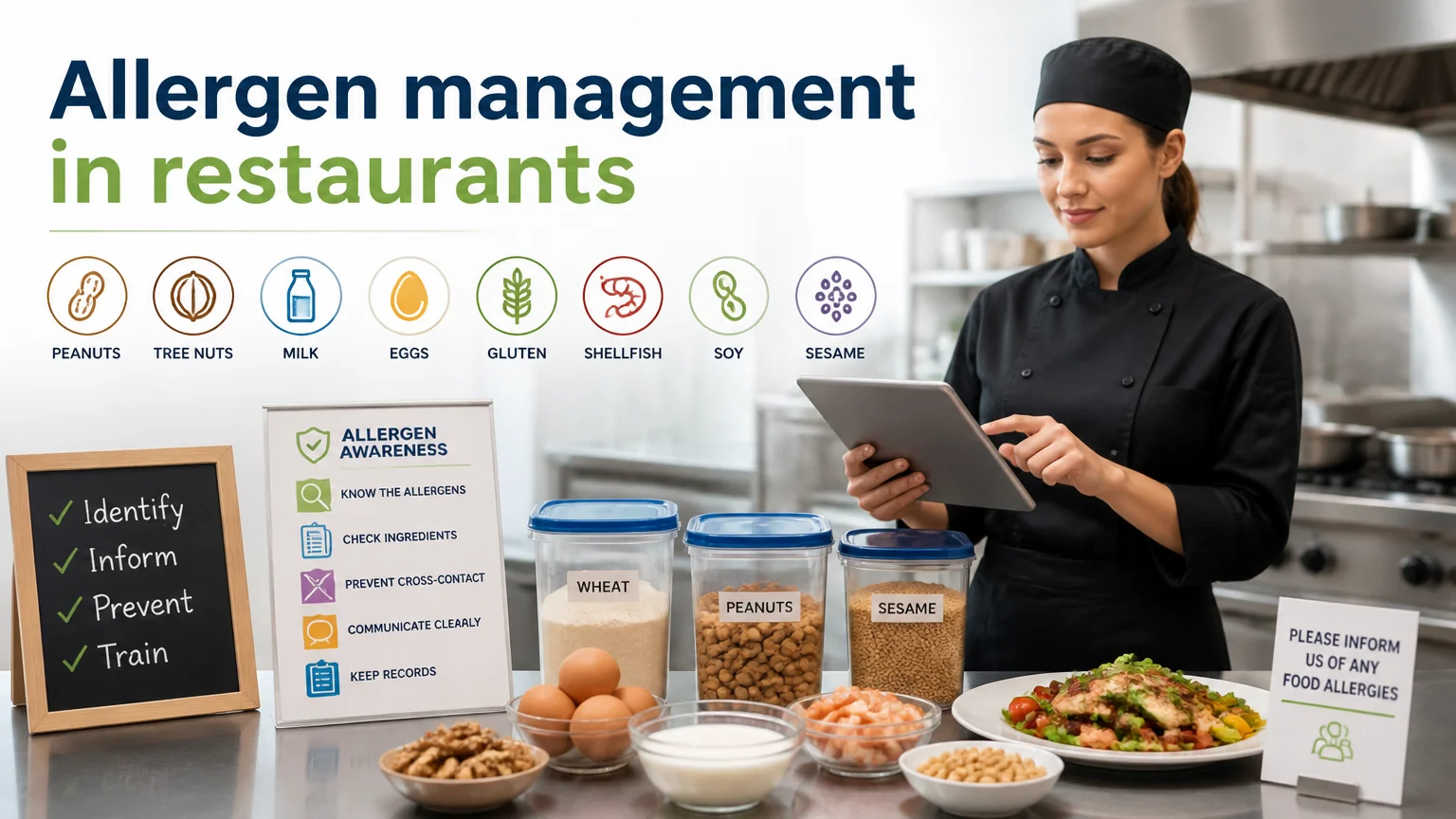
Allergen management in restaurants - allergens
Hello! If you own a restaurant, you know that delicious food is only part of the equation. You also need to ensure your customers are safe and healthy. And that means, among other things, having a solid plan for allergen management. Does that sound complicated? Don''t worry! We''ll break it down step by step.
Imagine this: someone walks into your restaurant, orders a dish that sounds delicious, and suddenly, bam! Allergic reaction. That''s not a good situation for anyone, is it? Allergen management isn''t just a formality; it is vital to protect your customers and your business.
Food allergies are on the rise. More and more people are allergic to certain foods. Why? Well, that''s a complicated question, but what we do know is that you, as a restaurateur, have the responsibility to take action. Ignoring this fact is not an option.
Think about the consequences: lawsuits, bad press, loss of customers. A mistake in allergen management can cost you dearly, both in economic and reputational terms. No one wants to be known as the restaurant that caused an allergic emergency!
The first step is knowing what you are up against. Which allergens should you consider?
European legislation (and many others) identifies 14 allergens that must be compulsorily declared on menus and in food information. These are:
Make sure all your staff know this list and know how to identify these allergens in ingredients and dishes.
This is where things get a little more complicated. Many processed ingredients may contain hidden allergens. For example, some sauces may contain gluten, or some broths may contain milk. Always read the labels carefully and do not hesitate to contact the supplier if you have doubts.
Now that you know what to look for, you need a plan. A solid allergen management plan is your best defense against accidents.
Your staff is your first line of defense. If they are not well trained, your plan won''t be worth much.
Make sure everyone knows how to identify allergens in ingredients and dishes. Conduct regular training sessions and update the information frequently.
Establish clear protocols for food handling. This includes frequent hand washing, using clean utensils, and preventing cross-contamination.
Communication is essential. Your customers must feel safe when ordering at your restaurant.
The simplest way to communicate allergen information is through your menu. You can use symbols or abbreviations to indicate which dishes contain each allergen.
Have a clear procedure for handling special customer requests. Make sure your staff knows how to take an order with allergies, how to verify the ingredients with the kitchen, and how to communicate the information to the customer.
Cross-contamination occurs when an allergen comes into contact with a food that should not contain it. This can happen at any stage of the preparation process, from storage to service.
If possible, dedicate separate preparation areas for foods containing allergens. Use different utensils and equipment to avoid cross-contamination.
Cleanliness is essential. Clean and disinfect all surfaces and utensils after each use. Pay special attention to areas where allergens are handled.
Allergen management is not a one-time project. You need to monitor your plan and improve it continuously.
Conduct regular internal audits to verify that your plan is being implemented correctly. Consider hiring an external consultant to conduct a more exhaustive audit.
Allergen information can change over time. Stay up to date with the latest regulations and recommendations.
You don''t have to do it alone. There are many tools and resources available to help you manage allergens in your restaurant.
Software programs are designed to help you track allergens in your ingredients, create menus with detailed allergen information, and train your staff.
A specialized food safety consultant can help you develop and implement an effective allergen management plan.
Allergen management is a commitment to food safety. It is not just a legal obligation; it is a moral responsibility. By taking steps to protect your customers, you are building a safer, healthier, and more successful business. So, let''s get to work!
What happens if a customer suffers an allergic reaction in my restaurant?
The first thing is to stay calm. Call emergency services immediately. Try to obtain as much information as possible about what the customer ate and the allergens involved. Once the situation is under control, review your procedures and analyze what went wrong to prevent it from happening again.
Is it mandatory to have an allergen management plan?
Yes, in most countries, it is mandatory by law. Regulations vary but generally require restaurants to provide clear and accurate information about allergens in their dishes and have procedures to avoid cross-contamination. Consult local laws to ensure compliance with all requirements.
How can I know if an ingredient contains hidden allergens?
The best way is to read the labels carefully. Look for the 14 mandatory declaration allergens. If you have doubts, contact the supplier and ask for additional information.
How much does it cost to implement an allergen management plan?
The cost varies depending on the size of your restaurant and the complexity of your menu. Some investments include staff training, allergen management software, additional kitchen equipment, and consulting. However, think of this as an investment in the safety of your customers and the reputation of your business.
What certifications exist in allergen management?
There are several certifications that demonstrate your restaurant complies with allergen management standards. Some of the most common include IFS Food, BRCGS Food Safety, and FSSC 22000. Obtaining a certification can help you gain the trust of your customers and demonstrate your commitment to food safety.