For Onlinecourses55
|
2026-10-12
For Onlinecourses55
|
2026-10-12
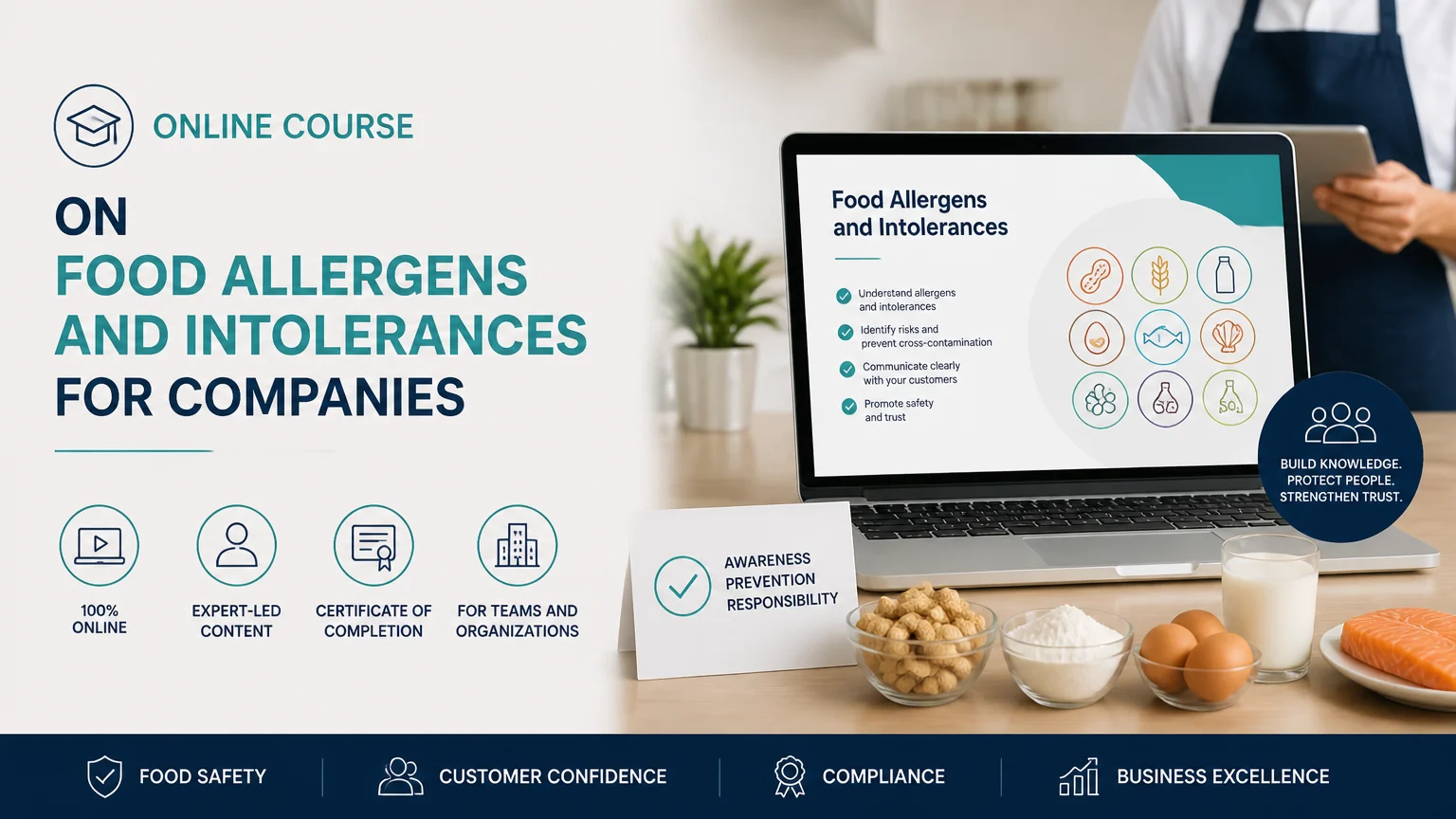
Online course on food allergens and intolerances for companies - allergens
Your customers' safety hinges on your knowledge, and taking an informative course on food sensitivities and allergies can empower you to manage these risks effectively. Ensure you are prepared for the evolving expectations of diners today.
Hello! If you run a food business—be it a restaurant, a catering service, a grocery store, or even a factory—this article is for you. Have you stopped to consider the importance of food safety for your customers and how a small mistake can have devastating consequences? Today we are going to talk about something crucial: food allergens and intolerances, and how an online course can be the key to protecting your customers and, of course, your business.
In today''s world, awareness of food allergies and intolerances is constantly growing. More and more people are aware of their special dietary needs and expect food businesses to take their health seriously. Are you prepared to meet this demand?
First of all, let''s clarify the concepts. A food allergy is an immune system reaction to a specific protein in a food. This reaction can be rapid and severe, even life-threatening. A food intolerance, on the other hand, is a difficulty in digesting a food, usually due to a lack of an enzyme. Although intolerances can cause discomfort, they are rarely life-threatening. For example, a peanut allergy can lead to an anaphylactic reaction, while lactose intolerance can cause bloating and gas. It is essential that your staff understands this difference to offer appropriate service.
It''s not just about ethics; it''s also about legality. Both European and Spanish regulations oblige food businesses to inform about the presence of allergens in their products. Failure to comply with these regulations can lead to significant economic sanctions, in addition to severely damaging your company''s reputation. Imagine the cost of a fine and the negative impact on your brand image... Better safe than sorry!
Ultimately, your company has the responsibility to guarantee the safety of the food it offers. This involves knowing the allergens present in your ingredients, informing your customers clearly and accurately, and avoiding cross-contamination in food preparation and handling. What value does your customers'' trust hold? A lot!
Are you wondering if it''s really worth investing in an online course for your employees? The answer is a resounding yes! Here''s why:
Online courses offer flexibility that in-person courses cannot match. Your employees can access the content whenever and wherever they want, adapting the training to their schedules and learning pace. Do you have staff with complicated schedules? An online course is the solution!
As we have already mentioned, ignorance of allergen regulations can lead to economic sanctions. An online course provides your employees with the necessary knowledge to avoid mistakes and comply with the law. How much does a fine cost you? Certainly more than an online course!
Demonstrating that you care about your customers'' safety and that you invest in staff training will give you a competitive advantage and improve your company''s reputation. Customers value transparency and responsibility. Do you want to be seen as a trustworthy company? Start with training!
A good online course will provide you with the necessary tools and knowledge to effectively manage allergens in your business. Here is what you should expect to learn:
Knowing the 14 mandatory declaration allergens is fundamental. Do you know what they are? Here''s a hint: milk, eggs, fish, crustaceans, nuts, peanuts, soy, gluten, mustard, sesame, celery, lupin, mollusks, and sulfites! A course will teach you how to identify them in ingredients and recognize the symptoms of an allergic reaction.
Labeling is the main communication tool with your customers. You will learn how to write clear, precise, and legible labels, highlighting the presence of allergens visibly. How do you communicate allergens on your menus? Make sure the information is easy to find!
Cross-contamination is the transfer of allergens from one food to another during preparation or handling. This is a significant risk, especially in kitchens where foods with and without allergens are prepared.
Keeping the kitchen clean and organized is essential to prevent cross-contamination. You will learn how to effectively clean and disinfect surfaces, utensils, and kitchen equipment. Do your employees know how to properly clean a cutting board after using it to cut bread containing gluten?
Storing food correctly, separating those containing allergens from those that do not, is crucial. It is also important to use different utensils and equipment for handling foods with and without allergens. Do you have specific storage areas for gluten-free foods?
Knowing how to answer customer questions about allergens and offering safe alternatives is fundamental. A course will provide you with the necessary communication skills to reassure customers and guarantee their safety. How do you respond when a customer asks you if a dish contains peanuts?
With so many options available, choosing the right online course can seem overwhelming. Here are some tips:
Make sure the course is updated with current regulations and covers all relevant aspects of allergen management in your type of business. Does the course include information on the latest changes in labeling legislation?
Look for courses accredited by recognized organizations, as this guarantees the quality of the content and the validity of the certification. Is the course certification recognized in your sector?
It is important that the course offers technical support and personalized tutoring to resolve doubts and help you implement what you have learned in your company. Can you contact a tutor if you have specific questions?
Once your employees have completed the course, it''s time to put what they''ve learned into practice.
Review your menus and ensure that allergen information is clear and accurate. Offer allergen-free alternatives so that all your customers can enjoy a safe meal. Do you have gluten-free, lactose-free, and nut-free options on your menu?
Allergen management is an ongoing process. Offer periodic training to your employees to keep their knowledge current and reinforce good practices. How often do you update your staff''s allergen training?
Create clear and concise action protocols so that all your employees know how to act in the event of an allergic reaction. What should your staff do if a customer suffers an allergic reaction at your establishment?
There are increasing numbers of allergen-free products available on the market. Stay up-to-date with the latest trends and offer innovative options to your customers. Are you familiar with the latest alternatives to cow''s milk for people with lactose intolerance?
New technologies, such as mobile apps and QR codes, are making it easier to communicate allergen information to consumers. Explore these tools to enhance your customers'' experience. Do you use QR codes on your menus so customers can access detailed allergen information?
In summary, investing in an online course on food allergens and intolerances for your employees is not just a legal obligation, but also an investment in the safety of your customers, the reputation of your company, and the future of your business. Don''t hesitate any longer—start protecting your customers today!
Search
Popular searches