For Onlinecourses55
|
2026-02-23
For Onlinecourses55
|
2026-02-23

Online course on food allergens and intolerances with case studies - allergens
Are you a food safety enthusiast? Discover essential knowledge with our course on food sensitivities and allergies and become a proactive advocate for safety.
Hello to all lovers of good food and food safety! Have you ever wondered how important it is to know about food allergens and intolerances? In today''s world, where more and more people suffer from allergies and intolerances, understanding this topic is not just useful—it''s crucial! And what better way to do it than with an online course full of practical case studies that will make you feel like a true food detective?
Have you noticed how often you hear someone say "I am gluten intolerant" or "I am allergic to nuts"? It''s no coincidence. Food allergies and intolerances are on the rise, and the reasons are varied: changes in diet, environmental factors, and even the stress of modern life.
Think about this: every time you eat out, do you fully trust that the restaurant knows what ingredients are in your dish? What if you have a severe allergy? Information and prevention are key.
Here comes the serious part. Legislation regarding allergens is increasingly strict. Restaurants, food manufacturers, and any food-related business have a legal obligation to clearly inform about the presence of allergens in their products. Failure to do so can result in significant fines and, what is worse, jeopardize the health of consumers.
Can you imagine the negative impact an intoxication or severe allergic reaction due to poor labeling or lack of information would have on your business? A course on allergens and intolerances helps you avoid these problems and protect your customers.
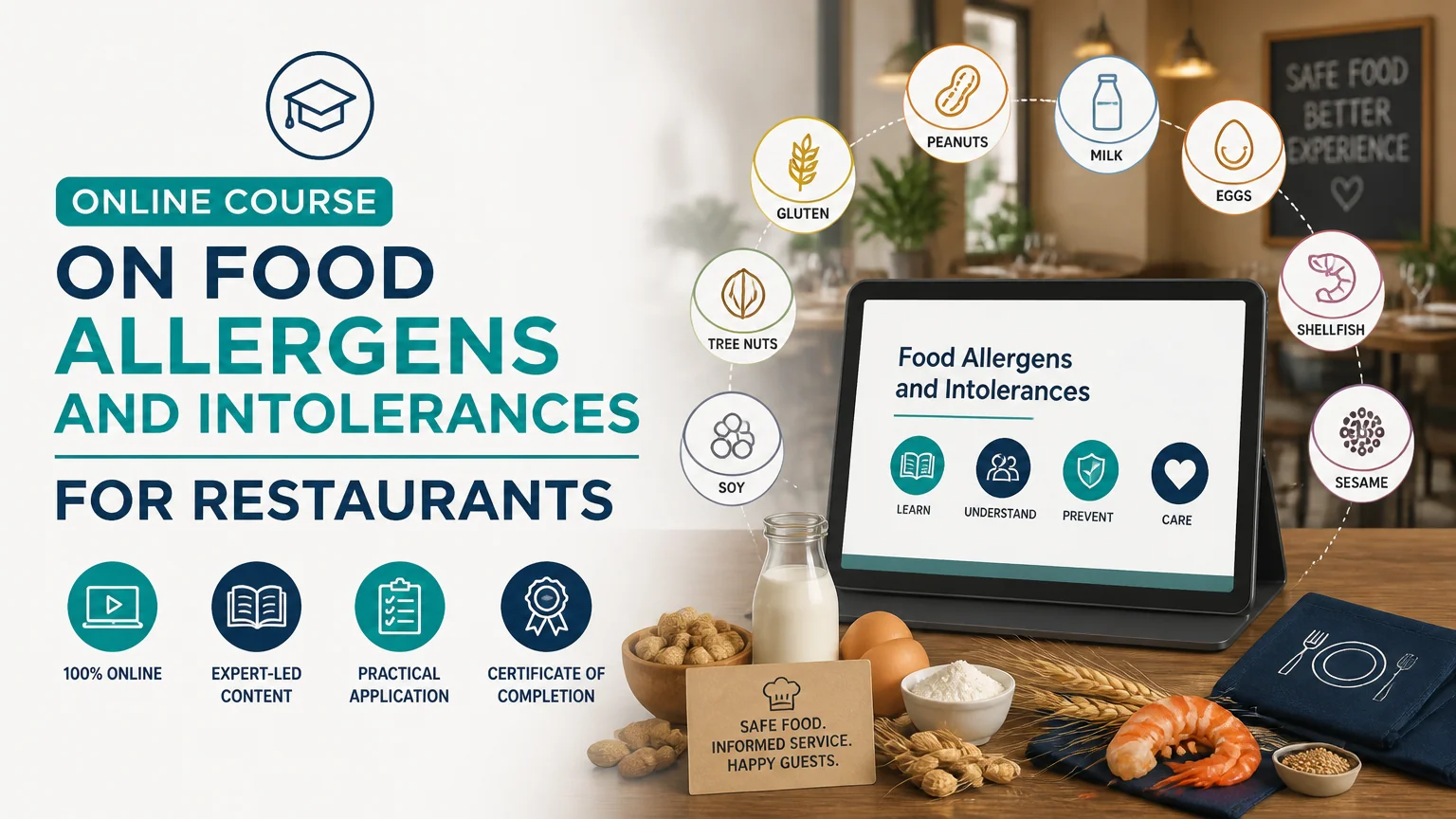
Let''s start with the basics. Do you know the 14 mandatory declaration allergens in the European Union? And how are they classified? In this course, you will learn to identify the most common allergens: milk, eggs, nuts, gluten, soy, fish, crustaceans, mollusks, sesame, mustard, celery, sulfites, lupin, and sulfur dioxide.
Watch out! It''s not just about memorizing the list. You will also learn where these allergens hide, in which ingredients they are found, and how they can contaminate other foods.
Is an allergy the same as an intolerance? Not at all! Although both can cause discomfort, allergies involve the immune system and can be life-threatening. Intolerances, on the other hand, are usually less severe and are related to digestive issues.
In the course, you will learn to differentiate between the two, recognize the symptoms, and know how to act in each case. Your knowledge can save lives!
As mentioned before, legislation is key. You will learn everything about Regulation (EU) No 1169/2011, which regulates food information provided to consumers. What must a food label include? How should the presence of allergens be highlighted? What information must be provided on restaurant menus?
Mastering the legislation will allow you to comply with regulations and avoid penalties. Furthermore, you will demonstrate to your customers that you take their health and safety seriously.
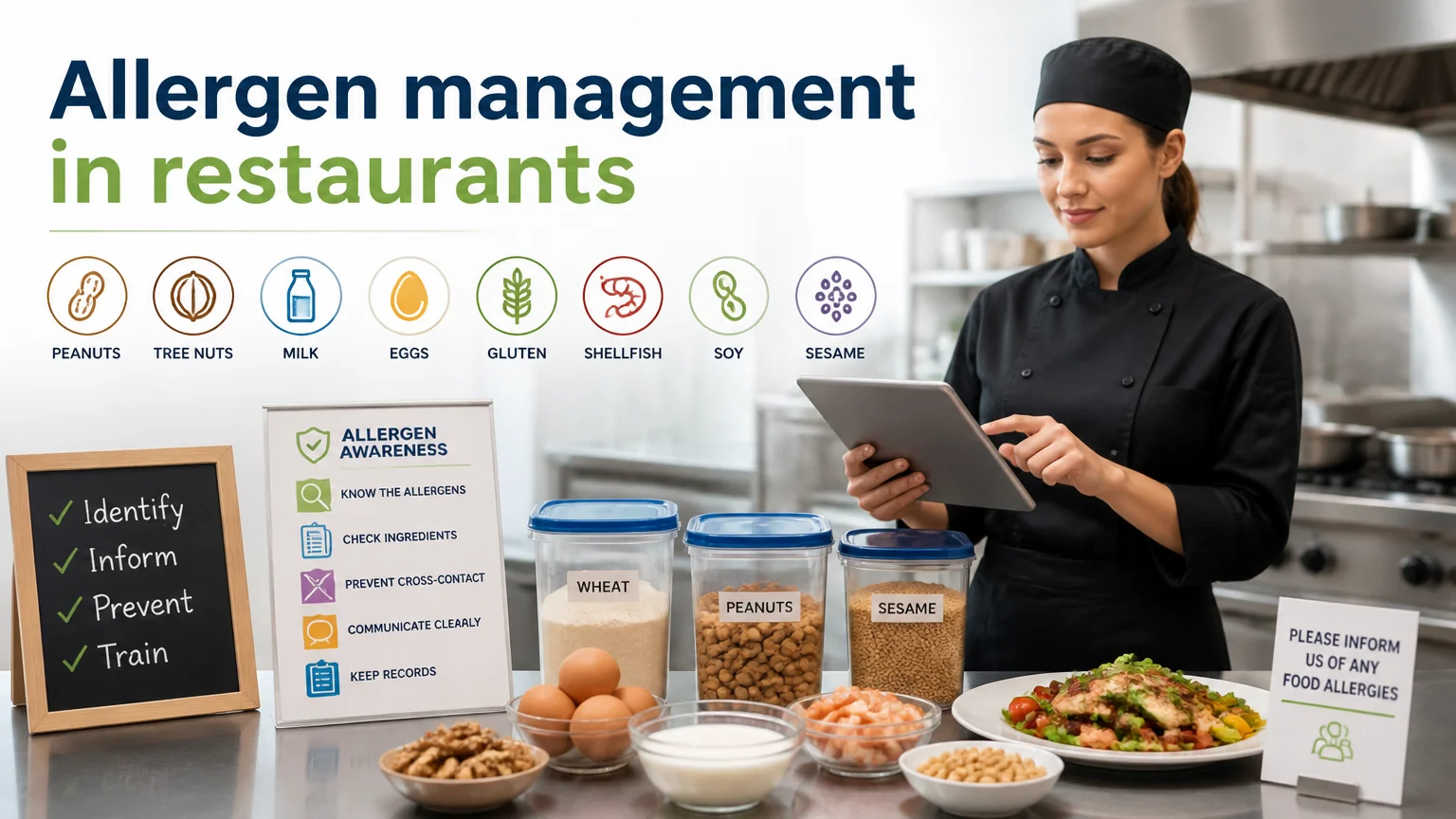
This is where theory turns into practice. You will learn to manage risks in the kitchen or production plant to avoid cross-contamination. How to organize workspaces? What utensils to use? How to clean and disinfect correctly?
The course will provide you with tools and protocols to create a safe environment and minimize the risk of allergic reactions. Prevention is the best remedy!
Are you someone who prefers to learn at your own pace? No problem! The course offers live online classes where you can interact with the instructor and resolve your doubts in real-time. And if you cannot attend a class, don''t worry! All sessions are recorded so you can watch them whenever you want.
Learning doesn''t end in the classroom. The course features discussion forums where you can share your experiences, ask questions, and learn from other students. Additionally, you will have access to personalized tutoring to resolve any questions that arise.
Imagine you are the head chef of a restaurant, and a customer with a gluten allergy orders a dish that, in principle, does not contain gluten. However, due to poor food handling, the dish becomes contaminated with gluten, and the customer suffers an allergic reaction.
What went wrong? How could you have avoided this situation? In this practical case study, you will analyze the causes of the incident and propose solutions to prevent cross-contamination.
Now, put yourself in the shoes of a social event organizer. One of the attendees suffers a severe allergic reaction after eating an appetizer. What measures should you take? How can you help the affected person? What responsibilities do you have as an organizer?
This practical case study will teach you how to act in emergency situations and manage allergen information at social events.
If you work in a restaurant, bar, hotel, or any other hospitality business, this course is for you. You will learn how to offer a safe service and comply with current legislation.
If you produce or handle food, this course will provide you with the necessary tools to guarantee the safety of your products and protect your customers.
If you are a doctor, nurse, nutritionist, or any other healthcare professional, this course will help you better understand food allergies and intolerances and offer better service to your patients.
If you are simply concerned about your health and that of your loved ones, this course will give you the knowledge necessary to make informed decisions and avoid risks.
You will learn everything you need to know about food allergens and intolerances in a practical and enjoyable way.
Having knowledge of food safety is an added value in the job market.
You will avoid penalties and protect your customers.
The enrollment process is simple and fast. You just need to visit our website, complete the registration form, and make the payment. In just a few minutes, you''ll be ready to start learning!
The course includes all the necessary materials: presentations, videos, practical guides, etc. Additionally, you will have access to our online platform, where you can view classes, participate in discussion forums, and access personalized tutoring.
In summary, an online course on food allergens and intolerances is a smart investment in your future. It will not only provide you with valuable knowledge but also help you protect your customers, comply with legislation, and improve your career prospects. Don''t hesitate—sign up today!
Search
Popular searches