For Onlinecourses55
|
2026-02-09
For Onlinecourses55
|
2026-02-09
What are the 14 allergens that must be declared? - allergens
Having knowledge about the most common food reactions can make all the difference in maintaining health. Dive into this informative program on allergenic ingredients and empower yourself to make safe choices.
Food allergy, what a topic! It affects a growing number of people worldwide, and understanding what causes it and how to avoid it is fundamental to ensuring food safety. Legislation requires producers to inform about the presence of certain allergens in their products, and here we will explain what those 14 "usual suspects" are.
Imagine this: you are eating something delicious, and suddenly you feel terrible! You could be experiencing an allergic reaction. The mandatory declaration of allergens: helps people make informed decisions about what they eat, thus avoiding potentially severe reactions. It’s like having a protective shield against an invisible enemy.
Almost everyone! Although food allergies are more common in children, they can appear at any age. Some people experience mild symptoms, such as itching, while others suffer severe reactions that can be life-threatening. The declaration of allergens: is crucial for everyone, but especially for those who have already been diagnosed with allergies.
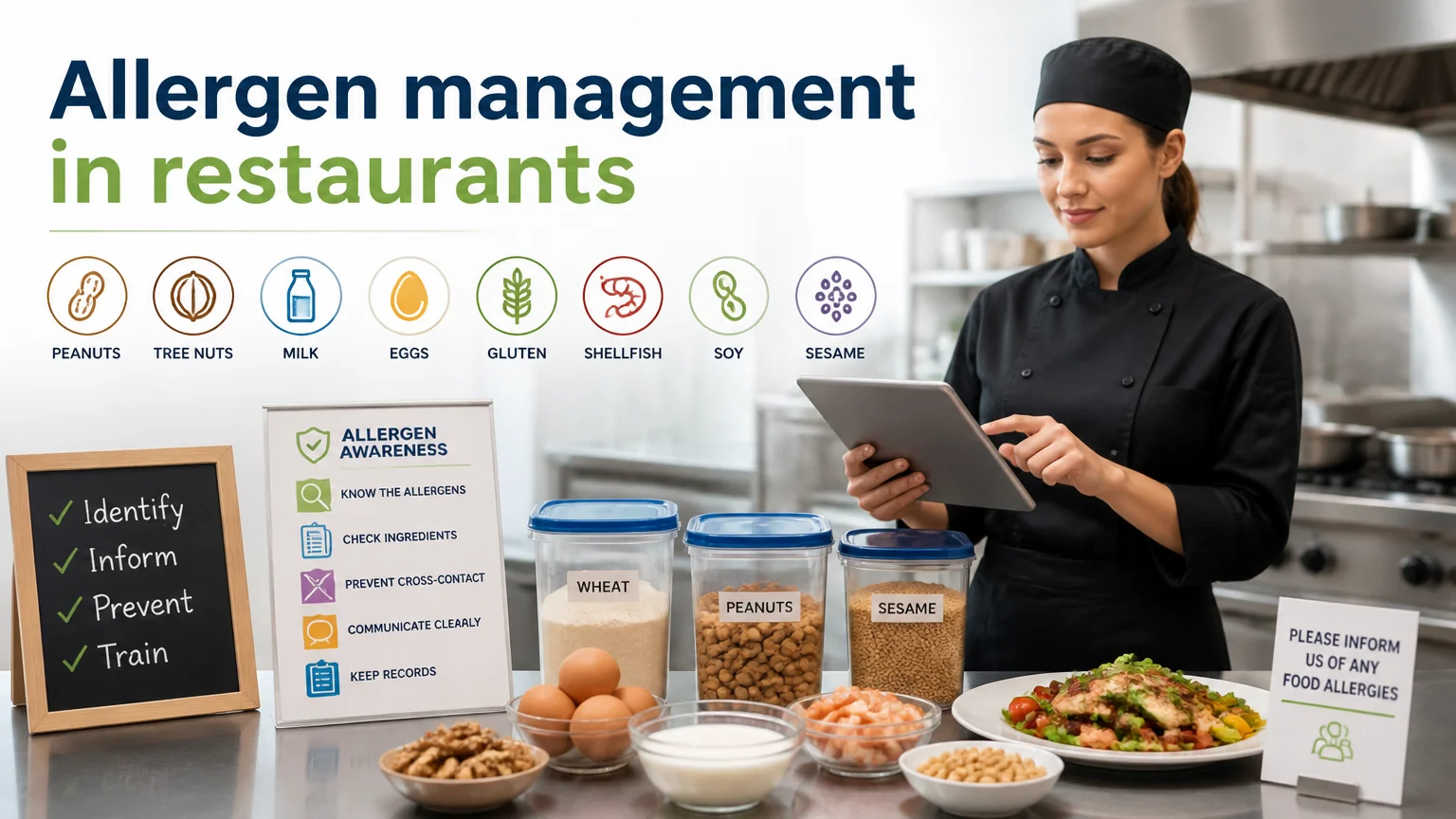
Now, let''s get down to business. Here are the 14 allergens that must be mandatorily declared in the European Union and many other countries:
Gluten: is found in cereals such as wheat, barley, rye, and oats (in some cases, due to cross-contamination). Gluten-containing products are a large part of the Western diet, but for people with celiac disease or gluten sensitivity, they are a real problem!
Shrimp, prawns, crabs! These delicious sea delicacies can be a trigger for some people. Pay attention: to the ingredients in dishes like paellas, seafood soups, and sauces.
From omelets to cakes, eggs: are everywhere. If you are allergic to eggs, you must be careful with baked goods, sauces (like mayonnaise), and some desserts.
Another classic of the sea! Fish: can be present in seemingly innocuous dishes like Worcestershire sauces or some Caesar salads.
The king of allergenic nuts! Peanuts: are a common ingredient in many sweets, sauces, and oils. Be careful with the labels!
Soy: is a versatile ingredient present in soy milk, tofu, soy sauces, and many processed products. Read the labels carefully, especially if you are vegan or vegetarian!
Milk: and its derivatives (cheese, yogurt, butter) are common allergens, especially in children. Watch out for baked goods, ice creams, and creamy sauces!
Almonds, hazelnuts, walnuts, cashews, pistachios... the list is long! Tree nuts: are common in desserts, chocolates, and some Asian dishes.
Often overlooked, celery: can be present in soups, sauces, and broths. Do not underestimate the allergenic power of the humble celery!
Mustard: is more than just a simple condiment. It can be present in salad dressings, sauces, and marinades.
Sesame seeds: are used in breads, salads, and oriental dishes. Even tahini (sesame paste) can be a problem!
They are used as preservatives: in wines, dried fruits, and some canned products. They can cause reactions in sensitive people!
Often used as flour substitutes: in gluten-free products, lupins can be a hidden allergen for some people.
Mussels, clams, oysters... another group of seafood that can cause allergic reactions! Be careful: with paellas and seafood soups.
If you are a food producer, listen carefully! Allergen legislation: is strict, and it is your responsibility to ensure that your products are clearly labeled.
The European Union: has specific legislation (Regulation (EU) No 1169/2011) that requires the 14 allergens to be declared clearly and visibly on food labels.
The labeling: must be easy for the consumer to understand. Allergens must be highlighted in the list of ingredients (for example, in bold, italics, or a different color).
Sometimes: allergens hide in unexpected places. Here are some clues to detect them!
Cross-contamination: occurs when one food comes into contact with another containing an allergen. This can happen during production, storage, or food preparation. It is crucial to be careful in the kitchen and in factories!
Many processed ingredients: may contain hidden allergens. Always read the labels carefully and don''t be afraid to ask the manufacturer if you have any doubts!
If you have a food allergy: you are not alone! Here are some tips for managing it safely.
Knowing the 14 mandatory declaration allergens: is essential to ensure food safety for everyone. Whether you are a producer, consumer, or simply someone who cares about health, we can all do our part to prevent allergic reactions!
Question 1: What should I do if I think I am having an allergic reaction? Answer: If you experience symptoms of an allergic reaction (difficulty breathing, swelling, hives), seek immediate medical attention. Question 2: Where can I find additional information about food allergies? Answer: Consult an allergist, visit websites of food allergy organizations, or speak with a registered dietitian. Question 3: Is a food allergy the same as a food intolerance? Answer: No. A food allergy: involves the immune system, while a food intolerance: does not. Intolerances may cause discomfort but are generally not as serious as allergies. Question 4: Can I outgrow a food allergy? Answer: Some food allergies: especially in children, may disappear over time. However, other allergies, such as nut allergies, tend to be lifelong. Question 5: What does "may contain traces of..." mean on a food label? Answer: It means that the product: is manufactured in a facility where allergens are also processed. Although precautions are taken to avoid cross-contamination, there is a risk that the product contains small amounts of the allergen. If you are highly allergic, you should avoid these products.