For Onlinecourses55
|
2026-01-26
For Onlinecourses55
|
2026-01-26

Online course on food allergens, intolerances, and legislation - allergens
Navigating allergen regulations is crucial for your business. Our course on allergens and legal compliance will keep you informed and compliant.
Food safety is a topic that concerns all of us, right? From the restaurants we frequent to the products we buy at the supermarket, information about food allergens and intolerances is crucial. And that''s where training comes in. If you are reading this, you are probably wondering how you can acquire the necessary knowledge to comply with current legislation and, at the same time, protect your customers. An online course is the answer!
Think about this: a simple error in allergen information can have devastating consequences for a customer. We are not just talking about a bad experience, but potential severe allergic reactions! Therefore, training in this field is more than a mere formality; it is an ethical and legal responsibility.
Food safety is not just a buzzword. It is the foundation of trust between consumers and businesses. Ensuring that the foods you offer are safe and properly labeled is fundamental to protecting your customers'' health. A course on allergens and intolerances provides you with the necessary tools to identify, control, and communicate the risks associated with these elements.
Imagine the bad reviews and damage to your reputation if a customer suffers an allergic reaction at your establishment. In the age of social media, information travels at the speed of light. A single incident can stain your business image for a long time. Investing in training on allergens and intolerances is an investment in the reputation and future of your company.
A good online course will provide you with a solid foundation in the following aspects:
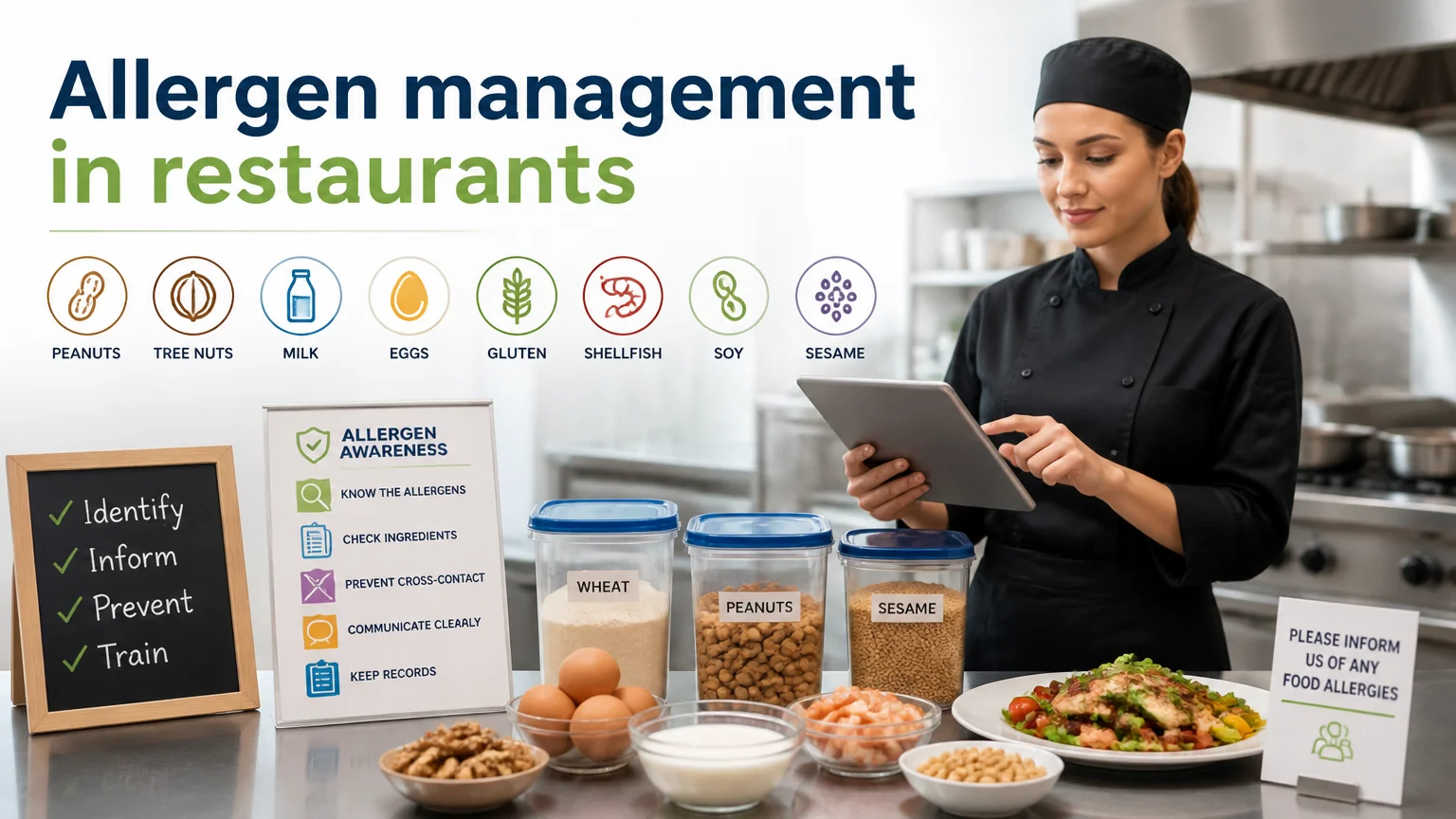
What are the most common allergens? Gluten, milk, eggs, nuts, fish... A comprehensive course will teach you how to identify these and other allergens present in food, as well as their possible sources of contamination.
Legislation on allergens and intolerances can be a labyrinth. A course will help you understand the applicable rules and regulations, both nationally and European, so that you can comply with them without problems.
Cross-contamination is one of the greatest risks in food preparation. A course will teach you how to implement preventive measures to prevent allergens from spreading to other foods and causing adverse reactions.
Do you know how to properly label your products? Allergen information must be clear, legible, and easy to find. A course will guide you in preparing labels that comply with current regulations and protect your customers.
Are you wondering if an online course is as effective as an in-person one? Let me tell you yes, and sometimes even more!
The main advantage of an online course is flexibility. You can study at your own pace, whenever and wherever you want. You don''t have to adjust to rigid schedules or travel to a specific location.
Online courses usually offer access to updated material, interactive resources, and online tools that facilitate learning. You can consult the information when you need it and review the concepts that you find most difficult.
Online courses are generally more economical than in-person ones. Furthermore, you save on travel, accommodation, and meal expenses. More money in your pocket!
Legislation on food allergens and intolerances is constantly evolving. It is essential to stay up to date with the latest developments to ensure regulatory compliance and protect your customers.
This regulation is the cornerstone of European legislation on food information. It establishes the requirements for food labeling, including the obligation to indicate the presence of allergens.
In addition to the European regulation, Spain has its own specific regulations on allergens and intolerances.
This royal decree regulates the food information that must be provided to the final consumer, including allergens. It is essential to know it thoroughly to avoid sanctions and protect your customers.
Not all online courses are the same. Here are some key factors you should consider when choosing the right course:
Research the reputation of the course provider. Does it have good references? Is it accredited by a recognized entity? Make sure you choose a course taught by professionals with solid experience and knowledge.
Analyze the content of the course program. Does it cover all relevant aspects of allergen and intolerance legislation? Is it updated with the latest regulatory changes? Choose a course that provides you with comprehensive and up-to-date training.
Does the course offer technical support and tutoring? It is important to have the help of a tutor or a support team who can resolve your doubts and guide you through the learning process.
Once you have completed the course, it is time to put what you have learned into practice. Here are some recommendations:
Training on allergens and intolerances should not be a one-off event. It is essential to offer continuous training to all staff so that they are up to date with the latest developments and best practices.
Develop an allergen control plan specific to your business. This plan should include preventive measures to avoid cross-contamination, action protocols in case of allergic reactions, and procedures to ensure the correct labeling of products.
Communication with customers is key. Clearly inform them about the allergens present in your dishes and products. Offer alternatives for people with intolerances. Listen to their needs and answer their questions kindly and professionally.
Training in food allergens and intolerances is evolving rapidly.
New technologies are transforming the way we learn. Online learning platforms, virtual reality, artificial intelligence... The future of training in allergens and intolerances is digital and personalized.
The market is constantly changing. New allergens, new intolerances, new regulations... Training in this field must adapt to changing market needs to remain relevant and effective.
In summary, an online course on food allergens and intolerances is a smart investment in the safety of your customers, the reputation of your business, and regulatory compliance. Don''t hesitate any longer and start training today!
Is it mandatory to take a course on food allergens and intolerances? It depends on local legislation and the type of business. However, it is highly recommended to ensure food safety and avoid penalties.
How long does an online course on food allergens and intolerances last? The duration varies depending on the course, but generally ranges between a few hours and several days.
What type of certificate is obtained upon completion of the course? Normally, a certificate of completion is obtained, certifying that you have completed the course and acquired the necessary knowledge.
Do I need prior knowledge to take a course on food allergens and intolerances? Not necessarily. Many courses are designed for people without previous experience in the subject.
Where can I find a good online course on food allergens and intolerances? Research online training platforms, consult with sector associations, and ask other professionals for recommendations.
Search
Popular searches