Decide on the best style for your CV by understanding the nuances between traditional and modern formats through our expert advice on crafting an effective resume that fits your career path.
In today’s competitive job market, standing out from the crowd is crucial to landing your dream job. One of the most important elements in this process is your curriculum vitae (CV). But which type of CV is most appropriate: the modern and eye-catching or the traditional and formal? The answer is not that simple and largely depends on your professional sector.
What Is a Traditional Curriculum Vitae?
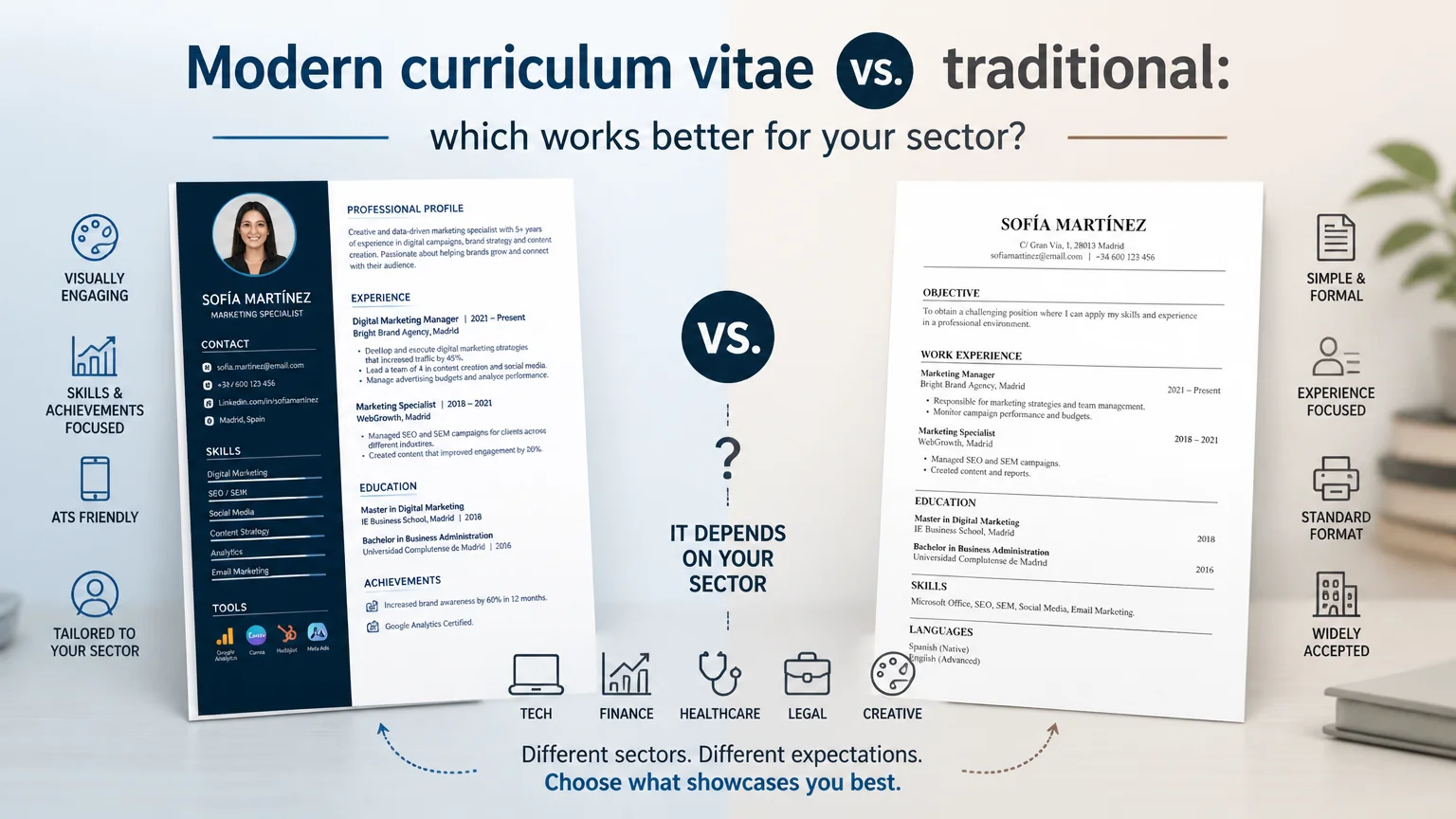
The traditional curriculum vitae is the classic format we all know. It is characterized by its reverse-chronological structure, starting with your most recent work experience and going back in time. It typically includes the following sections:
- Personal Details: Full name, contact information (phone, email, address).
- Work Experience: List of previous jobs with start and end dates, company name, and a brief description of your responsibilities and achievements.
- Education: Academic degrees, educational institutions, and graduation dates.
- Skills: List of soft and hard skills relevant to the position.
- References: (Optional) Contact information for people who can vouch for your work performance.
Advantages of the Traditional Curriculum Vitae:
- Clarity and Formality: It is easy to read and understand, making it ideal for sectors where formality is important.
- Emphasis on Experience: It highlights your professional trajectory, which is valuable if you have extensive experience in your field.
- Widespread Acceptance: Many companies and recruiters are familiar with this format, which makes it easier to review.
Disadvantages of the Traditional Curriculum Vitae:
- Can Be Monotonous: Its rigid structure can be boring and visually unappealing.
- Does Not Highlight Creativity: It doesn't offer many opportunities to show your personality or creativity.
- Less Suitable for Career Changes: If you are looking to change careers, a traditional CV might not be the best option.
What Is a Modern Curriculum Vitae?
The modern curriculum vitae is characterized by its visually attractive design, its focus on skills and achievements, and its flexibility in structure. It often uses graphic elements such as icons, progress bars, and colors to attract attention.
Features of the Modern Curriculum Vitae:
- Attractive Design: Uses visual elements to capture the recruiter's attention.
- Emphasis on Skills and Achievements: Highlights your most relevant skills and accomplishments instead of merely listing your responsibilities.
- Flexible Structure: Can adapt the layout to your specific needs and emphasize the most important information.
- Use of Keywords: Incorporates relevant keywords for the role you are applying for to optimize it for applicant tracking systems (ATS).
Advantages of the Modern Curriculum Vitae:
- Visual Appeal: Captures the recruiter's attention and makes reading easier.
- Highlights Skills and Achievements: Allows you to effectively showcase your capabilities and results.
- Customization: You can adapt the design and structure to your sector and specific skills.
- Better for Career Changes: Facilitates the transition to a new career by highlighting transferable skills.
Disadvantages of the Modern Curriculum Vitae:
- Can Be Confusing: If the design is too complex, it can hinder readability and comprehension.
- Not Suitable for All Sectors: It is not recommended for sectors where formality is essential, such as law or medicine.
- Requires More Time and Effort: Creating a high-quality modern CV takes more time and effort than a traditional CV.
Which Works Better for Your Sector?
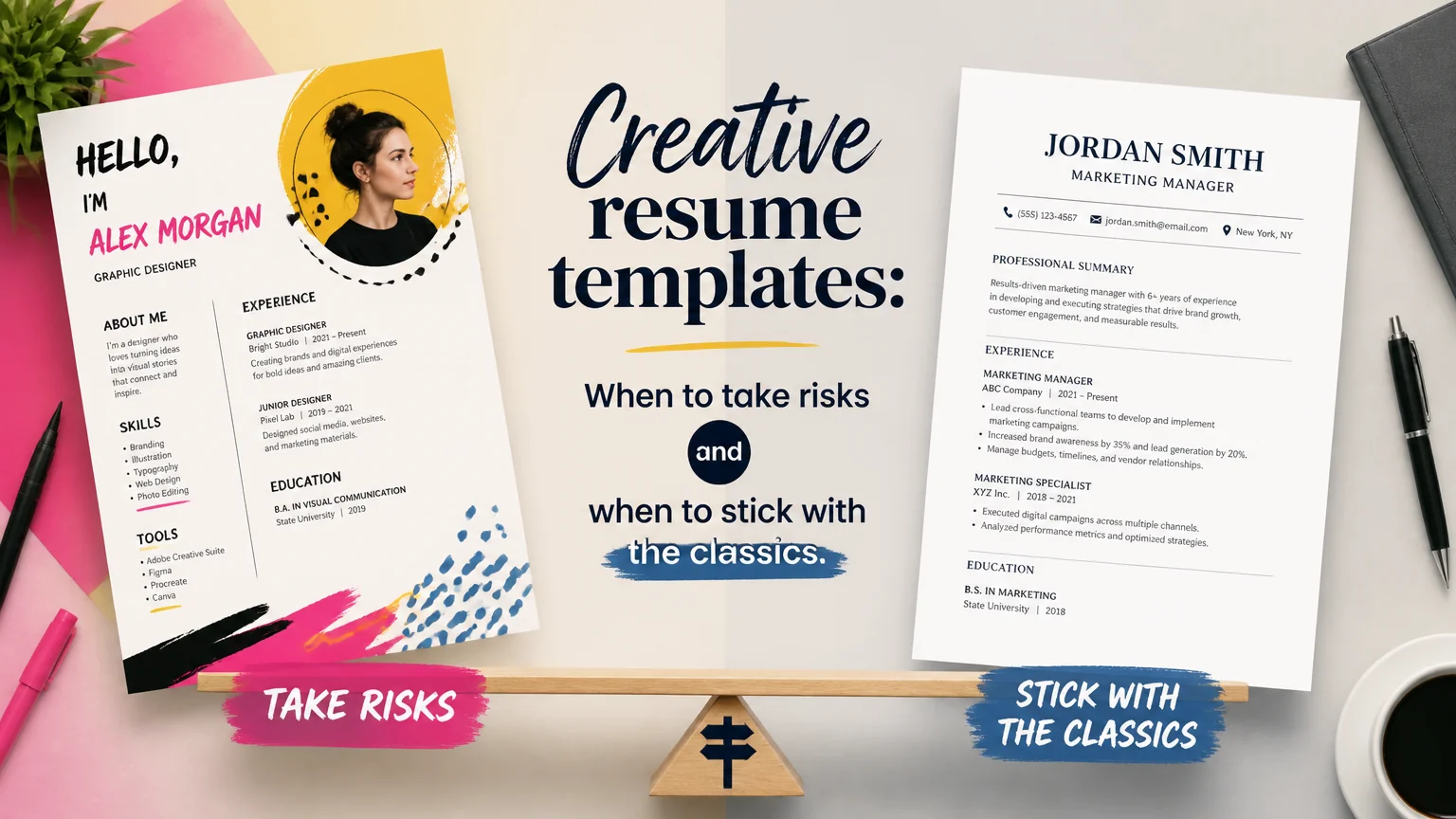
The choice between a modern and a traditional curriculum vitae largely depends on your professional sector and the culture of the company you are applying to.
Traditional Sectors:
In sectors such as law, medicine, finance, and public administration, a traditional curriculum vitae is usually the best option. Formality, clarity, and experience are highly valued in these fields.
Modern Sectors:
In sectors such as marketing, graphic design, technology, advertising, and communications, a modern curriculum vitae can be an excellent way to stand out. Creativity, innovation, and adaptability are highly appreciated in these fields.
Additional Considerations:
- Company Culture: Research the culture of the company you are applying to. If it is a traditional company, a traditional CV might be more appropriate. If it is an innovative company, a modern CV might be a better choice.
- Job Requirements: Read the job description carefully to identify the skills and experience being sought. Make sure your CV highlights these qualities, regardless of the format you choose.
- Applicant Tracking System (ATS): Many companies use ATS to filter CVs. Ensure your CV is compatible with these systems by using relevant keywords and a readable format. In general, traditional formats tend to be more ATS-friendly.
Conclusion: Adapt Your CV to the Situation
In summary, there is no single answer to whether a modern or traditional curriculum vitae is better. The key is to adapt your CV to your sector, the company culture, and the job requirements. Research, analyze, and choose the format that best allows you to showcase your skills and achievements and, ultimately, secure the interview you want.
Remember that, regardless of the format you choose, your curriculum vitae should be clear, concise, error-free, and easy to read. Good luck in your job search!
 For Onlinecourses55
|
2026-05-24
For Onlinecourses55
|
2026-05-24