Creative resume templates: when to take risks and when to stick with the classics - cv creation
Navigate the choice between classic and innovative designs with expert advice on crafting the perfect CV, ensuring your resume resonates with recruiters in your industry.
In the competitive jungle of job hunting, standing out is crucial. One of the first opportunities to make a memorable impression is through your curriculum vitae (CV). But should you opt for a classic, formal design, or venture into creative, avant-garde territory? The answer, like many things in life, is: it depends.
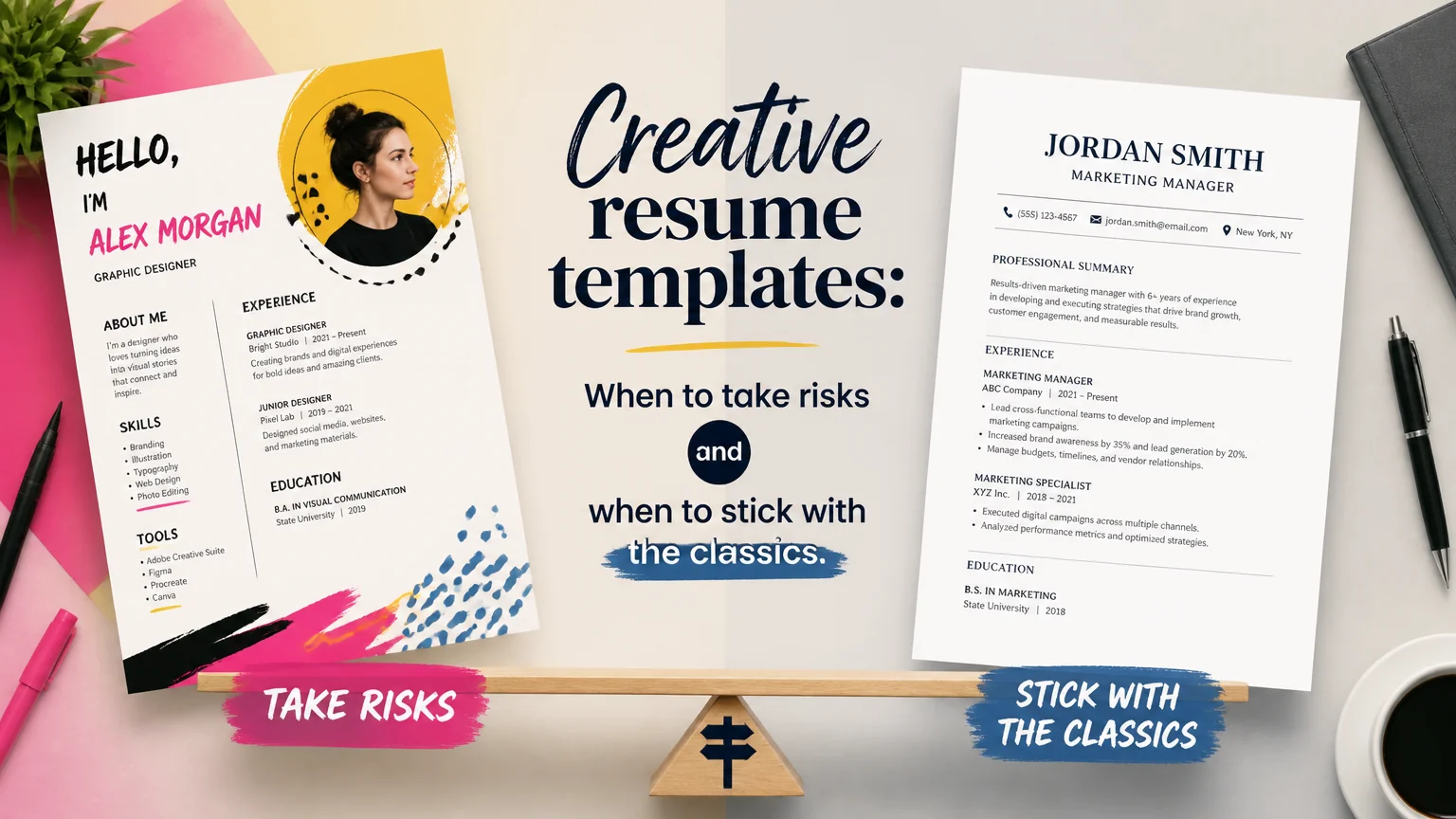
What Do We Mean by Creative and Classic CV?
Before making a decision, it's essential to define what we mean by these two CV styles.
Classic CV: Formality as an Ally
The classic CV is characterized by its traditional structure, sober typography (such as Arial, Times New Roman, or Calibri), and a clean, organized design. It usually includes well-defined sections such as:
- Personal details (name, contact information)
- Professional summary (or objective)
- Work experience (in reverse chronological order)
- Education
- Skills (hard and soft skills)
- Languages
- Additional information (optional, such as volunteering or awards)
The classic CV is a workhorse: reliable, predictable, and widely accepted. Its strength lies in its clarity and ease of reading, which allows recruiters to quickly identify relevant information.
Creative CV: Innovation and Personality
The creative CV, on the other hand, breaks with conventions. It uses more eye-catching designs, original typefaces, colors, graphics, and even multimedia elements (if it's a digital CV). Its main objective is to capture the recruiter's attention and showcase the candidate's personality and style.
A creative CV can include:
- Infographics that visualize your skills and achievements
- Interactive web designs (for developers or designers)
- Presentation videos
- Integrated online portfolios
- Use of storytelling to narrate your professional experience
When to Choose a Classic CV?
There are situations where the sobriety and formality of the classic CV are the best option:
- Traditional Sectors: Banking, finance, law, medicine, public administration. In these fields, a professional and serious image is paramount. An overly flashy CV could be counterproductive.
- Conservative Companies: If the company's culture is formal and hierarchical, it's better to opt for the security of the classic CV.
- High Volume of Applications: When a company receives hundreds or thousands of CVs, recruiters usually have little time to review them. A classic, clear, and concise design makes it easier to read and identify key qualifications.
- When Experience Is the Main Thing: If you have a solid and relevant professional track record, the classic CV allows the experience to speak for itself, without visual distractions.
When to Take a Risk with a Creative CV?
In other contexts, a creative CV can be your best weapon to stand out:
- Creative Sectors: Graphic design, marketing, advertising, communications, architecture, fashion, video games. In these areas, creativity is a core value, and your CV should reflect it.
- Startups and Innovative Companies: Companies seeking innovative talent usually value originality and the ability to think outside the box. A creative CV can demonstrate that you are a candidate with a disruptive mindset.
- When You Need to Compensate for Lack of Experience: If you have little work experience, a creative CV can help you capture the recruiter's attention and highlight your skills and potential.
- Online Job Search: On platforms like LinkedIn or company websites, a creative digital CV (such as an online portfolio) can be more impactful than a simple PDF document.
Tips for a Successful Creative CV
If you decide to take a risk with a creative CV, keep these tips in mind:
- Maintain Professionalism: Creativity should not sacrifice clarity and legibility. Avoid illegible typefaces, garish colors, and overly confusing designs.
- Be Relevant: Creativity should serve your skills and experience, not the other way around. Make sure the design is relevant to the position you are applying for.
- Adapt the CV to Each Job: Don't send the same creative CV to every company. Customize the design and content to match the specific requirements of each position.
- Ask for Feedback: Before sending your creative CV, show it to friends, family, or mentors to get their opinion. Make sure the design is attractive and understandable.
- Test Compatibility: If you create a digital CV, make sure it is compatible with different devices and browsers.
 For Onlinecourses55
|
2026-10-06
For Onlinecourses55
|
2026-10-06