For Onlinecourses55
|
2026-08-22
For Onlinecourses55
|
2026-08-22

Mindfulness and emotional coaching powerful combinations - emotional coach
Combining mindfulness with emotional work can lead to profound insights; a skilled guide can help you integrate these practices into your life for lasting change.
Combining mindfulness exercises with emotional coaching processes enhances results. Mindfulness favors non-reactive observation of thoughts and sensations, which creates a safe ground for exploring intense emotions. When a person learns to remain non-judgmentally present, he or she can detect automatic patterns that previously went unnoticed and thus make decisions more aligned with his or her values.
In addition, the support of a guide that structures emotional work makes it easier to transform that observation into learning and action. It's not just about noticing what's going on internally, but understanding the stories we carry, restructuring them and practicing healthy alternatives. The combination shortens the time between awareness and actual behavioral change.
The regular practice of mindfulness teaches us to recognize early signs of discomfort before they escalate. This ability enables the application of emotional tools - such as cognitive reappraisal or boundary management - more effectively, avoiding impulsive reactions. The result is often a reduction in emotional intensity and faster recovery from stressful episodes.
Being present helps to separate automatic reactions from genuine desires. In coaching sessions, that clarity translates into more coherent decisions: choice of goals, priorities and next steps that reflect what the person really wants, not just what arises in a fleeting emotional state.
Practicing presence with a gentle, non-judgmental attitude facilitates self-compassion. By integrating exercises that encourage self-care, emotional work becomes less punishing and more adaptive, increasing resistance to difficulties and resilience.
Beginning with a few minutes of attention to the breath or the body helps to center both the companion and the person being accompanied. This brief pause allows to abandon the urgency of the day and to place oneself in the here and now, creating a safe base to work on emotions.
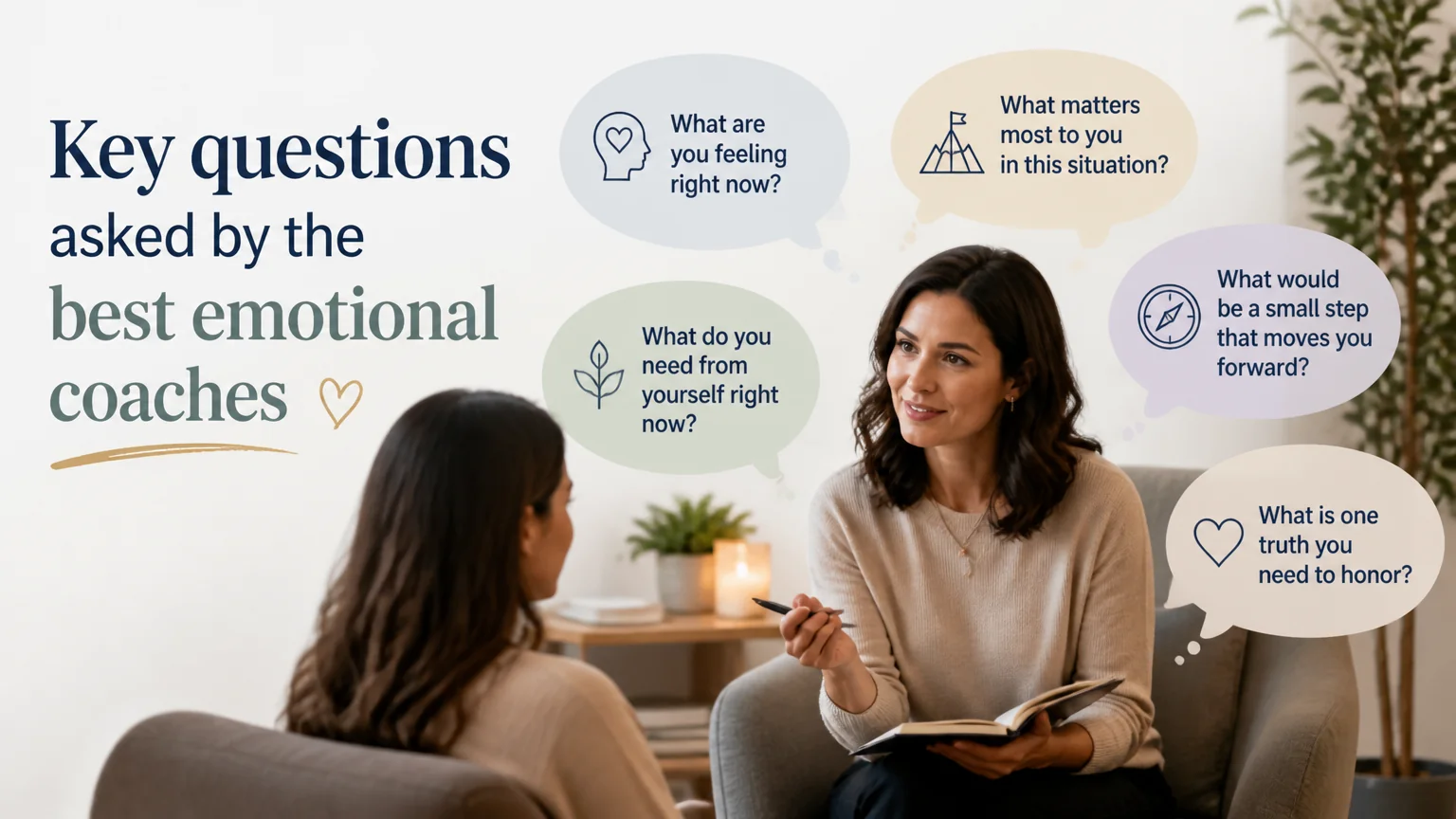
Once present, identification of emotions, associated thoughts and bodily sensations can be facilitated. Open-ended, reflective questions help to go deeper without inducing answers. The goal is to map internal experience with curiosity, not immediate solutions.
After exploration, specific tools are introduced: cognitive reframing, design of behavioral experiments, self-compassion exercises or gradual exposure techniques. It is key that any intervention is followed by a brief mindfulness practice to integrate what has been learned and observe its effect on the body and mind.
Perform a body scan for 5 to 10 minutes recording sensations without trying to change them. At the end, ask, "What emotion comes up?" Describe without judgment. This practice increases the connection between sensation and emotion and makes it easier to name it accurately.
When a limiting belief arises, take three deep breaths, observe the thought, and then formulate a more compassionate alternative. Practicing this cycle strengthens the ability to interrupt automatic thoughts and replace them with more helpful options.
When identifying an intense emotion, label it with a word (e.g., sadness, anger). Hold the label while you breathe and, from that calmness, design a small concrete step you can take in the next 24 hours to address that emotion or its cause.
You don't need to dedicate hours to notice changes. Micro-practices of five minutes a day can be very effective if maintained regularly. For example: start the morning with a brief mindful breath followed by an emotional intention (what tone you want to set in your interactions), or close the day with a brief review of emotions and a gesture of self-care.
In the professional environment, it is helpful to set rituals that mark transitions - entering a meeting, starting a complex task - with an anchor of presence that allows you to face whatever comes next with more resources.
Many expect immediate changes and get frustrated if they don't see them. It is important to emphasize that emotional learning and the consolidation of new responses require sustained practice. Setting small goals and celebrating them helps maintain motivation.
Mindfulness is not a tool for avoidance, but for awareness. If it is used to dissociate from difficult emotions, it loses its transformative function. In such cases, combining presence with exploratory questions and concrete actions counteracts avoidance.
Without a clear framework, sessions may remain descriptions and not lead to change. It is advisable that each meeting ends with specific agreements and home practices that integrate presence and emotional work.
Reduction of impulsive reactions and shorter duration of intense emotional states.
Greater clarity in identifying emotions and the situations that trigger them.
Increased self-compassion and less self-criticism.
Sustained implementation of small behavioral changes that reflect personal values.
For those who accompany emotional processes, it is useful to be trained in mindfulness techniques and specific interventions for affective regulation. Maintaining a personal practice of presence facilitates authenticity in the work and allows modeling calm responses. In addition, structuring clear protocols that include exercises for the session and homework improves adherence and results.
Integrating presence practices with structured emotional work offers a balanced path between inner discernment and transformative action. By combining non-judgmental observation with concrete tools for understanding and modifying emotional responses, people regain choice and a sense of responsibility for their well-being. With perseverance, even small steps end up generating significant changes in daily life.