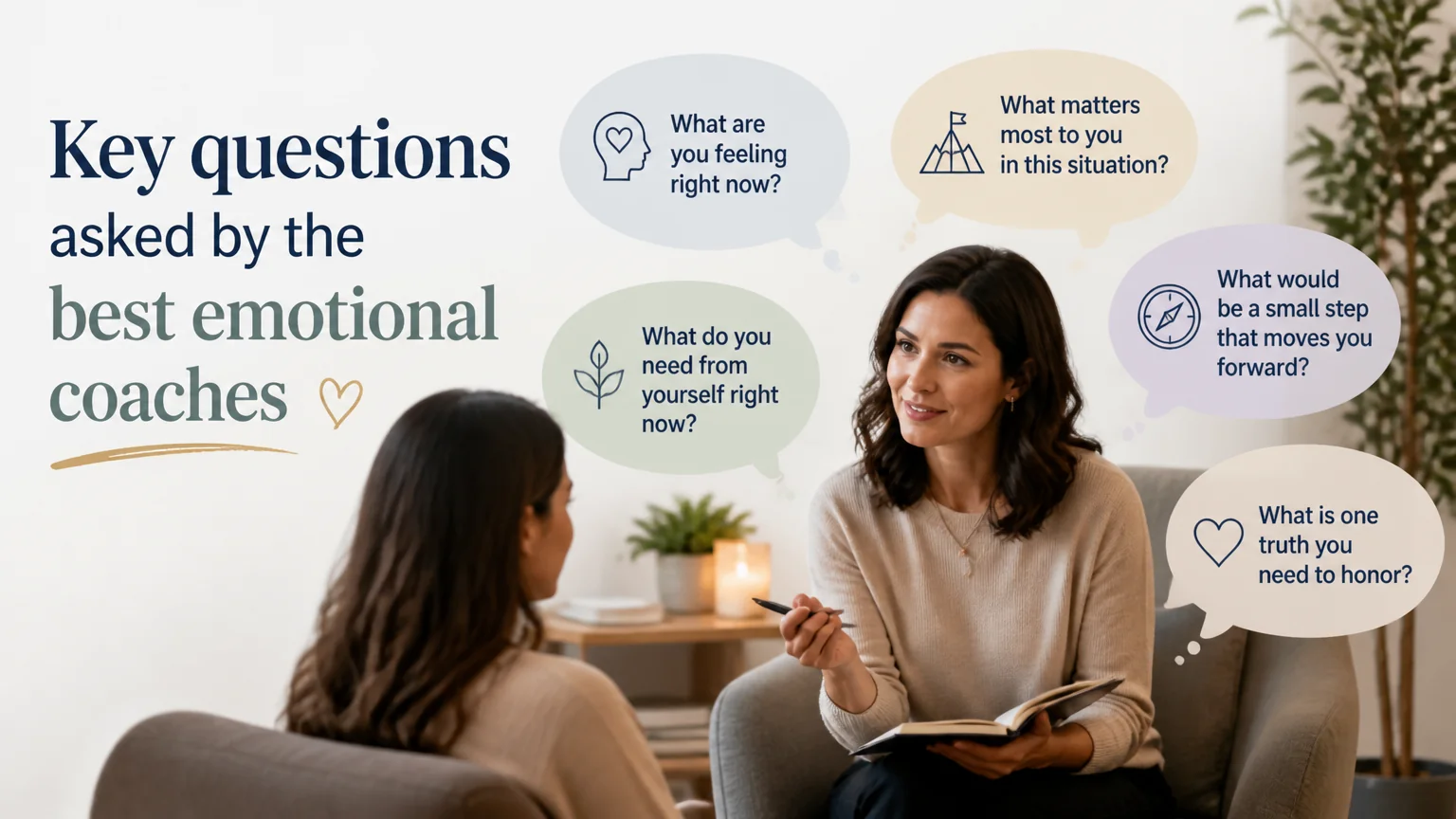
Key questions asked by the best emotional coaches - emotional coach
Building a solid foundation for your coaching skills starts with asking the right questions, and you can enhance your abilities even further by exploring this transformative course on emotional coaching techniques that empower your practice.
The importance of asking questions before giving advice
A good emotional coaching process begins with precise questions. It is not just a matter of gathering data, but of creating a space where the person can explore his or her inner world in safety. Questions guide attention, reveal nuances that go unnoticed and allow the emotional experience to be reconstructed from different angles. When questions are asked with respect and curiosity, the person feels that his or her experience is legitimate and opens up to new perspectives.
Fundamentals of effective inquiry
Curiosity not judgment
Inquiring from curiosity implies leaving aside labels and assumptions. One seeks to understand, not to judge. This attitude allows the answers to be sincere and rich in detail.
Focus on the present and experience
The best questions are anchored in what is happening now: concrete sensations, thoughts and behaviors. They avoid generalizations and promote specific descriptions that are useful for intervention.
Questions to identify the present emotion
- What are you feeling right now?
- Where do you notice that emotion in your body?
- If your emotion had a color, shape, or sound, what would it look like?
- How long have you noticed this sensation?
- What words best describe the intensity of what you are feeling?
Questions to explore origin and context
- What specific situation preceded this feeling?
- What thought went through your head just before the emotion appeared?
- Is there someone or something that reinforced that emotion?
- Has something similar happened in the past? What was it like then?
- What external factors (work, relationships, health) are influencing you now?
Questions to identify beliefs and patterns
- What do you think this means about you or others?
- What story are you telling yourself right now?
- Is there a rule or expectation you feel you need to live up to?
- How do you talk to yourself when this emotion comes up?
- If you look back on your life, at what times has this belief been present?
Questions to connect with values and goals
- What is important to you in this situation?
- What outcome do you really want?
- If you were to make the decision from your values, what would you choose?
- How would you like to feel about this area of your life six months from now?
- What commitments could you make today that are aligned with what you value?
Questions to discover resources and strengths
- What skills of yours can help you now?
- What have you done in the past that worked in a similar situation?
- Who do you trust and could you ask for support?
- What small steps could you take now to feel more in control?
- What gives you hope or calms you when you feel this way?
Questions to design actions and emotional management
- What intention would you like to set for the next week?
- What concrete action could you try in the next three days?
- How will you know that action is working?
- If the emotion returns, what contingency plan could you have?
- What habit could you incorporate to prevent this from escalating?
How to phrase questions so they work
Form matters as much as content. Open-ended questions invite thought; closed-ended questions limit the response. Avoid leading or judgmental-sounding questions. It is preferable to use a warm, leisurely, and legitimizing tone. Alternate exploratory questions with silences that allow space to think. Rephrase when necessary to make sure the message is understood and to get the person to go deeper.
Signs that a question is being useful
- The person expands on his or her story rather than giving terse answers.
- They begin to connect aspects that they did not see before.
- A sense of relief or clarity appears after answering.
- Concrete ideas for action or experimentation emerge.
- You perceive greater calm or emotional regulation.
Tips for responding with honesty and usefulness
- Take your time before answering, don't feel the need to fill in the silences.
- Be as specific as possible: names, moments, sensations and examples.
- If you don't know, say so. Uncertainty is valuable information.
- Also express what you are afraid of or what you would like to hide; often that is the key.
- Use your own language, avoid what sounds learned if it is not authentic.
Brief closing to take away when asking
The right questions don't solve everything by themselves, but they do open paths. They allow you to transform confusion into meaning, reactivity into choice, and discomfort into learning. Practicing these questions, both as a companion and as a self-explorer, helps to develop greater emotional intelligence and personal agency. Trying one or two each day and observing how the answers change is a powerful exercise for sustained growth.
 For Onlinecourses55
|
2026-10-06
For Onlinecourses55
|
2026-10-06