
Definition and Purpose of IE: Core Concepts Explained
Learn to identify and regulate emotions to make clearer decisions, reduce stress, build empathy, and resolve conflicts with self-control and resilience.
Watch Video For Onlinecourses55
|
2026-11-05
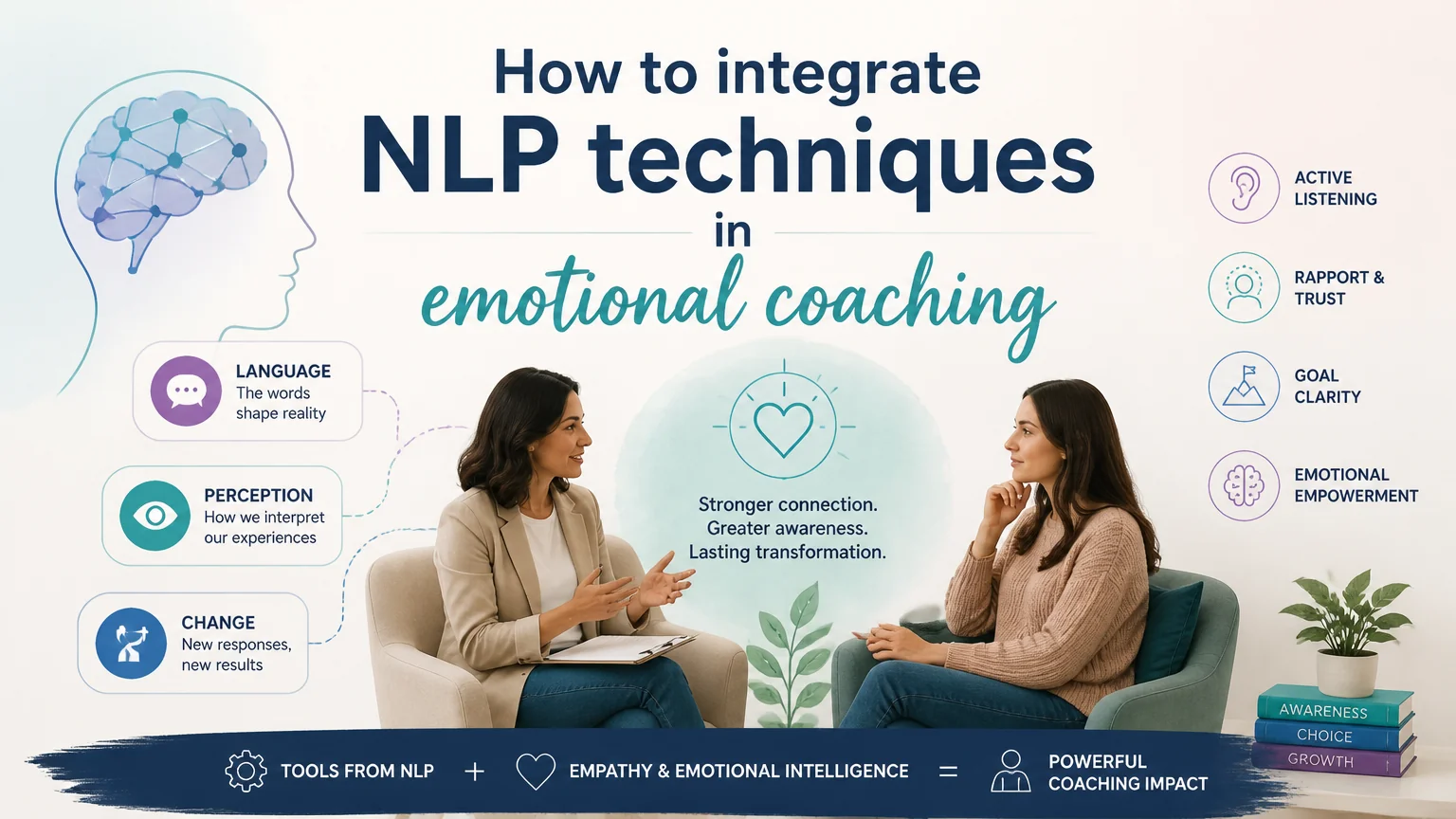
How to integrate nlp techniques in emotional coaching
Incorporating neurolinguistic programming with emotional management strategies can enhance your growth; a skilled instructor can help you apply these techniques effectively.
When working with emotions and personal changes, integrating neurolinguistic programming techniques can enhance the therapeutic and educational process. NLP provides practical tools to identify mental patterns, change emotional states and design anchors that facilitate emotional management. Below you will find a clear and applicable guide for professionals and people interested in incorporating these strategies in emotional support sessions, with exercises, precautions and concrete examples.
Before using any intervention, it is important to understand three principles: calibration, respect for the client's rhythm and ethics. Calibration means carefully observing nonverbal cues: breathing, posture, tone of voice and micro-expressions. Respecting rhythm means adapting the tempo and intensity of techniques to the emotional tolerance of the companion. Ethics means not imposing rapid changes without consent and clarifying objectives. These basics ensure that the techniques are effective and safe.
Rapport is the basis for any deep work. Beyond verbal and gestural synchrony, in emotional coaching it is necessary to create a space of trust where the person feels understood and not judged. Simple techniques such as mirroring language, using the same breathing rhythm at the beginning of the session and validating emotions facilitate the connection. A solid rapport allows NLP techniques to be introduced with greater receptivity.
Anchoring consists of associating a desired emotional state with a physical or verbal stimulus that can be repeated. In sessions, you can help the person remember a time when he or she felt calm or confident, intensify that experience, and then introduce a simple anchor, such as pressing a point on the hand or pronouncing a key word. With practice, the person will be able to activate that state in times of stress.
Reframing is a useful technique to change the person's interpretation of a situation. In emotional coaching you can help identify limiting beliefs and offer alternative frameworks that maintain the emotion but modify its usefulness. For example, transforming "I am incapable" into "I am learning and need time" reduces the emotional charge and opens up possibilities for action.
Submodalities are the sensory qualities of memories: brightness, color, size, volume, location. Working with them makes it possible to modify the intensity of an emotion. A practical example is to imagine a distressing memory and make it smaller, black and white and distant; by altering these properties, the emotional charge decreases. This offers a quick resource for self-regulation in moments of high arousal.
Language shapes experience. Using resource- and solution-oriented questions facilitates inner discovery. Avoid questions that reinforce the problem and favor those that amplify agency: "What has helped you already in similar situations?" or "What small step could you take today?" Also, statements in the present tense and reframing words like "failure" with "feedback" change the emotional relationship to the experience.
A session combining NLP and emotional coaching can follow a flexible sequence: 1) opening and rapport, 2) emotional state exploration and calibration, 3) NLP intervention (anchoring, submodalities or reframing), 4) action plan and practice between sessions, 5) closing with calming anchoring. Keep notes on reactions and adjust intensity according to progress.
Not all techniques are suitable for complex trauma situations; in such cases referral to mental health specialists is recommended. Always seek informed consent before applying methods that involve reliving intense memories. Watch for signs of overload (hyperventilation, dissociation, uncontrollable crying) and have grounding strategies to stabilize the person.
Integrating NLP techniques in emotional work provides concrete resources to identify, modulate and transform internal states. The key lies in attentive observation, respect for the time of the companion and gradual practice. With clear protocols, consent and caution, these tools can enrich coaching and offer people concrete ways to regain emotional balance and enhance their resilience.
Do you prefer learning by watching and listening? Expand your knowledge with these free videos related to this topic.
Learn to identify and regulate emotions to make clearer decisions, reduce stress, build empathy, and resolve conflicts with self-control and resilience.
Watch VideoDiscover why IQ doesn't predict emotional management, how emotional skills can evolve, and how to combine them with reason to improve social effectiveness.
Watch VideoMeasure and develop verifiable emotional skills—empathy, assertiveness, stress tolerance, and flexibility—to boost leadership and organizational performance.
Watch VideoSearch
Popular searches