For Onlinecourses55
|
2026-04-28
For Onlinecourses55
|
2026-04-28

Psychological strategies to control emotional cravings - emotional nutrition
Understanding the roots of your emotional urges can lead to healthier choices, which is why you should consider the practical course that equips you with insights on managing emotional impulses around food effectively.
There are times when the desire to eat, shop or seek comfort comes on suddenly and seems stronger than willpower. That impulse often does not respond to physical hunger or a practical need, but to an emotion: boredom, loneliness, stress or sadness. Recognizing that the impulse has an emotional root is the first step in being able to manage it without self-judgment or automatically giving in.
An emotional urge is often accompanied by quick "I need this now" thoughts and an urgency that makes it difficult to wait. Unlike physical hunger, it does not improve with water or a proper meal; it appears with specific situations such as arguments, gray days, or after viewing certain content on social networks.
If you find that it always appears after a certain event (a discussion, intense work, at the end of the day) or in specific environments (in bed, in front of the TV, after a notification), it is likely that emotion is the trigger. Identifying contexts will help you anticipate it.
The causes are usually varied and personal, but some recurrent ones are: lack of learned emotional regulation, accumulated stress, absence of healthy routines and association between an emotion and a relief behavior learned over time. Biological factors such as insufficient sleep, blood sugar fluctuations and dopamine related to quick gratification also play a role.
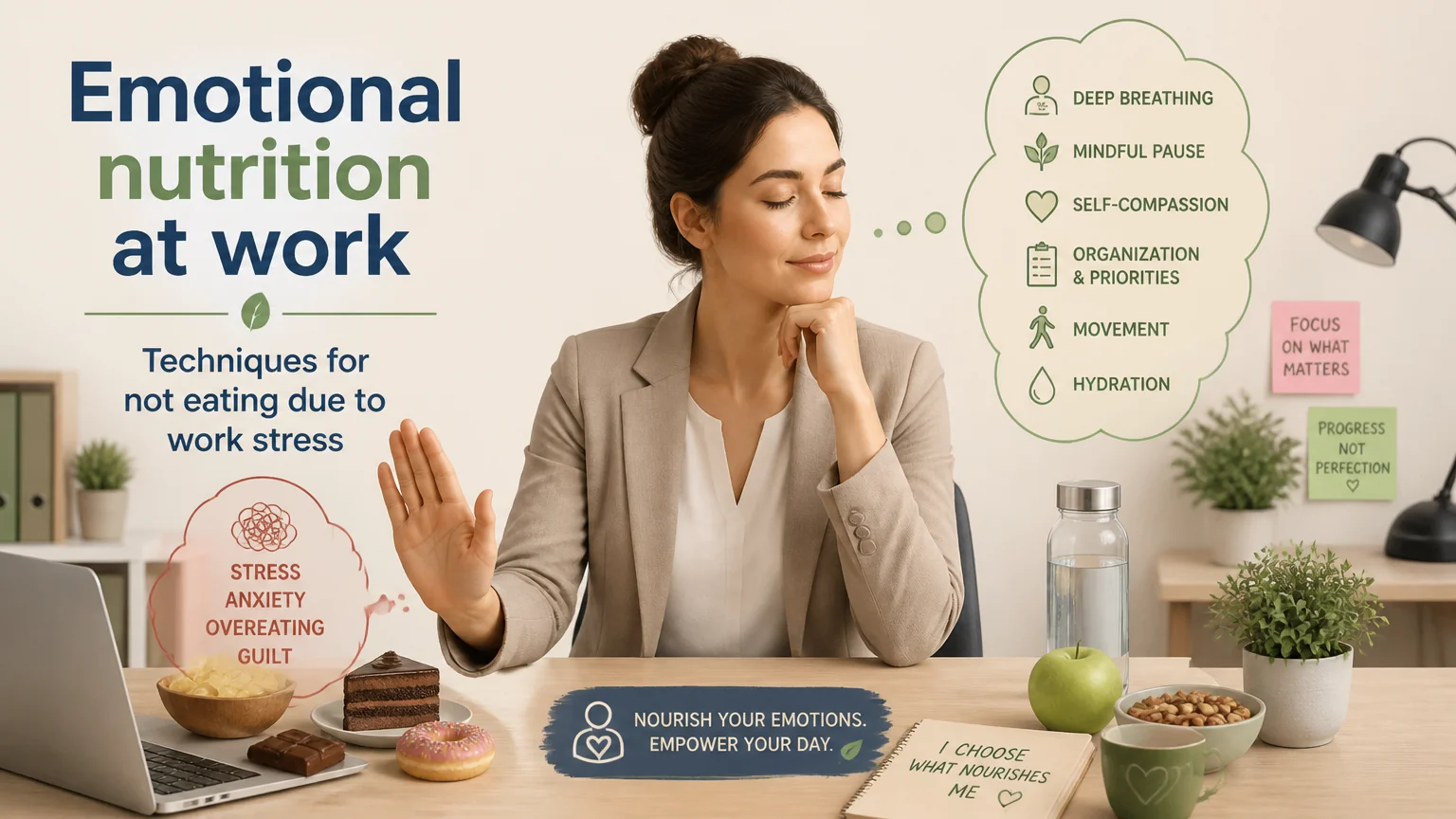
Breathe and buy time: stopping and taking three deep breaths helps to break the automatic reaction and reduce the intensity of the urge.
Describe what you feel: naming the emotion out loud or in your head ("I'm bored," "I'm anxious") reduces its power.
Delay action: aim to wait 10-20 minutes. Many times the impulse diminishes or disappears if you don't act immediately.
Healthy distractions: switching to a concrete activity such as walking for five minutes, drinking water, calling someone or brushing your teeth can break the cycle.
Sensory alternative: use a calming object (stress ball, blanket) or listen to a favorite song to modulate mood.
Regular mindfulness practice helps to observe emotions without acting impulsively. With short daily exercises of 5-10 minutes, one learns to recognize the onset of an emotion and to allow it to pass without responding automatically. It does not require perfection, but constancy.
Recognizing automatic thoughts and questioning them is helpful. Instead of thinking "I can't do without this," try "I can wait and take care of myself in another way." Changing the internal narrative reduces urgency and guilt, and opens space for healthier options.
Planning pleasurable activities that do not involve impulsive behavior is key. For example, schedule walks, creative hobbies, calls with friends, or light exercise. By increasing the availability of alternative rewards, impulsive behavior loses strength.
Talking with friends, family or a professional about difficult times offers support and new perspectives. Agreeing who to call when an impulse arises can replace automatic reaction with deliberate action that includes social support.
Getting enough sleep, maintaining regular eating schedules, and moving daily reduce emotional vulnerability. Often fatigue and irregular eating amplify emotional reactivity, so stabilizing these pillars facilitates impulse control.
Identify your triggers: write down when and where episodes occur for a week.
Choose three immediate strategies that work for you (breathe, wait, call someone).
Introduce a brief mindfulness practice daily, even if it's only 5 minutes.
Schedule rewarding alternative activities into your week to decrease the search for relief in a single behavior.
Evaluate and adjust: at the end of each week review what worked and what didn't, and adapt your plan.
Relapses are part of the learning process and do not mean failure. What is useful is to analyze them without punishment: what happened before? what emotion was present? Use each episode to gather information and adjust the plan. Keep a brief log to observe trends and celebrate progress, however small.
Be patient with yourself and prioritize small, realistic goals. A combination of immediate techniques and structural changes in your routine offers the greatest likelihood of success. If you feel that urges are too controlling your life or appear with an intensity that overwhelms you, consider seeking professional support. With practice and compassion, it is possible to respond to emotions mindfully and choose actions that move you closer to your goals and well-being.
Search
Popular searches