For Onlinecourses55
|
2026-05-29
For Onlinecourses55
|
2026-05-29

Neuromarketing success stories you can replicate today - neuromarketing
Real-world applications of consumer behavior principles can greatly improve your marketing strategies, so be sure to check out this practical course on tactical neuromarketing implementations that will help you adapt proven strategies for your business.
In this text you will find real examples of neuromarketing-based strategies that have proven effective and that you can adapt to your own business today. These are not just theory: they are concrete tactics, explained in a practical way, for you to test, measure and improve. Each block includes what was done, why it works from consumer psychology and clear steps to replicate it without the need for large resources.
One magazine and several service brands have used a third pricing option (the decoy) to push customers toward the middle subscription or the most cost-effective plan. Instead of offering only two options, they add a third option that seems less attractive but makes the target option perceived as the best value for money combination.
Booking and e-commerce platforms implement timers, "last units" messages or coupons with expiration dates. The combination of urgency (limited time) and scarcity (few units) triggers physiological responses that accelerate the purchase decision.
Large marketplace and direct-to-consumer brands use reviews, ratings and testimonials to reduce uncertainty. Showing large numbers of satisfied customers or high ratings makes the decision easier, because people trust the collective experience.
Streaming services and online stores personalize the experience with recommendations based on previous behavior. The feeling that the offer is "made for me" increases perceived relevance and interaction time.
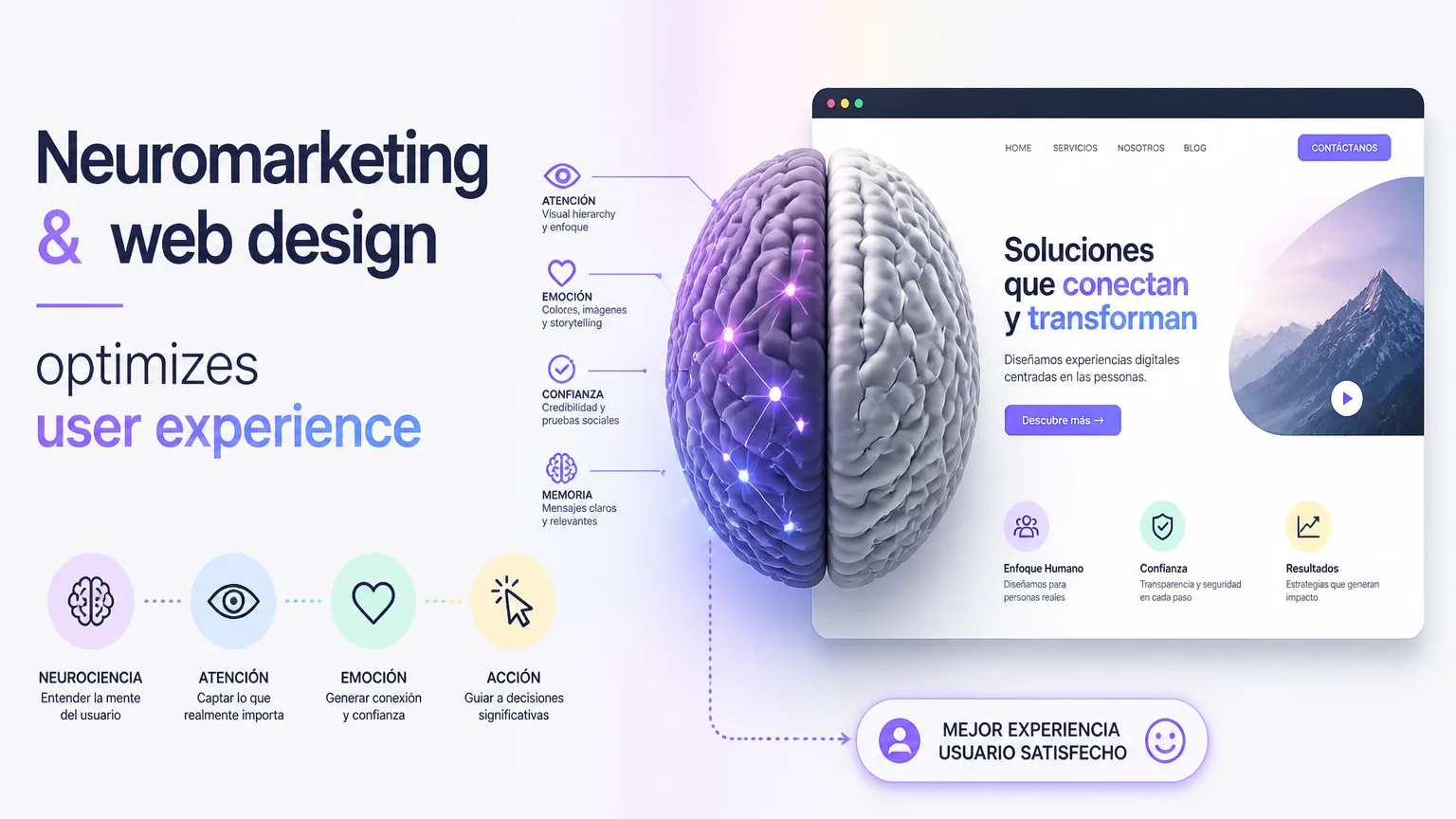
Leading brands use color contrasts, clear typography and white space to draw attention to key action buttons or benefits. A well-contrasting button and a short, emotional message can multiply clicks and conversions.
Successful campaigns appeal to specific emotions (joy, belonging, relief) using images and micro-stories. Brands that tell a short, authentic story achieve greater recall and predisposition to purchase.
These tactics don't require big budgets, but they do require consistency and testing. The key to effective neuromarketing is to measure each change: modify one variable at a time, record results and repeat what works. By knowing your audience and applying these examples in small ways, you can generate rapid improvements in conversion, brand awareness and loyalty.
Search
Popular searches