For Onlinecourses55
|
2026-04-29
For Onlinecourses55
|
2026-04-29

A practical guide to neuromarketing for small businesses - neuromarketing
Connecting with customers on a deeper level can greatly influence sales; find practical approaches in this course about behavioral insights in marketing that provides tools to align your strategies with consumer motivations.
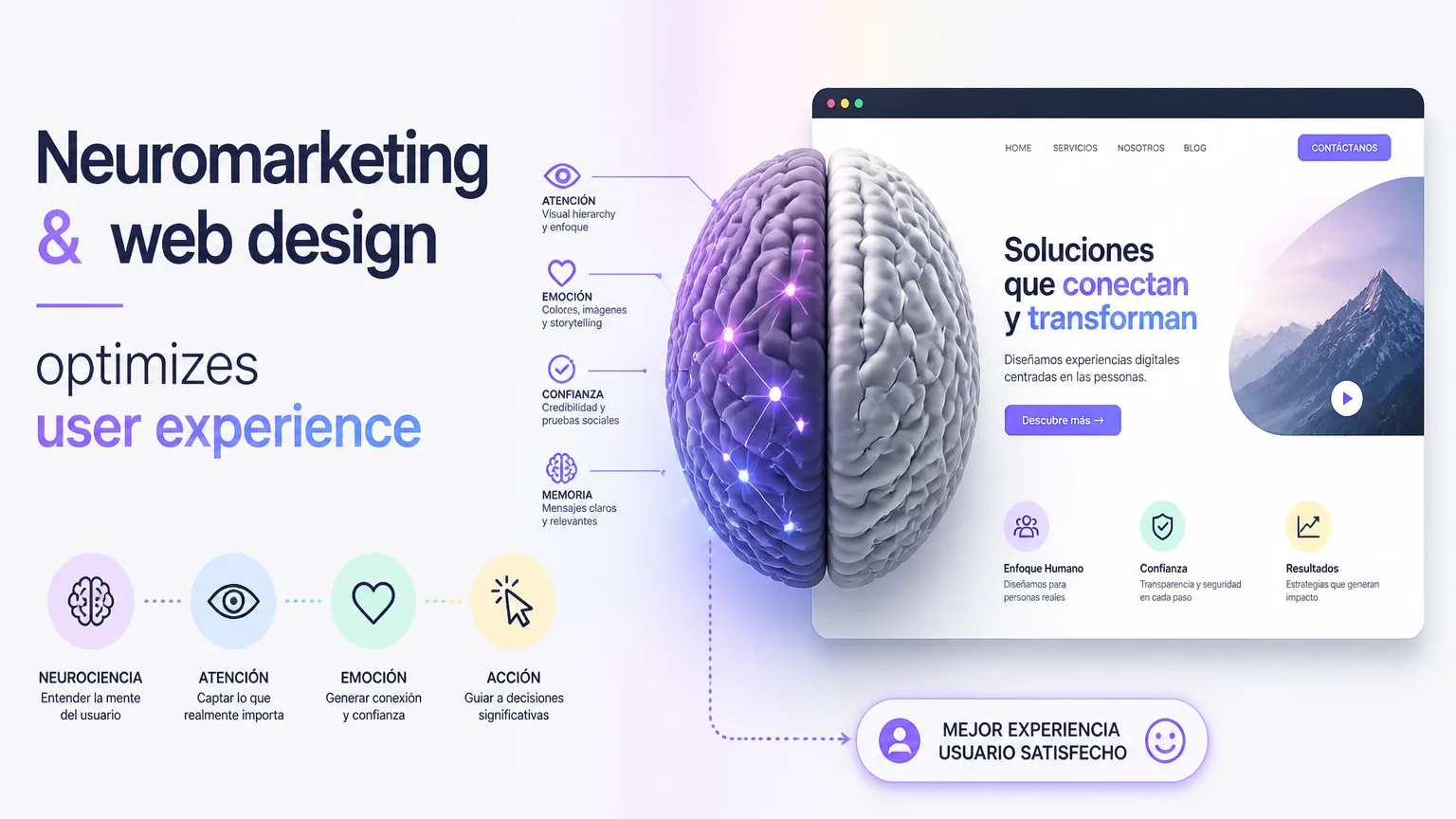
Understanding how your customers think and feel can make the difference between selling low and making repeat sales. Techniques from the study of behavior and neuroscience applied to marketing allow you to design messages, products and experiences that better connect with people's real motivations. Here you will find practical ideas and concrete steps to apply these principles in a small business without big budgets.
The approach seeks to understand automatic reactions, mental shortcuts and emotions that influence purchasing decisions. For a small business, this means optimizing resources: investing in high-impact changes (e.g., a clearer product sheet or a visible social proof) rather than spending on broad campaigns that don't convert. Applied with common sense, work in this area improves the customer experience and conversion rate with moderate costs.
People make quick decisions using simple rules: choose the familiar, follow recommendations, prefer what seems easy. Designing to reduce friction and increase trust signals leverages these shortcuts.
Most purchases are triggered by emotions and justified with reasons. Use short stories, images that evoke real benefits and words that connect to concrete desires (security, belonging, relief).
Attention span is short. It is imperative to present the main message in seconds: clear headline (you'll put the h1), subheadings, short listings and visible calls to action.
People trust what others validate. Testimonials, reviews and simple numbers work very well. Even displaying small logos from clients or media adds credibility.
When something seems limited or time is tight, motivation grows. This must be used with honesty: real offers, real quotas, clear deadlines.
Set out clear advantages in the first few lines. Use bullet points for benefits, include a visible call to action and an image showing actual usage. Add social proof near the buy button.
Change small text - buttons, labels, error messages - and measure. Phrases like "24-hour shipping" or "money-back guarantee" reduce uncertainty. A simple change to a button can improve conversion dramatically.
Present a premium option next to the standard one to make the latter appear cheaper. Showing a crossed-out price next to a real one also alters the perception of value.
Avoid hidden conditions. A transparent offer with honest urgency (e.g., "3 units left") builds trust and converts better than confusing promises.
Choose testimonials that speak to specific results and mention them near important decisions (form, payment). If you can, add a photo and job title to increase credibility.
Don't guess: test two versions of a page or email and measure which one converts more. Change one element at a time: title, image, button color, order of benefits.
You don't need expensive labs. Start with these affordable options:
Define metrics before any changes. Some relevant ones: conversion rate per page, time to purchase, average order value, cart abandonment rate. Compare similar periods and run controlled tests. If a variation consistently improves key metrics, it is worth implementing permanently.
Applying persuasion techniques comes with responsibility. Avoid manipulating with false information, creating unnecessary anxiety or hiding relevant data. Long-term trust is more valuable than immediate gains. Collect consent when using personal data and respect privacy rules.
Clearly define what you want to improve: more online sales, more in-store bookings, more newsletter subscriptions.
Choose the areas with the most traffic or the most friction. Starting with what can have the most impact will give you quick results.
Formulate concrete changes based on the above principles: "If I add testimonials next to the buy button, conversion will increase X%".
Implement A/B testing to validate the hypothesis. Test long enough to achieve meaningful results.
If it works, apply the change to more products or pages. If not, learn from the data and test another hypothesis.
Record tests and results to build a knowledge base for continuous improvement.
Integrating behavioral insights and neuroscience does not require huge teams or exorbitant budgets. With simple tests, observation and respect for the customer, you can significantly improve the effectiveness of your messages and offers. Prioritize changes that reduce friction, increase trust and respect ethics; this will build a lasting relationship with your customers and better sustainable results for your business.
Search
Popular searches