For Onlinecourses55
|
2026-03-30
For Onlinecourses55
|
2026-03-30

Colors and buying decisions according to neuromarketing - neuromarketing
Understanding the emotional impact of colors can transform your marketing strategies, so consider diving into this detailed course on the psychological effects of color to elevate your brand's visuals and resonate more effectively with your customers.
Colors are a powerful tool in neuromarketing because they act directly on emotions, attention and value perception. Before pricing, it is common for consumers to first respond to visual stimuli; color can accelerate brand recognition, induce specific feelings and guide buying behavior without the person being fully aware of it. Understanding how and why certain hues work helps to design more effective experiences that are consistent with business objectives.
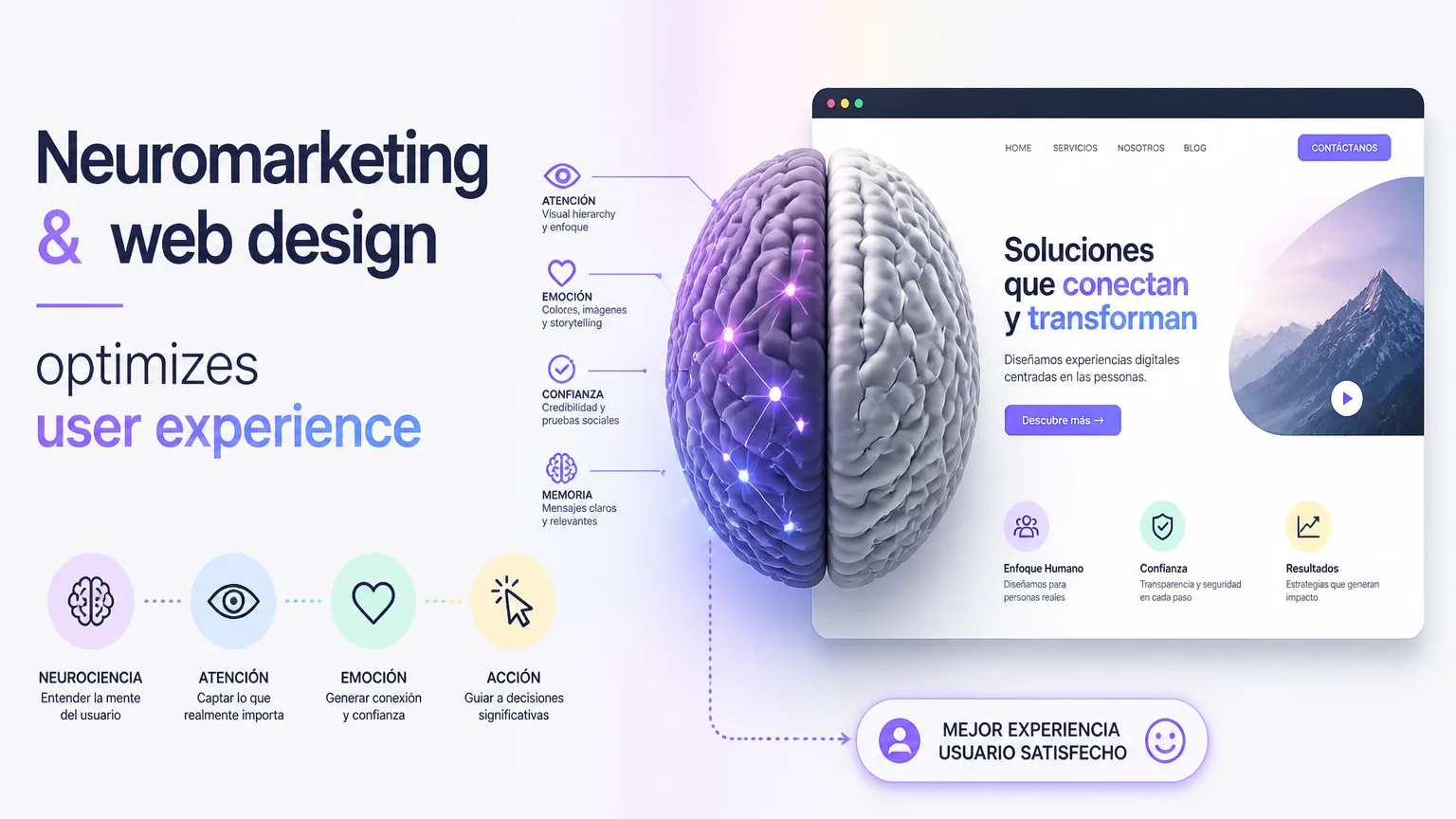
Neuromarketing combines neuroscience and marketing to study emotional and cognitive responses to commercial stimuli. In the case of color, automatic reactions such as visual attention, emotional arousal and symbolic association are analyzed. Some key mechanisms include sensory perception, associative memory and cultural load. There is no single law that determines the perfect color, but there is consistent evidence of trends and correlations between hues and behaviors.
Certain colors attract more attention because they contrast with the environment or because the human eye detects them with greater intensity. Bright or saturated colors tend to attract the eye initially, while contrasting tones help highlight calls to action (CTAs). Composition and negative space also play a role: a prominent color in a sober environment directs the focus to the desired message.
Color can evoke basic emotions (security, excitement, confidence) and facilitate brand recall. When a color is repeatedly associated with a positive experience, it forms an affective memory that influences future decisions. This is why chromatic consistency across all touch points is important to build lasting associations.
Associations are not universal but do recur in many cultures. The following are common perceptions that often trigger these colors in purchasing contexts.
The chromatic selection must be aligned with the value proposition, the target audience and the context of use. It is not just a matter of aesthetic preference, but of strategic coherence: a color that works in one sector may fail in another. Here are some practical criteria for deciding.
First identify what emotion or reaction you want to induce: trust for a financial service, urgency for a limited-time offer, calm for a wellness product. This target will narrow down the possible palette.
Age, gender, culture and context of use change the interpretation of color. For example, millennials may prefer bolder or more authentic palettes, while older audiences seek clarity and legibility. Research local perceptions and testing if you operate in multiple markets.
Color should integrate with brand personality and remain consistent across logo, packaging, web and advertising. Consistency facilitates recognition and reduces friction in the customer experience.
Context determines the priority of certain colors. In packaging, color competes in seconds to capture choice on the shelf. On the web, it influences usability and conversions. In the physical store, colors in the environment affect the permanence and price sensation.
Use contrasts to highlight essential information (flavor, benefits, promotions). For premium products, sober palettes with metallic or black accents work best; for natural products, greens and earth tones are more appropriate.
In digital, try A/B variants of the color of the buy button or CTA. A color that contrasts well with the background increases click-through rate; however, consistency with the visual identity is still crucial so as not to create dissonance.
Lighting and material influence how colors are perceived in-store. Warm colors can increase the sense of closeness and urgency, while cool colors favor serene environments. Use chromatic signage to guide routes and highlight offerings.
The meaning of color varies according to culture, religion and local experiences. For example, white represents purity in many Western cultures but may be associated with mourning in others. Before standardizing a global palette, validate meanings and conduct local testing.
The only way to know for sure which colors work for your audience is to measure. A/B tests, heat maps, eye-tracking studies and qualitative surveys offer complementary data. Measure variations in conversion rates, time on page, recall and perceived value to make decisions based on results.
In summary, color is a strategic lever within neuromarketing that, when properly applied, improves attraction, emotion and conversion. Understanding common associations, adapting the choice to the target and validating with real tests enables informed decisions that optimize both customer experience and business results.
Search
Popular searches