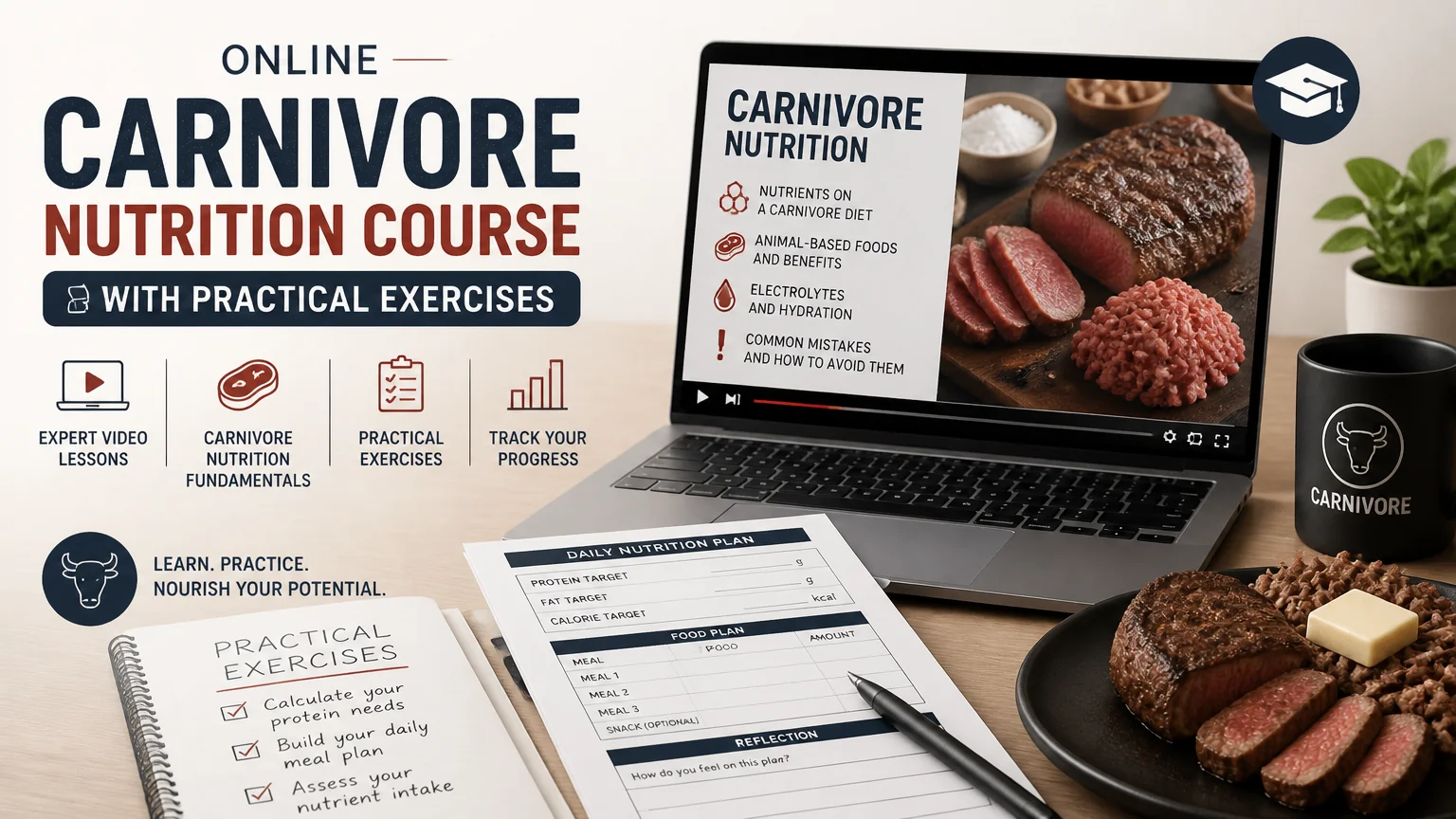
If you're eager to uncover your path to infinite energy with this diet, start by reading up on it, but for a thorough learning experience, access the dedicated online course available.
Have you ever wondered if the carnivore diet could be the key to unlocking endless energy levels? Well, you are not alone! More and more people are adopting this radical eating style, and one of the most frequent questions is precisely about its impact on energy. Does it really work, or is it just a mirage? In this article, we will thoroughly explore the relationship between the carnivore diet and your energy levels, separating reality from myth. Get ready to dive into a world of meat, fat, and… energy!
What is the Carnivore Diet? An Introduction
Before delving into how this diet affects your energy, let's define exactly what the carnivore diet is. In a nutshell, it is eating only animal products! Imagine eliminating all vegetables, fruits, grains, legumes, nuts, seeds... goodbye, everything that doesn't come from an animal!
Allowed and Forbidden Foods
So, what can you eat? Think red meat (beef, pork, lamb), poultry (chicken, turkey, duck), fish (salmon, tuna, trout), seafood, eggs, and some dairy products (such as hard cheese, in moderation). Some also include organs like liver and kidneys, impressive nutritional sources!And what is forbidden? Everything else! There is no room for bread, pasta, rice, fruits, vegetables, sweets, sodas... None of that! It is a very restrictive diet, which means it requires planning and a deep understanding of your nutritional needs.
Why Do People Adopt the Carnivore Diet?
People are drawn to the carnivore diet for various reasons. Some seek relief from autoimmune diseases, others try to lose weight, and some simply look for greater mental clarity and, of course, more energy! Many claim that the carnivore diet reduces inflammation, improves digestion, and stabilizes blood sugar levels. But how does all this translate into energy? Let's find out!
The Science Behind Energy and the Carnivore Diet
The energy we get from food primarily comes from three macronutrients: carbohydrates, fats, and proteins. In the carnivore diet, we almost completely eliminate carbohydrates, forcing our body to get energy from fats and proteins.
Glucose and Ketones: Two Sources of Energy
Normally, our body uses glucose (from carbohydrates) as its primary energy source. However, when we eliminate carbohydrates, our body begins to produce ketones from fat. This process is called ketosis, and ketones become an alternative fuel source.Some people experience an increase in energy and mental clarity once they adapt to ketosis. It's like switching from regular gas to premium gas for your car: more efficiency and performance!
The Impact of Protein on Sustained Energy
Protein also plays a crucial role in energy. While it is not a primary fuel source, protein helps stabilize blood sugar levels and provides essential amino acids for tissue building and repair. Adequate protein intake keeps you satiated and prevents the energy spikes and drops associated with a high-carbohydrate diet.
Essential Vitamins and Minerals in the Carnivore Diet
It is important to ensure you get all the necessary vitamins and minerals on the carnivore diet. Although meat is rich in many nutrients, such as Vitamin B12, iron, and zinc, it can be deficient in others, such as Vitamin C and fiber. Some carnivore diet proponents consume organs to get a broader range of nutrients, while others may opt for supplements.
How Does the Carnivore Diet Affect Your Energy Levels?
This is where things get interesting. The carnivore diet can affect energy in different ways, depending on the person and the adaptation phase.
The Adaptation Phase: Possible Initial Slumps
When you start the carnivore diet, it is common to experience a "carnivore flu" or "keto flu." This is because your body is switching its energy source from glucose to ketones. Symptoms may include fatigue, headaches, irritability, and difficulty concentrating. It's as if your body is protesting the change!This adaptation phase can last from a few days to a few weeks. It is important to be patient and persistent during this time, as the long-term benefits may be worthwhile.
Long-Term Benefits: Stability and Mental Clarity
Once you adapt to the carnivore diet, many people experience an increase in sustained energy, greater mental clarity, and a reduction in cravings. This is because blood sugar levels stabilize, avoiding the energy spikes and crashes that can occur with a high-carbohydrate diet. Additionally, ketones can provide a more constant and efficient energy source for the brain.
Testimonials and Personal Experiences
There are countless testimonials from people who claim to have experienced a significant improvement in their energy levels upon adopting the carnivore diet. Many describe feeling more alert, focused, and productive. However, it is important to remember that everyone's experience is unique, and what works for one person may not work for another.
Tips for Optimizing Your Energy on the Carnivore Diet
If you are considering the carnivore diet to improve your energy levels, here are some important tips:
The Importance of Hydration
Drinking enough water is crucial, especially during the adaptation phase. Ketosis can have a diuretic effect, meaning you lose more fluids through urine. Be sure to drink plenty of water throughout the day to stay hydrated and prevent fatigue.
Prioritize Meat Quality
The quality of the meat you eat is important. Opt for grass-fed meat whenever possible, as it tends to be richer in nutrients and lower in toxins. Additionally, be sure to get enough fat in your diet, as it is your primary energy source.
Electrolyte Management: Key to Optimal Energy
The carnivore diet can affect electrolyte levels, such as sodium, potassium, and magnesium. These minerals are essential for muscle and nerve function, and deficiency can lead to fatigue, muscle cramps, and other symptoms. Consider adding salt to your meals and taking electrolyte supplements if necessary.
Is the Carnivore Diet Sustainable for Long-Term Energy?
This is an important question. While the carnivore diet can provide short-term benefits in terms of energy, it is crucial to consider its long-term sustainability. Can you maintain this eating style indefinitely? Are you getting all the nutrients you need?The answer to these questions will vary from person to person. Some people can thrive on the carnivore diet long-term, while others may need to make adjustments or reintroduce some plant-based foods.
Conclusion: Listen to Your Body and Adapt the Carnivore Diet to Your Needs
Ultimately, the best way to determine if the carnivore diet is right for you and your energy levels is to listen to your body. Experiment, observe how you feel, and make adjustments as needed. Don't be afraid to modify the diet to fit your individual needs. The carnivore diet is not one-size-fits-all. Find what works best for you!
Frequently Asked Questions (FAQs)
1. Is it safe to do intense exercise on the carnivore diet?
Yes, many people do intense exercise on the carnivore diet and experience good performance. Make sure to hydrate adequately and consume enough electrolytes to support muscle function.
2. Can I eat honey on the carnivore diet for more energy?
Honey is not allowed on the strict carnivore diet, as it comes from plants. However, some people who follow a more flexible version may include small amounts of honey.
3. What can I do if I have the "carnivore flu"?
Rest, hydrate, and consume more salt to help alleviate the symptoms of the "carnivore flu." You can also consider taking electrolyte supplements.
4. Is the carnivore diet suitable for everyone?
The carnivore diet is not suitable for everyone. It is important to consult with a healthcare professional before making drastic changes to your diet, especially if you have any preexisting medical conditions.
5. How can I tell if the carnivore diet is working for me?
Pay attention to how you feel physically and mentally. Note whether you experience improvements in your energy levels, digestion, mental clarity, and any other symptoms you might be experiencing. Be patient and listen to your body!
 For Onlinecourses55
|
2025-11-27
For Onlinecourses55
|
2025-11-27