For Onlinecourses55
|
2026-08-28
For Onlinecourses55
|
2026-08-28
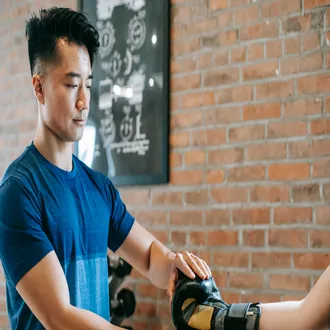
How to measure results with your personal trainer: metrics and tests - personal trainer
Discover the importance of progress tracking by enrolling in a course dedicated to personal fitness coaching that will guide you in monitoring your achievements.
Measuring progress isn’t just about looking at the scale or seeing if the weight on the bar goes up. It’s about understanding whether your training plan and nutrition are working, identifying plateaus, preventing injuries, and staying motivated. When you and your trainer share objective data, decisions stop being based on intuition and become informed adjustments that accelerate progress.
Not all metrics are relevant for everyone. Depending on your goal (fat loss, muscle gain, performance improvement, overall health), some metrics will carry more weight. Here are the most common ones you should consider with your trainer.
Body fat percentage, lean mass, and weight. Assessment can be done using calipers, bioimpedance, or more advanced methods. For most people, the trend over time is more valuable than a single point-in-time measurement.
Progress in key exercises (bench press, squat, deadlift, pull-ups). Not just the absolute maximum, but also the number of repetitions at a percentage of the maximum or the load relative to your body weight.
Time in standard tests, distance covered in a fixed time, or heart rate during submaximal efforts. These indicators show how aerobic capacity and cardiac efficiency are improving.
Range of motion in key joints, quality of movement patterns, and ability to perform daily tasks without pain. Injury prevention and functionality are equally important goals.
Attendance at sessions, adherence to the nutrition plan, sleep quality, and energy levels. These factors directly influence the ability to achieve sustainable results.
Tests should be reproducible and performed at an appropriate frequency. Below is a list of simple and useful tests that are typically conducted in consultation with a trainer.
Calculating a one-rep maximum in compound exercises is a direct way to measure strength. To avoid risks, estimates using submaximal repetitions (5RM, 3RM) and formulas that predict 1RM are used.
This measures the distance covered in 12 minutes to estimate aerobic capacity. It is practical and requires minimal equipment. Alternatives include the 6-minute test or the shuttle run test (Yo-Yo, more sports-oriented).
Maximum repetitions of a bodyweight exercise such as push-ups or squats within a set time. Useful for tracking improvements in endurance and technique.
Skinfold measurements, circumferences (waist, hip, arm), and weight. Having these done by the same professional every time improves reliability.
Tests such as the sit-to-stand test, single-leg balance, or maximum plank hold. These indicate functional ability and the risk of falls or loss of balance.
Monitoring resting heart rate and recovery after exercise provides information on cardiovascular adaptation and fatigue status.
The frequency depends on the indicator: weight and adherence measurements can be weekly; strength and performance, every 4–8 weeks; body composition and more invasive tests, every 8–12 weeks. Measuring too often can create noise and frustration; doing so at the right frequency reveals real trends.
Not every small change is significant. Your coach should help you distinguish normal daily variations from real trends. Look for sustained progress across multiple metrics: for example, if your strength increases and your body composition improves, that’s a clear sign. If your weight goes up but your strength doesn’t improve, it could be fluid retention or non-functional weight gain.
Use SMART goals: specific, measurable, achievable, relevant, and time-bound. Based on the results, the coach will adjust volume, intensity, frequency, and nutritional strategy. Small, consistent changes are usually more effective and sustainable than drastic attempts.
Keeping clear records facilitates analysis. You can use a notebook, spreadsheets, or apps to track sessions, loads, measurements, and how you feel. Photos and periodic anthropometric measurements help visualize changes. Sharing this information with your trainer allows for quick and precise adjustments.
The scale doesn’t tell the whole story. Combining metrics prevents misinterpretations.
Taking measurements at different times of day, after meals, or with varying hydration levels introduces variability. Try to standardize times and conditions.
Real adaptations take weeks or months. Patience and consistency usually yield better results than quick fixes.
Measuring without acting on the data is a waste of time. Results should guide changes in training and nutrition.
Share how you feel, your sleep, stress levels, and adherence. Numbers are useful, but the human context is key to understanding why a metric goes up or down. Ask about the testing plan, how often it will be done, and how the data will be used to adjust your program.
Define which metrics matter based on your goals, track consistently, log everything, and review with your coach periodically. Celebrate small wins and use the data as a guide, not a verdict. With a clear tracking system and open communication, you’ll make faster and more sustainable progress.
Search
Popular searches