For Onlinecourses55
|
2025-12-12
For Onlinecourses55
|
2025-12-12
Agile coach vs. scrum master: 5 crucial differences you need to know - professional agile coach
If you're ready to elevate your career in Agile methodologies and become a top-tier mentor guiding teams effectively, consider exploring the path to becoming an agile coaching expert and unlock transformative skills that will benefit your organization.
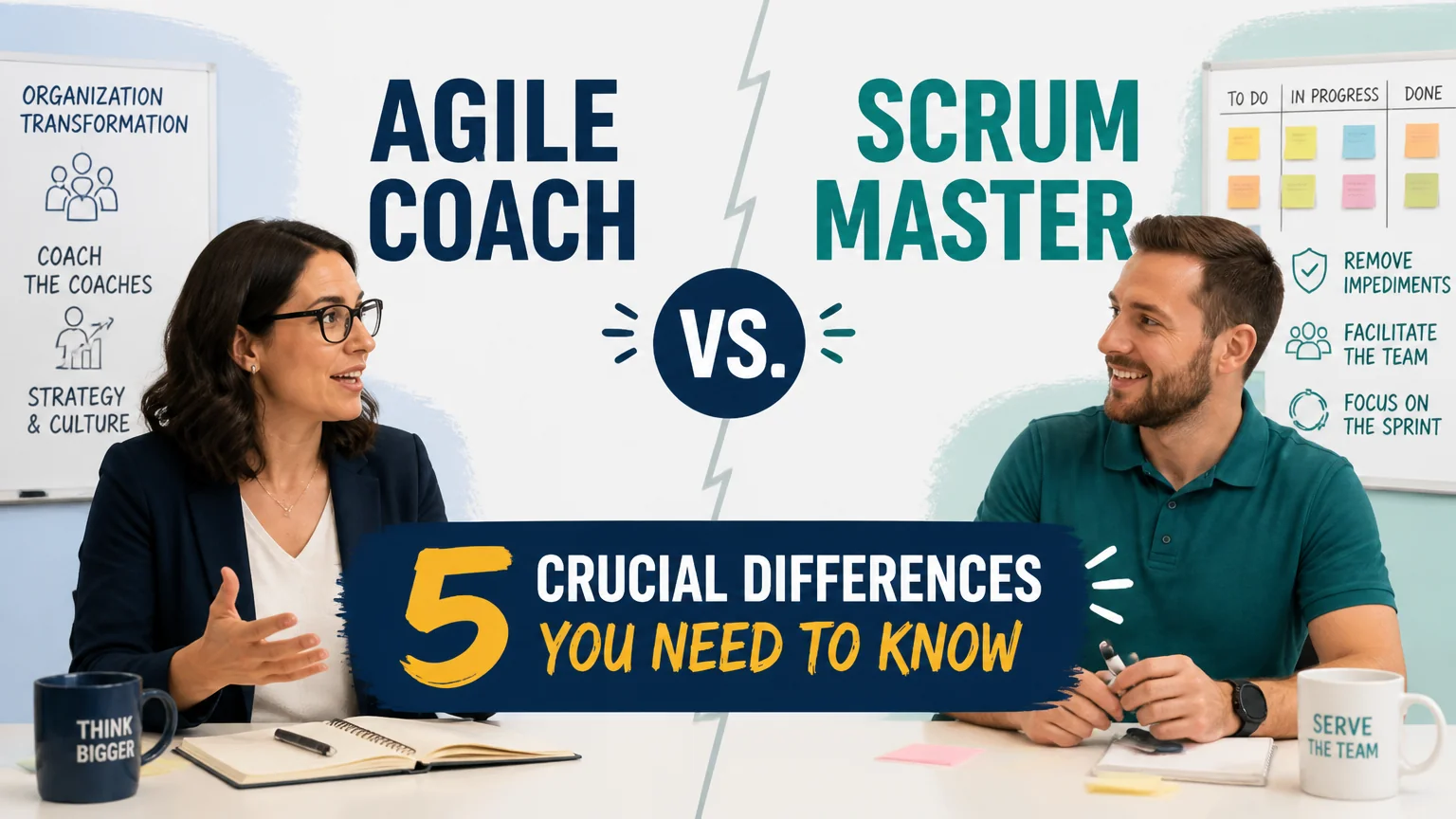
In the dynamic world of software development and project management, Agile methodologies have become a fundamental pillar for success. Within this framework, two roles stand out for their importance: the Agile Coach and the Scrum Master. Although they are often confused, each performs distinct and complementary functions. This article explores the 5 crucial differences you need to know to understand their roles and how they can benefit your team.
The Scrum Master is the facilitator of the Scrum team. Their main responsibility is to ensure that the team understands and correctly applies the Scrum framework. They act as a shield, protecting the team from external interruptions and helping them remove impediments that hinder their progress.
The Agile Coach has a broader view than the Scrum Master. While they also know Scrum, their focus extends across the entire organization, promoting the adoption of an Agile mindset at all levels. They work with teams, leaders and stakeholders to transform organizational culture and optimize processes.
The main difference lies in their scope. The **Scrum Master** concentrates their efforts on a single Scrum team, ensuring they follow Scrum practices and principles effectively. Their world is the sprint, the Daily Scrum and the Sprint Retrospective. In contrast, the **Agile Coach** operates at a more strategic level, influencing multiple teams, departments and even the entire organization. Their goal is to integrate the Agile philosophy into the business culture, impacting how decisions are made and projects are managed at scale.
While both roles require a solid knowledge of Agile, the **Agile Coach** generally possesses a greater depth of experience and knowledge. They have worked with various Agile methodologies (Scrum, Kanban, XP, etc.) and understand how to adapt them to different contexts. The **Scrum Master** often specializes in Scrum and its specific application. An Agile Coach, because of their experience, can identify patterns and offer broader solutions to organizational challenges related to agility.
The **Scrum Master** focuses on the continuous improvement of the Scrum process. They seek to optimize the team's efficiency and productivity by removing obstacles and ensuring that Scrum ceremonies are followed correctly. On the other hand, the **Agile Coach** focuses on cultural transformation. Their aim is to change people's mindsets, fostering collaboration, transparency and adaptation to change. They are concerned with building an organizational culture that values continuous learning and constant improvement.
Both roles share some skills, such as facilitation and coaching, but they require different sets of specialized skills. The **Scrum Master** must be an excellent facilitator, able to guide the team through Scrum meetings effectively. They also need problem-solving skills to remove the impediments that block the team. The **Agile Coach**, for their part, needs mentoring skills to guide leaders and teams on their path to agility. They also need change management skills to help the organization overcome resistance to transformation.
Ultimately, the main responsibility of each role differs significantly. The **Scrum Master** is responsible for the success of the Scrum team, ensuring they deliver value consistently and efficiently. The **Agile Coach** is responsible for the success of the organization's Agile transformation, ensuring that Agile principles and practices are adopted at all levels and that the organization gains the expected benefits, such as increased agility, innovation and customer satisfaction.
The need for an Agile Coach or a Scrum Master depends on the context of your organization. If you are starting to adopt Scrum, a Scrum Master is essential to guide your team. If you are already using Scrum but want to take your agility to the next level, an Agile Coach can help you transform your organization.