Outcome metrics vs. production: are you measuring value or only velocity? - professional agile coach

onlinecourses55.com For Onlinecourses55 | 2026-10-15
Outcome metrics vs. production: are you measuring value or only velocity? - professional agile coach


Outcome metrics vs. production: are you measuring value or only velocity? - professional agile coach

To shift your focus from mere productivity metrics to meaningful outcomes, seeking knowledge through the advanced coaching program aimed at agility can provide you with powerful insights.

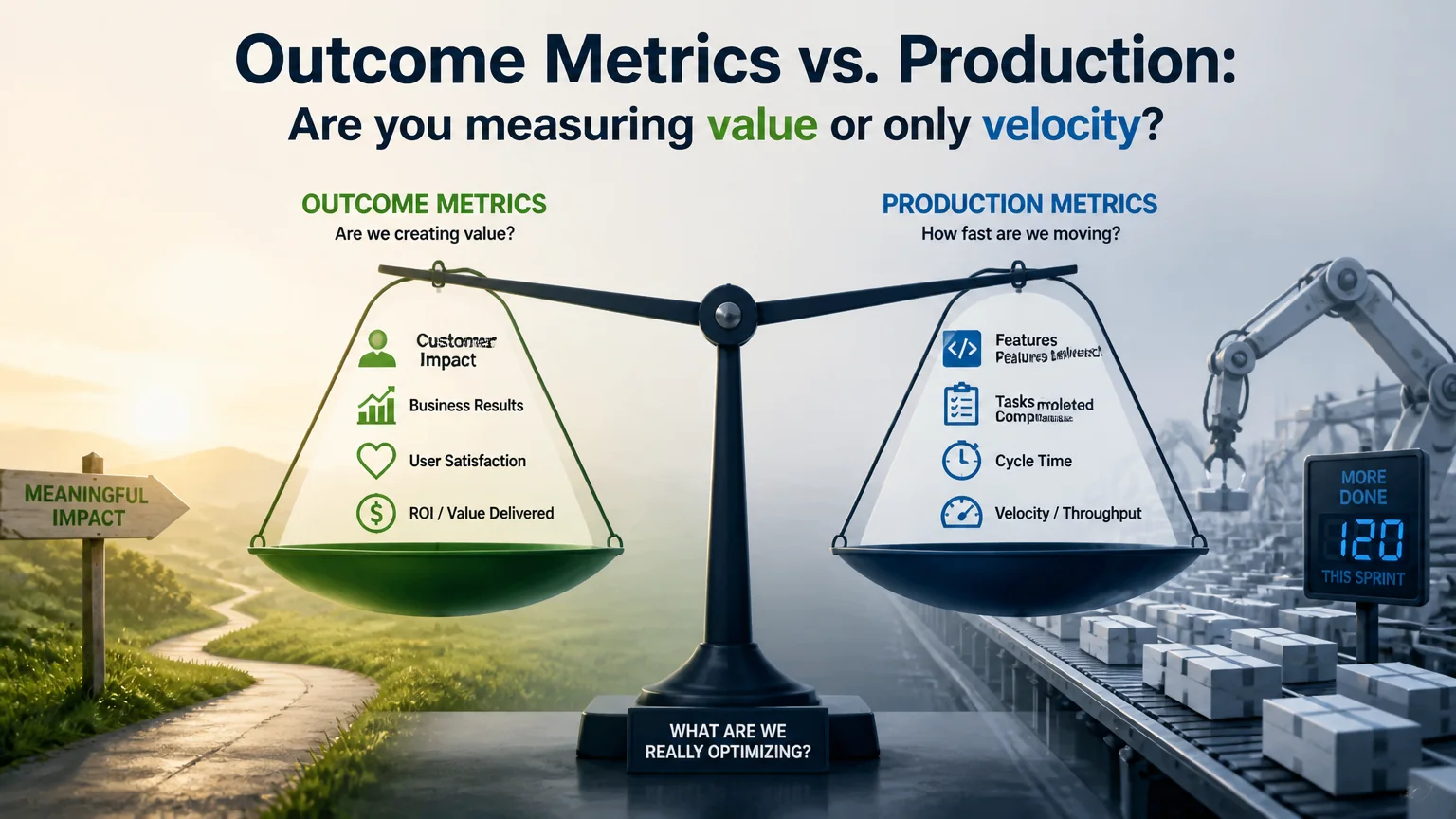
In today's fast-paced business world, it's easy to get swept up in the relentless pursuit of productivity. We want to do more, faster, and with fewer resources. However, in this haste for speed, we often lose sight of what really matters: the true value we are creating. The key to long-term success does not simply lie in measuring the amount of work we perform (production), but in assessing the real impact of that work (outcome).

What Are Production Metrics?

Production metrics, also known as activity metrics or "output" metrics, focus on the amount of work completed. They measure the efficiency with which we are performing tasks. Common examples include:

  • Number of calls made by a sales team.
  • Number of lines of code written by a developer.
  • Number of articles published on a blog.
  • Number of products manufactured in an hour.

These metrics are useful for monitoring activity and ensuring that teams are working. They tell us how much is being done, but they don't tell us why it is being done, nor whether it is generating a positive impact on the business.

Understanding Outcome Metrics: The True Barometer of Success

Outcome metrics, also called impact metrics or "outcome" metrics, focus on the value generated by the work performed. They measure the real effects of our actions on the business. They are a direct reflection of whether we are achieving our strategic objectives.

Examples of outcome metrics include:

  • Increase in sales due to calls made.
  • Reduction of software errors thanks to the code written.
  • Increase in web traffic and lead generation through blog articles.
  • Increase in customer satisfaction with the products manufactured.

Note the crucial difference: while production metrics focus on activity, outcome metrics focus on the impact of that activity. They tell us whether we are moving in the right direction and whether our efforts are generating a positive return on investment (ROI).

Why Focusing on Outcome Metrics Is Fundamental?

Focusing exclusively on production metrics can lead to an illusion of progress. You can be very busy, working tirelessly, but if you are not measuring the real impact of your work, you could be wasting valuable resources on activities that do not contribute to business growth. Here are some key reasons to prioritize outcome metrics:

  • Informed Decision Making: Outcome metrics provide a solid basis for making strategic decisions. They allow you to identify what works and what doesn't, and to optimize your strategies accordingly.
  • Alignment with Objectives: Outcome metrics help ensure that all team members are working toward the same objectives and understand how their individual work contributes to overall success.
  • Continuous Improvement: By regularly monitoring outcome metrics, you can identify areas for improvement and make adjustments to optimize performance.
  • Greater Accountability: When people are accountable for results, they feel more motivated and committed to their work.
  • Demonstrating Value: Outcome metrics provide a tangible way to demonstrate the value of your work to stakeholders and gain their support for future initiatives.

How to Implement Effective Outcome Metrics

Implementing effective outcome metrics requires careful planning and a clear understanding of your strategic objectives. Here are some tips:

  1. Define Your Objectives: Start by clearly defining your SMART objectives (Specific, Measurable, Achievable, Relevant, and Time-bound).
  2. Identify Key Metrics: Determine which outcome metrics will help you measure progress toward your objectives. Make sure they are relevant, measurable, and easy to understand.
  3. Establish Baselines and Targets: Set baselines for each metric and define realistic targets you want to reach within a given time period.
  4. Collect Data Regularly: Implement a system to collect data regularly and accurately. Ensure that the data is accessible to all team members.
  5. Analyze the Results: Regularly analyze the results to identify trends, patterns, and areas for improvement.
  6. Take Action: Use the insights obtained from data analysis to take concrete actions to optimize your strategies and improve performance.
  7. Communicate the Results: Transparently communicate the results to all stakeholders. Celebrate successes and learn from failures.

A Necessary Balance: Combining Production and Outcome Metrics

While outcome metrics are crucial, production metrics should not be completely ignored. In fact, a balanced approach that combines both can be most effective. Production metrics can provide valuable information about process efficiency, while outcome metrics measure the real impact of those processes.

For example, if a sales team is making a large number of calls (production metric) but sales are not increasing (outcome metric), then it's necessary to investigate what's happening. Maybe the quality of the calls isn't adequate, or the team needs better training.

Become an expert in Professional agile coach!

Certified Agile Coach Course: Learn to lead successful organizational transformation – Composed of 17 topics and 72 study hours – for only $12.00

EXPLORE THE COURSE NOW

Recent Posts