For Onlinecourses55
|
2026-10-10
For Onlinecourses55
|
2026-10-10
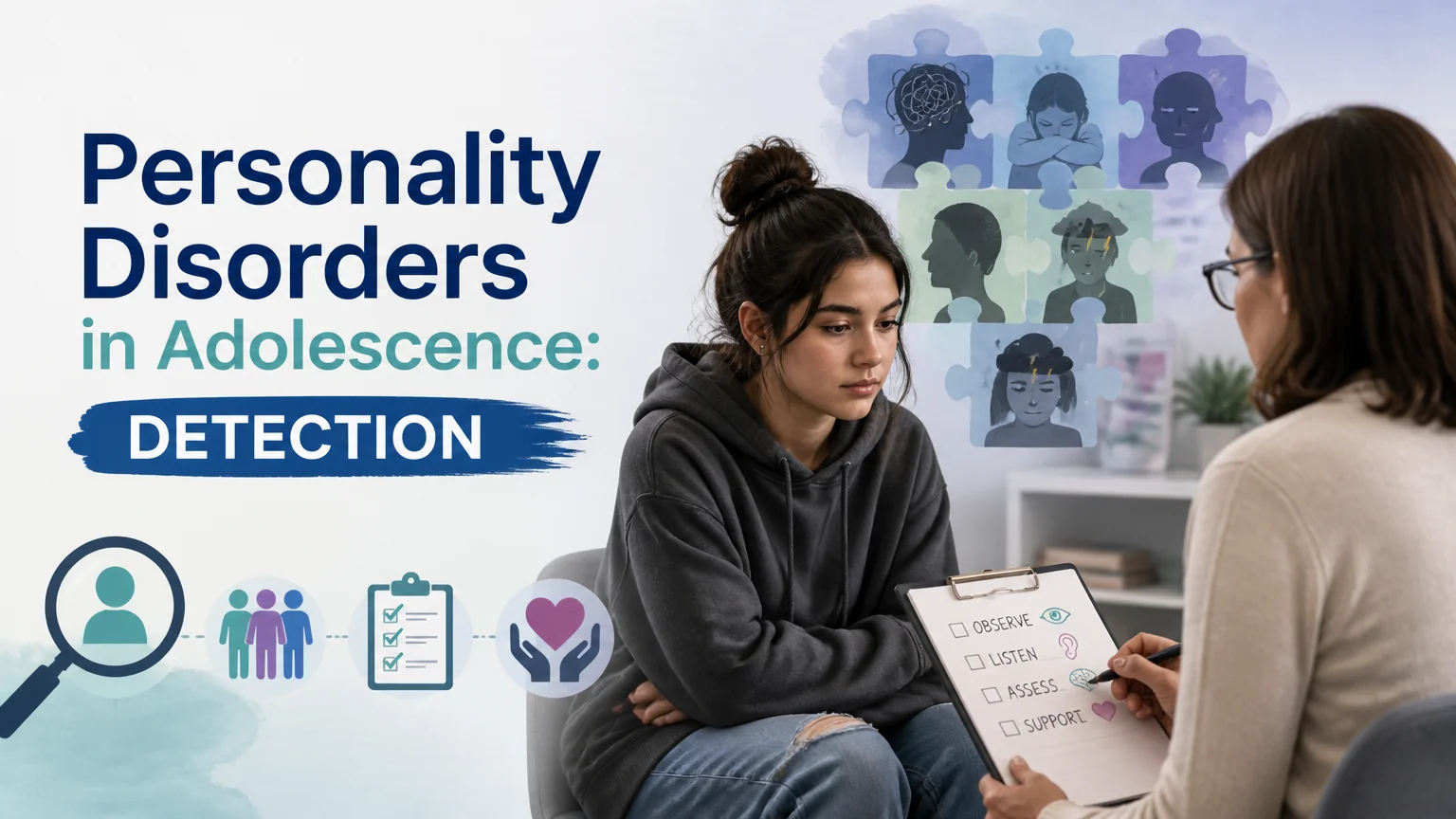
Personality disorders in adolescence: detection - psychology disorder personality
Detecting personality issues in adolescents is crucial for timely support. This course offers vital information and strategies; join our specialized program that prepares you to identify and address these challenges effectively.
During adolescence personality traits emerge that, in most cases, are transient and part of normal development. However, in a group of young people certain patterns of thinking, emotion and behavior become persistent, rigid and cause notable distress or impairment in daily life. The purpose of detection is not to label early, but to identify consistent signs of difficulty so support arrives in time. It is important to know that a formal diagnosis requires caution: some manuals allow diagnosing before 18 in clear cases, but always considering the developmental context and the stability of traits over time.
Adolescence involves intense biological, social and emotional changes: identity exploration, greater sensitivity to social evaluation and mood fluctuations. These transformations can sometimes appear as problematic traits. The challenge is to distinguish what is age-appropriate from patterns that are inflexible, persistent and produce negative impact in multiple areas (family, school, friendships). In addition, coexistence with anxiety, depression, behavioral problems or substance use is common, which can mask personality traits. Therefore, detection requires observing trajectory, context and functionality, not isolated episodes.
The signs that warrant a specialized evaluation are those that repeat over months, appear in more than one setting and do not improve with reasonable adjustments. These are not single traits, but patterns.
A conflict with parents or changing friendships can be normal; they become concerning when intensity, frequency and duration exceed what is expected and there is deterioration. For example, arguing over boundaries is common; it is a risk sign if the reaction includes repeated aggression, loss of schooling and sustained isolation. Similarly, social shame is common; it is worrying if there is persistent avoidance of all interaction, anticipatory panic and abandonment of pleasurable activities. Looking at rigidity (inability to adapt), generalization (it happens everywhere) and chronicity helps to distinguish.
No single factor alone determines a disorder, but certain elements increase vulnerability or protect against it. Understanding them guides detection and prevention.
The assessment must be comprehensive and consider life trajectory, cultural diversity and development. It involves the adolescent and their caregivers, and collects information from the school context when possible. The goal is to describe patterns, their onset, their persistence and their impact, rather than to place a quick label.
To consider a problematic personality pattern, traits are expected to be relatively stable for at least one year and not limited to an acute episode. Some categories have specific age rules, and it is always contextualized in development. The clinical priority is the level of distress and functional interference and safety, more than the diagnostic label.
Observing traits in dimensions (for example, negative affectivity, detachment, antagonism, disinhibition, psychoticism) helps to describe precisely what is happening and to design tailored interventions. This approach avoids all-or-nothing thinking and favors work toward concrete goals: improving emotional regulation, flexibilizing cognitions, strengthening social skills and increasing frustration tolerance.
Early detection benefits from brief, objective records. It is not about monitoring, but about understanding patterns and triggers to guide useful supports.
It is advisable to consult when the described patterns persist, intensify or significantly affect study, relationships or wellbeing. Urgent care is required if there is self-harm, suicidal thoughts, violence or problematic substance use. A mental health professional experienced with adolescents will carry out a collaborative assessment, explain options and propose a plan that may include psychotherapy, family interventions and coordination with the school. Confidentiality and the adolescent's active participation are pillars of the process.
Detection is not an end, but a gateway to help. There are therapies with evidence in adolescents for problems with emotional regulation, impulsivity and relationships: skills-based interventions (such as emotion management and distress tolerance), mentalization-focused approaches, relationship-focused therapies and family programs that improve communication and boundaries. Social skills training, psychoeducation about emotions and strategies for parents and teachers are also useful. The aim is to increase flexibility, sense of identity and coping strategies without stigmatizing.
Detecting patterns that cause suffering in time allows intervention before they consolidate and improves quality of life. Traits do not define a person; with appropriate support many young people achieve trajectories of growth, more stable relationships and greater wellbeing. If there is concern, seeking professional guidance is an act of care. And if there is immediate risk to safety, it is essential to go to emergency services or contact local helplines. Accompanying with respect, consistency and patience is one of the most powerful interventions.
Search
Popular searches